It is 3 p.m. in the office. You have been sitting for five hours, your lower legs feel heavy, your ankles are cold, and the inside of your right knee has started to ache for no obvious reason. You stand up, walk to the water cooler, stretch — and ten minutes later the same heaviness is back. Now picture this instead: you sit down, place your palm over your knee, and press one spot on the inner thigh for five minutes. The warmth comes back slowly, the ache eases, and your legs feel like yours again.
That spot is Xuehai, known in English as the “Sea of Blood” point, or SP10 — the tenth point on the Spleen meridian. In traditional Chinese medicine, a meridian is a channel through which qi — the body’s vital energy — is understood to flow, and each point along it is a place where that flow can be influenced by pressure. Xuehai has been used for over a thousand years, mostly for menstrual discomfort, itchy skin, and cold, heavy legs. This guide shows you exactly where it is, how to press it, and when to leave it alone.

Where Is Xuehai? Find It in Three Steps
Xuehai sits on the Spleen meridian, on the inner thigh, about two cun above the inner top edge of the kneecap. A cun is a traditional Chinese unit of body measurement — roughly the width of your own thumb at the joint — so you do not need a ruler. Your own hand is the measuring tool.
Sit upright with your legs stretched out in front of you and your knees slightly relaxed. Cup your left palm over your right knee, fingers pointing down. Let your thumb rest naturally on the inner thigh. The spot where your thumb tip lands — press gently, and you should feel a dull, sore ache — is Xuehai. Repeat on the other side with the opposite hand.
There is a second, even more visual way to find it. Bend your knee to 90 degrees. A bulge of muscle rises on the inner thigh; about one finger-width below the highest point of that bulge, press in. The spot with the strongest achy feeling is the point. The first time you look for it, you may be a little off — that is normal. Press around until you find the spot that aches most distinctly, remember it, and next time you will land on it immediately.
Two things to keep in mind when locating it. First, do not try to find it right after exercise, when the muscles are tight — the tender spot shifts when the muscle is tense. Second, there is a Xuehai on each leg, and both sides should be pressed. Working only one side gives you about half the effect.
What Xuehai Is For: Moving Blood and Nourishing Deficiency
The name says it all: “Xue” means blood, “hai” means sea — a place where blood gathers like a sea. In traditional Chinese medicine, Xuehai’s core role is to regulate how blood moves through the body. In practice, practitioners reach for it most often for three kinds of problems.
Menstrual discomfort
This is its classic use. For period cramps that feel cold and heavy in the lower belly, dark menstrual blood with clots, or a cycle that swings between heavy and light, Xuehai is a standard point. Many Chinese medicine practitioners pair it with Sanyinjiao (SP6), a point on the inner lower leg: Xuehai works on the blood itself, Sanyinjiao on the spleen and kidneys, and together they are smoother than either one alone. One honest caveat: pressing a point is a daily self-care aid, not a diagnosis. If your periods have been irregular for months, get checked by a doctor to find the cause.
Itchy, dry skin
Traditional Chinese medicine describes a pattern called “blood deficiency with wind dryness” — blood too thin or too weak to nourish the skin, which then itches, flakes, and breaks out. Xuehai is used to nourish the blood and moisten that dryness. People whose skin breaks out in rashes, or who lie awake itching every winter, often make this a daily habit point. It will not replace treatment for eczema or dermatitis, but as a complement it is one of the first points practitioners suggest.
Poor circulation in the legs
If you sit at a desk all day, you know the pattern: by mid-afternoon your calves feel swollen and your ankles are cold. Pressing Xuehai together with Zusanli (ST36), the well-known point below the outer knee, helps get blood moving in the lower limbs again. Five minutes at around 3 or 4 p.m. targets the problem more directly than simply standing up and walking around. After a long hike or a day of climbing stairs, pressing the muscles around Xuehai can also help relax the inner head of the quadriceps, the big thigh muscle that gets sore on the inside of the knee.
How to Press It: Three Techniques, Pick One That Fits
Xuehai does not need complicated technique. What matters is pressure and time. Choose one of the three methods below, whichever suits your body, and give it two weeks before judging the result.
Thumb pressure: the standard method, for most people
Press the pad of your thumb straight down onto Xuehai. Increase the pressure slowly until you feel a dull ache, hold for 5 seconds, release for 2 seconds, and repeat. Do 10 presses per set, two sets on one side, then switch to the other side. The right pressure is “achy but not sharp.” Skin turning slightly pink afterward is normal; a bruise means you pressed too hard.
Palm-heel rubbing: for people who dislike pain
Place the heel of your palm over Xuehai and rub in small circles around the point — 30 circles clockwise, then 30 counterclockwise. The broad palm spreads the force out, so it suits sensitive skin, people who flinch at thumb pressure, and anyone pressing the point for an older family member. A little moisturizer on the skin first reduces friction.
Warm compress first: for cold hands and feet
Hold a warm towel, around 40°C (104°F), against the inner thigh for 3 minutes until the skin feels warm, then press Xuehai with your thumb for 5 minutes. The warmth dilates local blood vessels, and the pressing works better on warm tissue. This is the most comfortable option for people whose hands and feet are always cold, or whose period cramps come with a cold lower belly. Keep the towel below 45°C (113°F), and test the temperature on the inside of your wrist first.
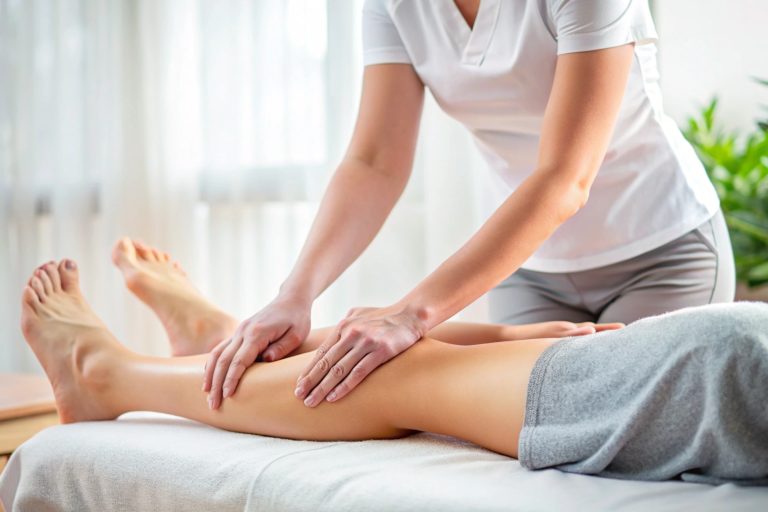
Do it once a day, 5 minutes per side, and avoid pressing within 30 minutes after a meal. You can keep pressing during your period — just halve the pressure. Consistency matters more than any single session: 10 minutes a day for two weeks beats one 40-minute session once in a while.
Who It Helps — and Who Should Be Careful
Xuehai suits a wide range of people, but there are situations where you need to pause and check first.
Good candidates for regular pressing: women with irregular periods or menstrual cramps; people with dry, itchy skin or recurring eczema; desk workers with poor leg circulation; athletes with soreness on the inner knee; and anyone whose hands and feet are cold most of the year.
Pregnant people should be cautious. Xuehai is understood to invigorate blood flow, and pressing it during pregnancy may stimulate uterine contractions. If you are pregnant and want to use acupressure, talk to your obstetrician or a qualified Chinese medicine practitioner first — do not press it on your own.
Never press over broken skin. If there is a cut, a broken-out rash, a burn, or red, inflamed skin near the point, skip the area entirely until the skin has healed.
Ask your doctor first if you have a medical condition. People taking anticoagulants such as warfarin, or with low platelets or a clotting disorder, bruise easily — even moderate pressure can leave marks. People with severe varicose veins or a history of blood clots in the legs should not press the inner thigh on their own either. Check with a doctor before you start.
Skip it after meals, after drinking, or when exhausted. After eating, blood concentrates in the digestive system, and massage pulls it elsewhere. After alcohol, blood vessels are already dilated, and pressing can worsen dizziness. When you are very tired, rest first — the point will still be there tomorrow.
A common mistake is thinking that a weak achy feeling means you should press harder, pinch, or dig in with a fingernail — and waking up with a bruise the next day. Acupressure aims for a dull ache, not pain. If it hurts enough to make you wince, you have already gone too far and may damage the tissue underneath.
Pairing Xuehai With Other Points
Xuehai is rarely used alone. Paired with the right point, its effect becomes more focused.
For periods and nourishing blood: Xuehai + Sanyinjiao (SP6). Sanyinjiao sits on the inner lower leg, about four finger-widths above the ankle bone. One point high on the thigh, one low on the calf, both on the Spleen meridian. Press each for 5 minutes a day, especially in the days before and during your period.
For itchy skin: Xuehai + Quchi (LI11). Quchi is at the outer end of the elbow crease, easiest to find when you bend your elbow. Xuehai nourishes the blood, Quchi is used to dispel “wind” — the traditional explanation for itching that moves around. One treats the root, the other the symptom, and they work well together when the itching is bad.
For cold legs: Xuehai + Zusanli (ST36). Zusanli sits about four finger-widths below the outer knee and is the most widely used general health point in the body. One invigorates blood, the other tonifies qi — vital energy — and together they are a solid afternoon routine for anyone who sits all day. Five minutes on each and your calves feel noticeably lighter.
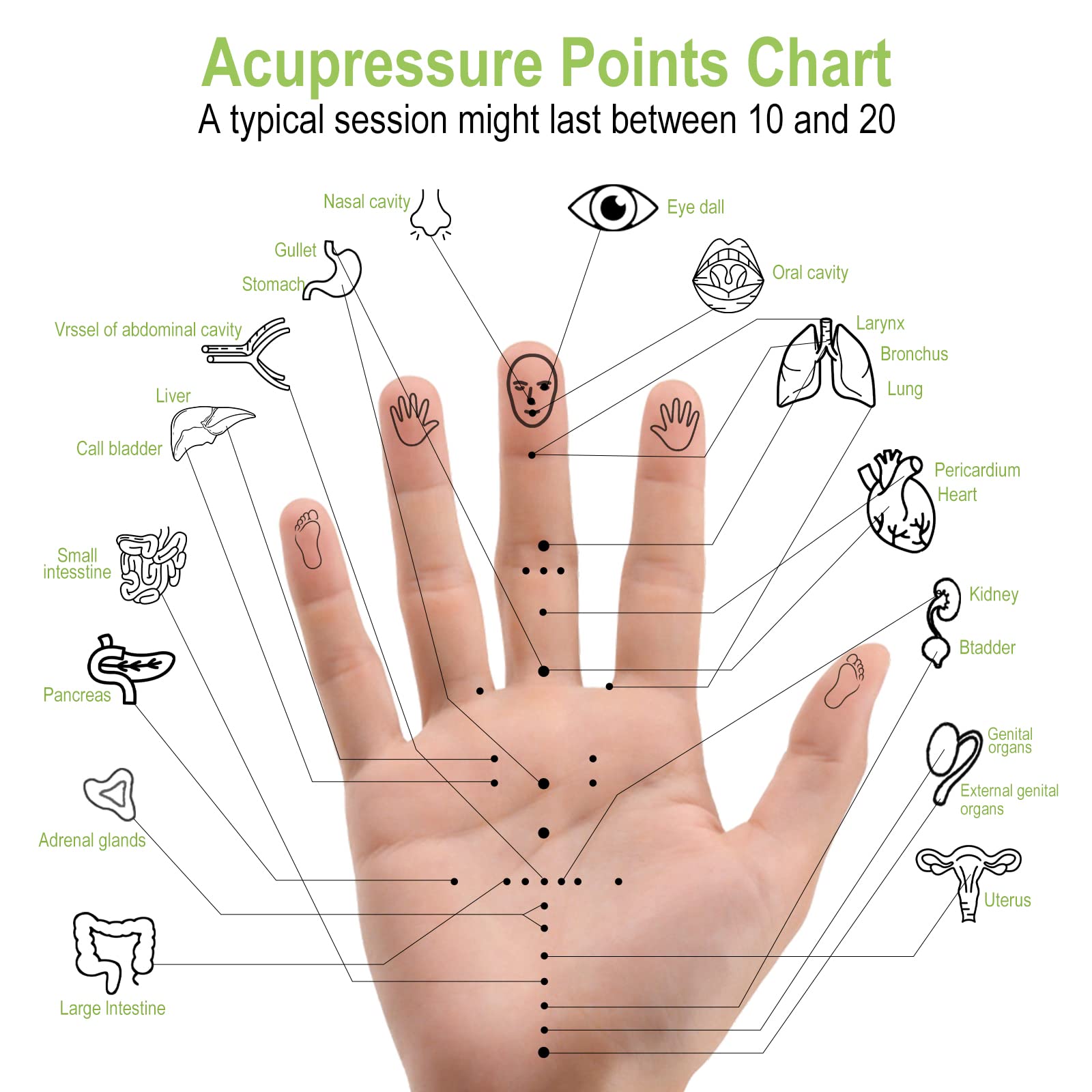
You do not need to do all three pairs at once. Pick the pair that matches your main problem and stick with it daily for two weeks. One pair, done every day, beats rotating through all three for a day and then forgetting about them.
Quick Answers
How do I know I found the right spot? Press slowly and look for a dull, sore ache that feels different from the surrounding muscle. If the spot feels no different from the tissue around it, shift your thumb a finger-width in any direction and try again. The ache is the signal.
How long before I notice anything? Warmth in the legs and looser knees can show up within a few days. Menstrual and skin changes are slower — give it at least two weeks of daily pressing before deciding whether it helps you.
Can I press it during my period? Yes, with lighter pressure — about half your usual force. Many people find it eases cold cramps. If pressing makes the bleeding noticeably heavier, stop and ask a doctor.
What if I press too hard and get a bruise? Rest the area for a few days and let the bruise fade. Next time, press until you feel the ache, then back off slightly — the ache, not the pain, is the target.
Is once a day enough? Yes. Five minutes per side, once a day, is the standard self-care dose. More is not better; longer sessions do not speed anything up.
Can I use a massage tool instead of my thumb? A smooth, rounded tool works fine if your thumb gets tired — just keep the same rule: pressure to the point of ache, never to the point of pain, and never use a sharp edge or a fingernail.
Three things to remember: Xuehai is on the inner thigh, about two cun above the inner top edge of the kneecap — cup your knee with your palm and your thumb lands on it. Press each side for 5 minutes a day, to the point of ache, and give it two weeks. And if you are pregnant, have broken skin, or a clotting problem, ask a doctor first instead of pressing on your own.
Try it tonight before bed: stretch both legs out, find Xuehai on each side with your thumb, and do 10 presses per side, 5 minutes each. Tie it to something you already do — right after brushing your teeth, or right before sleep — and it will stick. In two weeks, check in with yourself: is your lower belly still cold during your period? Are your hands and feet still cold? Is your skin still itching? Your body will give you the answer.
Disclaimer: This article is for reference only and is not a substitute for medical advice. Pregnant people, anyone with broken skin, and people with health conditions or who are taking medication should consult a doctor before trying acupressure. Acupressure is a daily self-care aid, and no therapeutic effect is promised. If you experience persistent discomfort, worsening pain, or no improvement in your symptoms, please seek medical care promptly.