You wake up with a stiff neck. You spend half an hour scrolling on your phone, head down, and by lunchtime your shoulders feel like someone left a stone on them. Right at the back of your neck, in the hollow just below the most prominent bone you can feel when you bend your head forward, sits an acupoint people have been using for over a thousand years: Dazhui, also known as GV14.
Dazhui is one of the easiest acupoints to find on your own body — no tools, no guesswork. This guide shows you exactly where it is, how to press it properly, which points pair well with it, and when to leave it alone.
Where Is Dazhui? Just Bend Your Head Forward
Dazhui is easy to locate. You do not need any equipment — a mirror, or a family member to take a quick look, is enough. Gently lower your head, tucking your chin toward your chest. A row of small bones appears along the back of your neck. The highest and most prominent one is the spinous process of the seventh cervical vertebra (C7). Dazhui sits in the hollow directly below that bone, on the midline of the back of the neck.
If you are unsure you have the right bone, here is a simple check: with your head still lowered, slowly turn your neck left and right. The bone that moves with the turn is the sixth cervical vertebra (C6). The one that stays still is C7. The two bones sit very close together, but being off by one segment makes a real difference in effect — spending ten extra seconds to confirm is worth it.
In traditional Chinese medicine, Dazhui lies on the Governing Vessel (Du Mai), the meridian that runs up the midline of the back. It is also the meeting point of the Governing Vessel and the three yang meridians of the hands and feet. Classical texts call it the “meeting of all yang,” meaning the body’s yang energy gathers here — which is why it has long been used to ease neck and shoulder tension and discomfort after catching a chill.
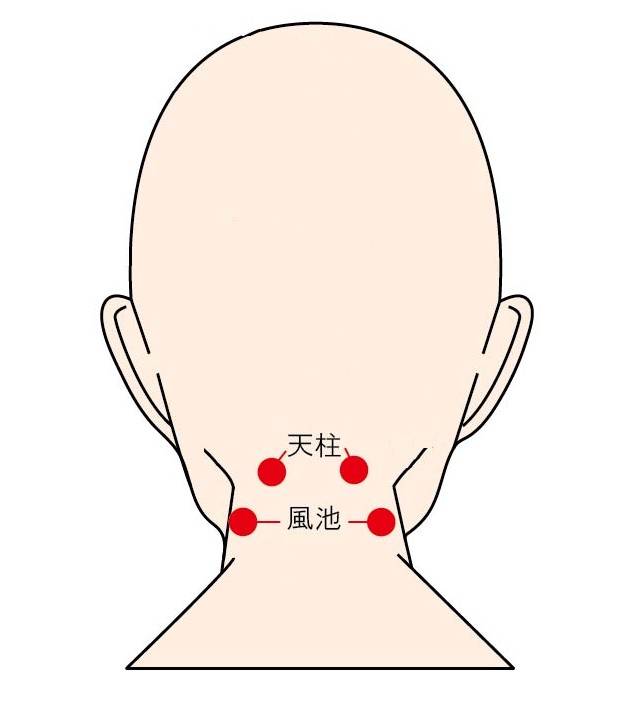
Two things to keep in mind when locating the point: first, do not bend your head too far down — a natural, relaxed bend is enough to feel the bone, and over-bending only tenses the muscles; second, your fingertip should rest in the hollow below the bone, not on the tip of the bone itself. Pressing directly on the bone hurts and does nothing useful.
What Is Dazhui Used For? Three Everyday Situations
Dazhui is most commonly used in three everyday situations. The first is a stiff neck and shoulders: after a long day hunched over documents, a long drive, or two or three hours of gaming, your neck creaks every time you turn it. Pressing and kneading Dazhui for three to five minutes often leaves the neck feeling noticeably looser right away. The second is discomfort after catching a chill: too long in an air-conditioned room in summer, or stepping out in winter without a scarf, and the back of your neck feels cold and your head feels heavy. Covering Dazhui with a warm palm and rubbing it gently works better than just rubbing your neck at random. The third is a cricked neck: you wake up with your head tilted to one side and every turn hurts. Gentle pressure on Dazhui, combined with slow, careful neck movements, often eases part of the stiffness.
Beyond those three, Dazhui is also commonly used to ease early cold symptoms — a mild fever with chills, or a headache — and the fatigue that follows long hours of mental work. All of these are everyday self-care uses: relaxing muscles and encouraging local blood flow, not treating disease. If a fever goes above 38.5°C, or neck pain has not eased after a week, see a doctor first.
Dazhui self-massage suits office workers and students who sit at desks all day, people who spend long hours driving, and older adults whose necks and shoulders tense up easily. If you have thin skin or are sensitive to pain, use a lighter touch — it still works. There is no need to chase the idea that “the more it hurts, the better it works.”
The Technique: Four Steps, Done Right
You need no equipment for Dazhui acupressure — one hand is enough, sitting or standing, and a full session takes about five minutes, in four steps.
Step 1: Warm Up — 1 Minute
Rub your hands together first. Press your palms together and rub 15 to 20 times until they feel warm, then cup the back of your neck with your warm palms for 30 seconds. Warm hands will not startle the muscles into tensing up, and the warmth itself helps the neck muscles loosen first. This step matters most in winter, when your hands are cold.
Step 2: Press — 1 to 2 Minutes
Place the pad of your middle or index finger on Dazhui and press straight down. Use enough pressure to feel a dull, achy sensation, but not sharp pain. Hold for 3 seconds, release for 1 second, and repeat 15 to 20 times. That dull ache is the sign you have found the right spot — if all you feel is pain with no ache, you are probably pressing on the bone; shift half a finger-width downward and try again. Trim your nails first.
Step 3: Knead — 2 to 3 Minutes
Keep your fingertip on the point and make small circles around it, 30 circles clockwise and 30 counterclockwise, about one circle per second. Keep your wrist relaxed and let the finger do the work — do not push down with your whole arm. Stop when the area feels slightly warm and the skin looks a little flushed, which usually takes 2 to 3 minutes.
Step 4: Finish and Relax
When you are done, use both hands to gently stroke outward from Dazhui toward each shoulder, 5 to 8 times. Then slowly move your neck: bend it down, lift it up, and rotate it three times in each direction, as slowly as you can. Right after the massage, do not stand in a cold draft and do not immediately look down at your phone. Get up, walk a few steps, and drink a sip of warm water.
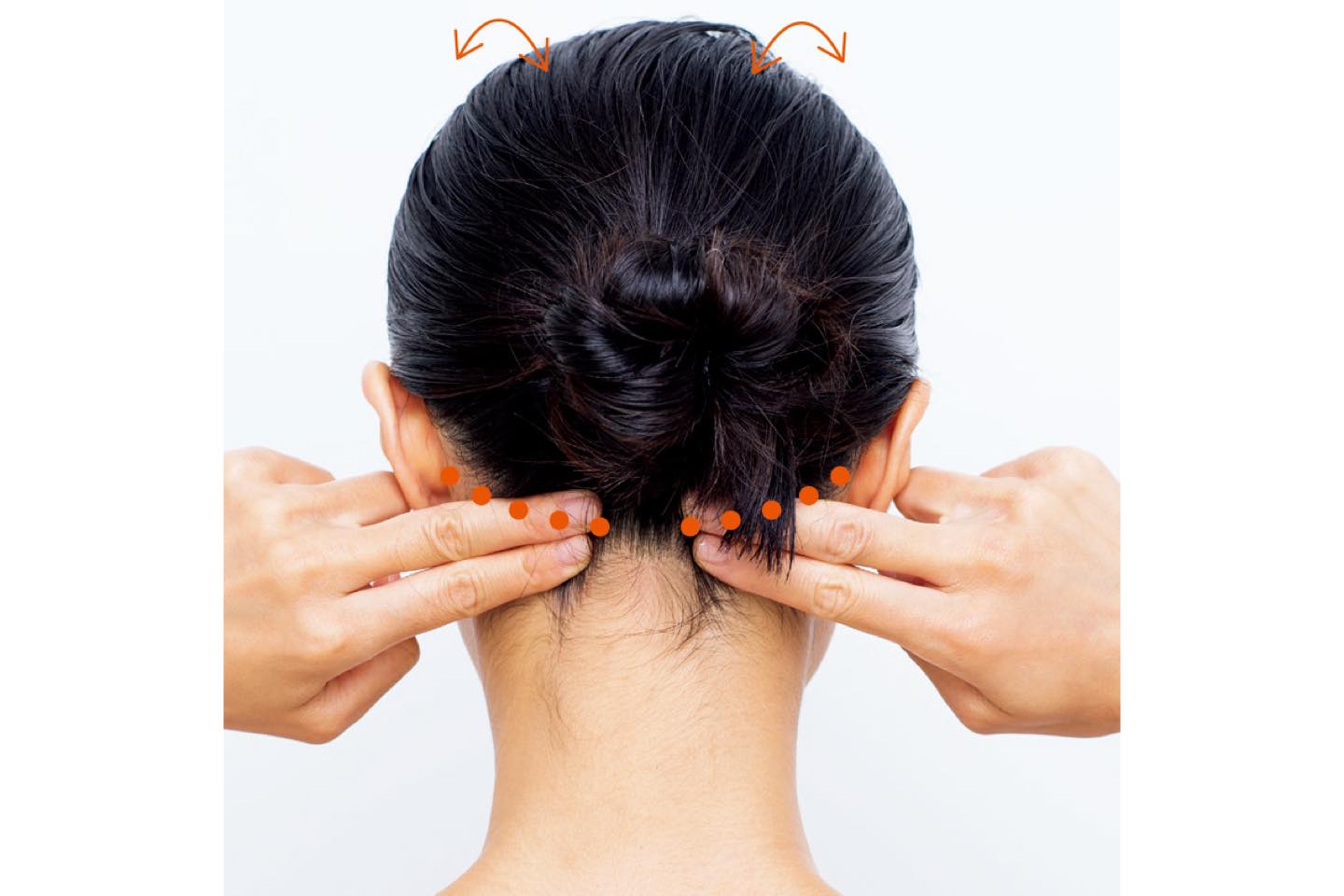
For everyday self-care, once or twice a day is enough, about five minutes each time. Doing it before bed tends to make the biggest difference to how your neck feels the next morning. If the achy feeling lingers for more than ten minutes afterward, you pressed too hard — use half the pressure next time. If you feel nothing at all, you are probably off the point; go back to the head-down method and locate the bone again.
Pairing Points: Two Combinations That Work Better Together
Dazhui works well on its own, and pairing it with nearby acupoints makes the effect more complete. Pick one combination — there is no need to do them all.
- With Fengchi (GB20): Fengchi sits in the hollows below the back of the skull, just outside the thick tendons on either side of the neck. When a stiff neck comes with dizziness or a foggy head, press Fengchi for 1 minute first, then Dazhui for 3 minutes. This suits people who have stayed up late or stared at a screen all day.
- With Jianjing (GB21): Jianjing sits at the highest point of the shoulder, midway between Dazhui and the tip of the shoulder. If your shoulders feel heavy and lifting your arms takes effort, after pressing Dazhui, knead Jianjing with your fingers for 1 minute on each side — the shoulders will loosen more thoroughly.
Remember the order when combining points: Fengchi first, then Jianjing, 1 to 3 minutes per point, and keep the whole routine under 10 minutes. Doing too much at once is the fastest way to give up on the habit.
Precautions: When Not to Press Hard
Dazhui massage is generally safe, but there are several situations that call for extra care.
- Broken, red, swollen, or eczema-affected skin: If the skin over the point is broken, has a boil, or is having an allergic reaction, leave it alone until it heals. Rubbing irritates the skin, and the risk of infection far outweighs any benefit.
- Running a fever: During a cold or fever, you can cover the point with a warm palm, but do not press or knead it firmly, and do not expect acupressure to bring a fever down. A high or persistent fever needs a doctor.
- Serious cervical spine problems: If you have diagnosed cervical spondylosis or a herniated cervical disc, especially with numb arms or an unsteady walk, do not press your neck forcefully yourself, and never let anyone yank or twist your neck or step on it. Ask a doctor first — the wrong technique can make nerve compression worse.
- Osteoporosis or a history of neck surgery: If your bones are fragile, or you have plates, screws, or a surgical history in the neck, keep the pressure very light, or use warm compresses only, without pressing the point.
- Pregnancy: The body is more sensitive during pregnancy, so check with a doctor about the pressure and duration of neck massage before doing it yourself, and do not increase the amount on your own.
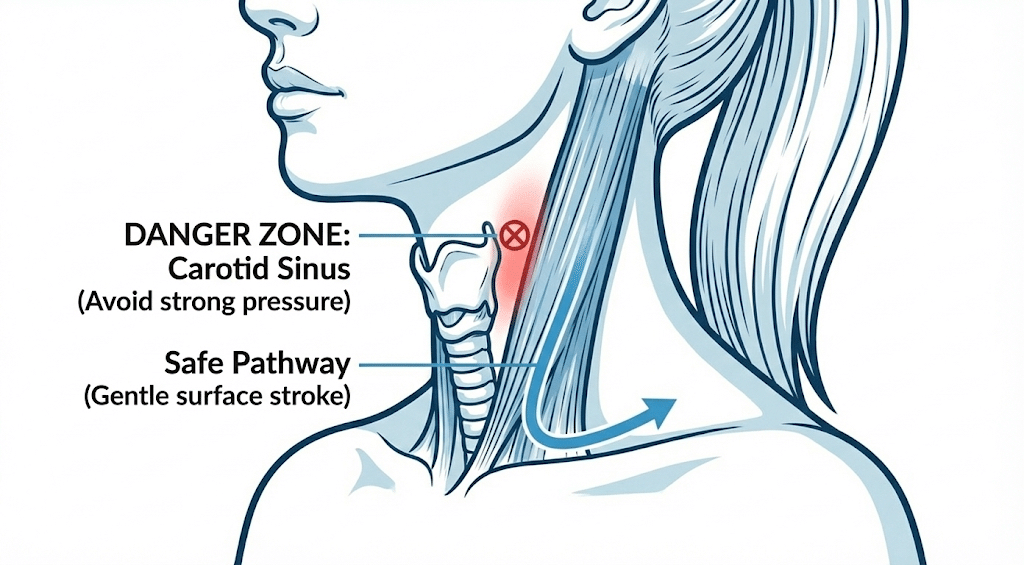
One point that is easy to overlook: do not let someone without experience press with brute force. Right below Dazhui is the cervical spine. The pressure should be a gentle push downward and inward, not a forward shove or a downward thump. When family members massage each other, start light, build up gradually, keep asking how it feels — stop if it hurts, and hold steady if it feels like a dull ache.
Make It a Habit: Three Minutes a Day
The beauty of Dazhui is how low the barrier is: no equipment, no going out, no need to set aside special time. One minute waiting for the elevator, three minutes while the kettle boils, five minutes before sleep — any of these is a chance to do it. After a week of steady practice, many people find their neck is less stiff in the morning, and the heavy-necked stretch of the afternoon feels easier.
Three small habits help as well: keep your pillow 8 to 12 centimeters high — too high or too low leaves your neck at an awkward angle all night; every 40 minutes of looking down, lift your head and move it for 1 minute (setting an alarm works better than relying on willpower); and on cold days, wear a scarf when you go out to protect Dazhui, which sits right where the wind hits.
Quick Answers
How do I find Dazhui? Lower your head and feel for the most prominent bone at the back of your neck — that is the C7 vertebra. Dazhui is in the hollow directly below it, on the midline. If in doubt, turn your neck gently: the bone that moves is C6, the one that stays still is C7.
How hard should I press? Press until you feel a dull, achy sensation, not sharp pain. If it only hurts, you are on the bone — shift half a finger-width down. If the ache lingers more than ten minutes, use half the pressure next time.
How often should I do it? Once or twice a day, about five minutes each time, is enough. Before bed is the most effective slot for most people.
When should I skip it? Skip firm pressure when the skin over the point is broken or inflamed, when you have a fever, or if you have serious cervical spine disease, osteoporosis, a history of neck surgery, or are pregnant — check with a doctor first in those cases.
Disclaimer: This article is for general health education only and does not replace a doctor’s diagnosis or treatment. Massaging Dazhui is everyday self-care, not a treatment for disease, and no therapeutic effect is promised. Use with caution or consult a doctor first if you have broken skin, a fever, serious cervical spine disease, osteoporosis, a history of neck surgery, or are pregnant. Seek medical care promptly if you experience persistent pain, numbness, weakness, or worsening dizziness.