It is 3 a.m. You are sprinting down an alley you cannot see the end of, your legs heavy as lead, and the footsteps behind you are getting closer. You jolt awake, your heart pounding as if you just ran an 800-meter race, your pillow damp with sweat. If that scene sounds familiar, you are far from alone — most people have this dream a few times a year.
Being chased is one of the most common dream plots in the world. In traditional Chinese dream culture, there is no single one-line answer to what it means. It depends on who is chasing you — a person or a wild animal — whether you escape or get caught, and where the dream ends. Below, we lay out the most widely circulated interpretations side by side, traditional and modern, so you can compare them. This article is cultural background only, for reference, and makes no predictions about your fate.
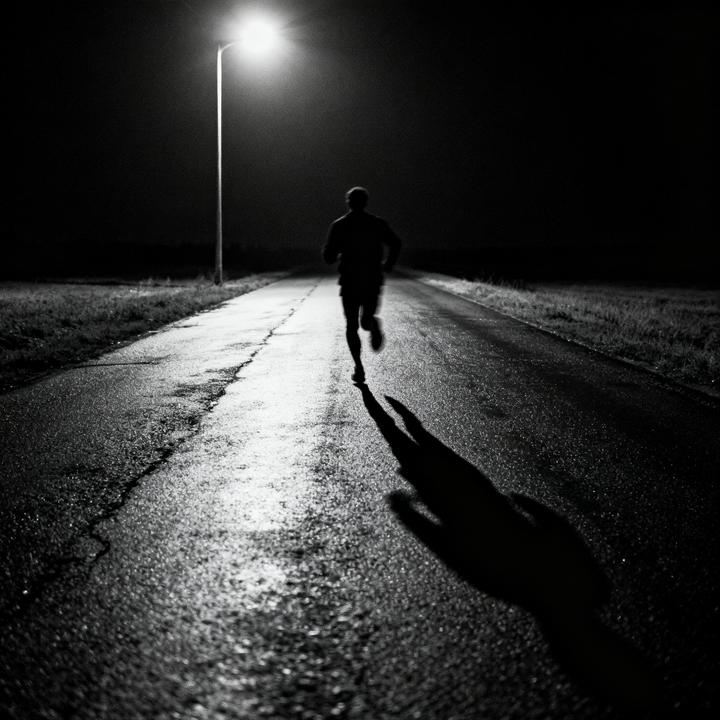
How the Old Generation Reads a Chase Dream: Zhou Gong Dream Interpretation and Folk Sayings
In classic Chinese dream books such as Zhou Gong Jie Meng — literally “Duke Zhou Interprets Dreams,” a centuries-old collection of dream lore named after a revered figure from the Zhou dynasty — dreams have long been read as omens. For chase dreams, the most common folk saying is simple: “something is weighing on your mind.” The thing you keep avoiding during the day comes back at night in a different shape and chases you. The older generation often says: the harder you run in the dream, the longer that unresolved matter has been pressing on you.
Another widely repeated saying connects chase dreams with a “noble helper” — a benefactor who shows up at the right moment. If someone chases you in the dream and you keep running until you reach open ground and daylight breaks, the elders may call it “escaping a calamity.” But if your legs give out, you cannot shout, and you cannot run at all, the folk explanation usually turns to the body: you are exhausted. These dreams show up far more often after late nights, after catching a chill, or on evenings when you ate too much right before bed.
Traditional dream interpretation has never had a single standard answer. The same chase dream can mean opposite things in different places: in one region, people say the thing chasing you is good luck running after you; in another, they say it is a petty troublemaker at work. That is why the first question an elder usually asks is always the same: who, exactly, was chasing you?
Who Is Chasing You Makes All the Difference
In the traditional reading, the identity of the pursuer is the key to the whole dream. The differences fall into three main situations.
- Chased by a stranger: The most common folk interpretation points to a pressure you cannot dodge in waking life — a proposal due at the end of the month, a phone call you have put off for three months, an apology you still owe someone. The pursuer has no face because the thing making you anxious has no clear shape either.
- Chased by someone you know: When a colleague, a relative, or an old classmate appears behind you, the traditional reading usually turns to relationships: is there something left unsaid, an account unsettled, a promise unkept? The chase in the dream is often the sentence you never spoke during the day, wearing a different costume.
- Chased by a wild animal, a dark shadow, or something you cannot see clearly: The elders describe this kind most mysteriously — some say you were “startled,” others say your “inner fire is too strong.” Looked at another way, these dreams peak at two moments: the days when you have stayed up several nights in a row and your sleep schedule is a mess, and the nights when you are running a fever or fighting off a cold.
Here is an interesting detail: when people recall their chase dreams, they often realize the pursuer never actually caught them — or that they woke up at the exact moment it did. The traditional saying calls this “waking at just the right time.” Modern sleep research calls it the sleep cycle reaching a light stage. Both are describing the same thing: dreams are easiest to remember right before you wake up.

Escaped, Caught, or Woke Up Halfway: Three Endings, Three Readings
Change the ending, and the folk reading changes with it. The first ending is escape: you shake off the pursuer, duck into a room, jump onto a bus. The elders usually call this a sign of “turning luck around” — the hard part is already behind you. The second ending is being caught: a hand lands on your shoulder, an animal pounces. Here the sayings split in two directions — some places say “once it catches you, the spell is broken, and you are fine,” while others say it is a reminder to “stop putting it off; what you must face, you will face sooner or later.”
The third ending is the most common, and the easiest to overlook: you are running, and then the dream simply dissolves. You neither escaped nor got caught — the scene changes, and the dream breaks off. Traditional dream books say very little about this ending because it has no drama. Yet in real experience, this is how most people’s chase dreams actually end. A dream is not a story; it does not need a proper ending.
One recurring pattern deserves a paragraph of its own: the same chase dream, two or three times in a week, with the same pursuer, the same alley, the same footsteps, only the waking time different. Folk sayings call this “the dream reminding you about the same thing.” Whether or not you believe that, one thing is certain: if the same dream keeps coming back, the matter you cannot put down during the day is still waiting exactly where you left it.
What Modern Psychology Says: Stress, Avoidance, and Unfinished Business
Modern psychology explains chase dreams in ways that overlap a good deal with the traditional reading — it just uses a different vocabulary. Carl Jung understood the pursuer in a dream as “the repressed part” of yourself: what you deliberately refuse to think about during the day shows up at night wearing the face of a pursuer. Sigmund Freud was more direct: a dream is a mixture of wishes and anxiety — running is avoidance, and chasing is anxiety.
Contemporary sleep research adds concrete numbers. In one survey of more than 2,000 adults, about a quarter said they often dream of being chased, and the proportion rises noticeably during exam weeks, project deadlines, job changes, and house moves — the high-pressure periods of life. In other words, chase dreams show up most often on exactly the days when life is busiest and you most want to hide from it.
Another angle comes from the theory of unfinished business. Psychology has a concept called the Zeigarnik effect: people remember incomplete tasks far better than completed ones. The email you never answered, the conversation you never had, the decision you never made — at night, they can all turn into footsteps behind you. The more you tell yourself “I’ll deal with it tomorrow,” the faster the pursuer runs.
The two perspectives do not conflict. The traditional reading talks about “something on your mind”; modern psychology talks about “stress and avoidance.” They are describing the same thing: a chase dream rarely predicts the future. More often, it replays the state of your recent life.
What to Do After a Chase Dream
Do not rush to look up whether it is “good luck” or “bad luck.” A more practical approach is to treat the dream as a free self-check. When you wake up, spend three minutes writing down three things in your phone’s notes app: who was chasing you, where you ran to, and the strongest feeling you had when you woke up. Keep this up for two weeks, and the pattern will reveal itself: some people only have the dream the night before an exam; others only have it the night after an argument with a particular person.
If chase dreams come very often — more than three times a week — or if you wake up every time with a racing heart and cold sweat, start with the most practical adjustments: get seven hours of sleep for three nights in a row, put the phone away an hour before bed, and do not eat dinner too late or too spicy. These sound ordinary, but sleep research has repeatedly confirmed that they genuinely reduce the frequency of nightmares.
If the same pursuer and the same scene keep returning for more than a month, and the dream still lingers in your mind during the day, consider talking it over with someone you trust, or having one session with a professional counselor. This is not a sign that something is wrong with you — it is simply a more direct way of dealing with something that has already been reminding you again and again.

Final Thought: A Dream Is Not a Prophecy, It Is an Echo of Your Life
Chinese dream culture offers many readings of the chase dream: some call it a warning, some call it a turning point, some say it only means your body is tired. Modern psychology sees it as an echo of stress and unfinished business. The conclusions of both views are remarkably consistent: this dream rarely foretells the future. More often, it is reminding you that something in your recent life has been following close behind you.
The next time you have this dream, take a sip of water when you wake up, slow down, and ask yourself one question: what have I been avoiding lately? Write the answer down, and the next day pick the smallest item on the list and deal with it — reply to the email you have been putting off for weeks, make the phone call you never made, say the sentence you never said out loud. Very often, the footsteps in the dream stop the same way: by taking one small step forward during the day.
All content in this article is cultural background for reference only. It is not a prediction about your fate or fortune.
Quick Answers
Is dreaming of being chased a bad omen? Traditional Chinese dream culture gives no single answer: some sayings call it a sign of turning luck around, others call it a reminder to face something you have been avoiding, and still others blame simple exhaustion. Modern psychology reads it as stress and unfinished business, not a prediction.
Does it matter who is chasing me? In the traditional reading, yes — a stranger usually points to faceless pressure, someone you know points to an unresolved relationship, and an animal or shadow often coincides with poor sleep or illness. The identity of the pursuer is the first question elders ask.
What if I escape in the dream? Folk sayings usually read an escape as “turning luck around,” meaning the difficult part is over. If you are caught, the sayings split: some call it the spell breaking, others call it a nudge to stop delaying. If the dream simply fades away, that is the most common ending of all — dreams do not need a tidy conclusion.
What should I do if the same chase dream keeps coming back? Write down the pursuer, the place, and your strongest feeling on waking, and watch for the pattern over two weeks. Fix the basics first — seven hours of sleep, no phone before bed — and if the same dream returns for more than a month, talk it through with someone you trust or a professional counselor.