It’s mid-January, and your feet are still cold under two blankets. Your hands go numb holding a phone on the subway. A friend at work mentions moxibustion — burning a stick of mugwort near the skin — and you nod, but in your head you’re thinking: is this real, or is it just sitting next to a tiny campfire? This guide answers that question properly. What moxibustion is, which points to use, how to do it safely at home, how often, and — just as important — who should not try it.
What Moxibustion Actually Is
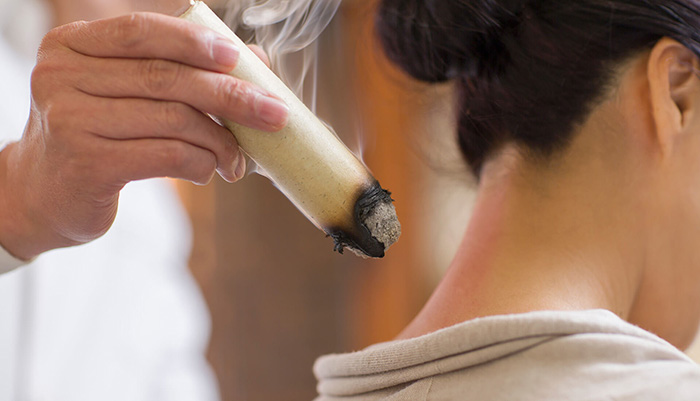
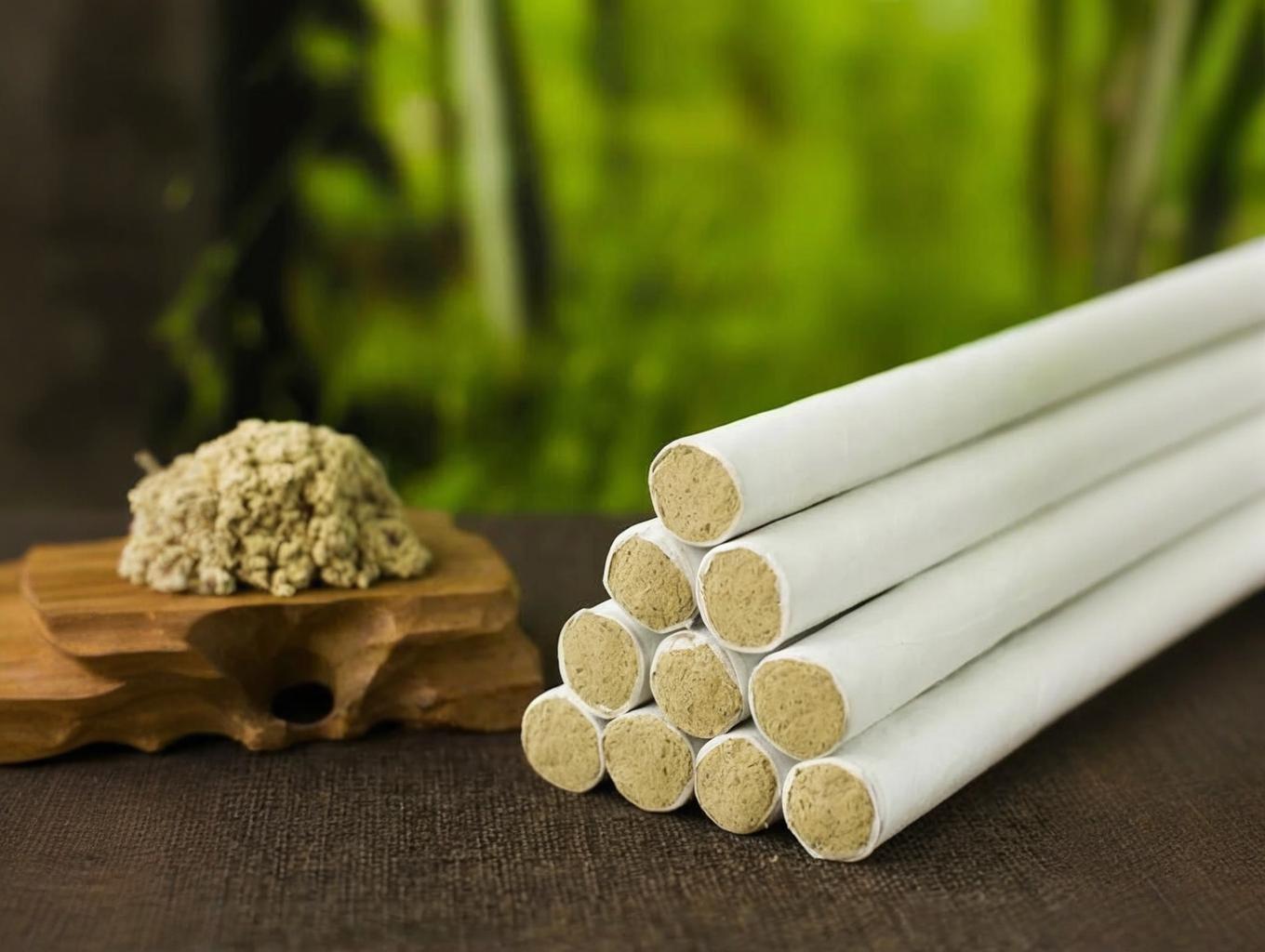
Moxibustion is a traditional Chinese therapy in which dried mugwort leaves — a herb called ai in Chinese, Latin name Artemisia argyi — are rolled into a stick or cone, lit, and held near the skin so that the steady, penetrating warmth stimulates an acupoint. The burning tip of a moxa stick reaches around 500°C, but held 2–3 centimeters from the skin, what you actually feel is a gentle 40–45°C — a slow warmth that seems to soak inward rather than sting the surface.
In traditional Chinese medicine, moxibustion is said to warm the channels, dispel cold, and support the body’s yang energy — yang here meaning the warm, active, outward-moving aspect of the body, as opposed to the cool, quiet yin. In plain language: moxibustion is for problems that feel “cold.” Cold hands and feet, a dread of winter, stiff joints when the temperature drops, loose stools after eating something cold, a dull cold ache in the lower belly before or during a period — these are the situations where gentle heat applied to the right points is traditionally used. The reverse also holds: if you are running a fever or feel dry-mouthed and overheated, moxibustion is usually the wrong choice.
There are three common methods. Direct moxibustion places a burning cone of moxa right on the skin — it carries a real risk of burns and scarring, and beginners should not touch it. Suspended moxibustion is the standard beginner method: you hold a lit moxa stick 2–3 centimeters above the skin and hover it there. A moxa box holds the stick inside a slotted wooden or bamboo box that sits over the point, giving even heat without you having to hold anything — ideal for the lower back and belly. For your first session, start with suspended moxibustion or a moxa box.
Six Points to Start With
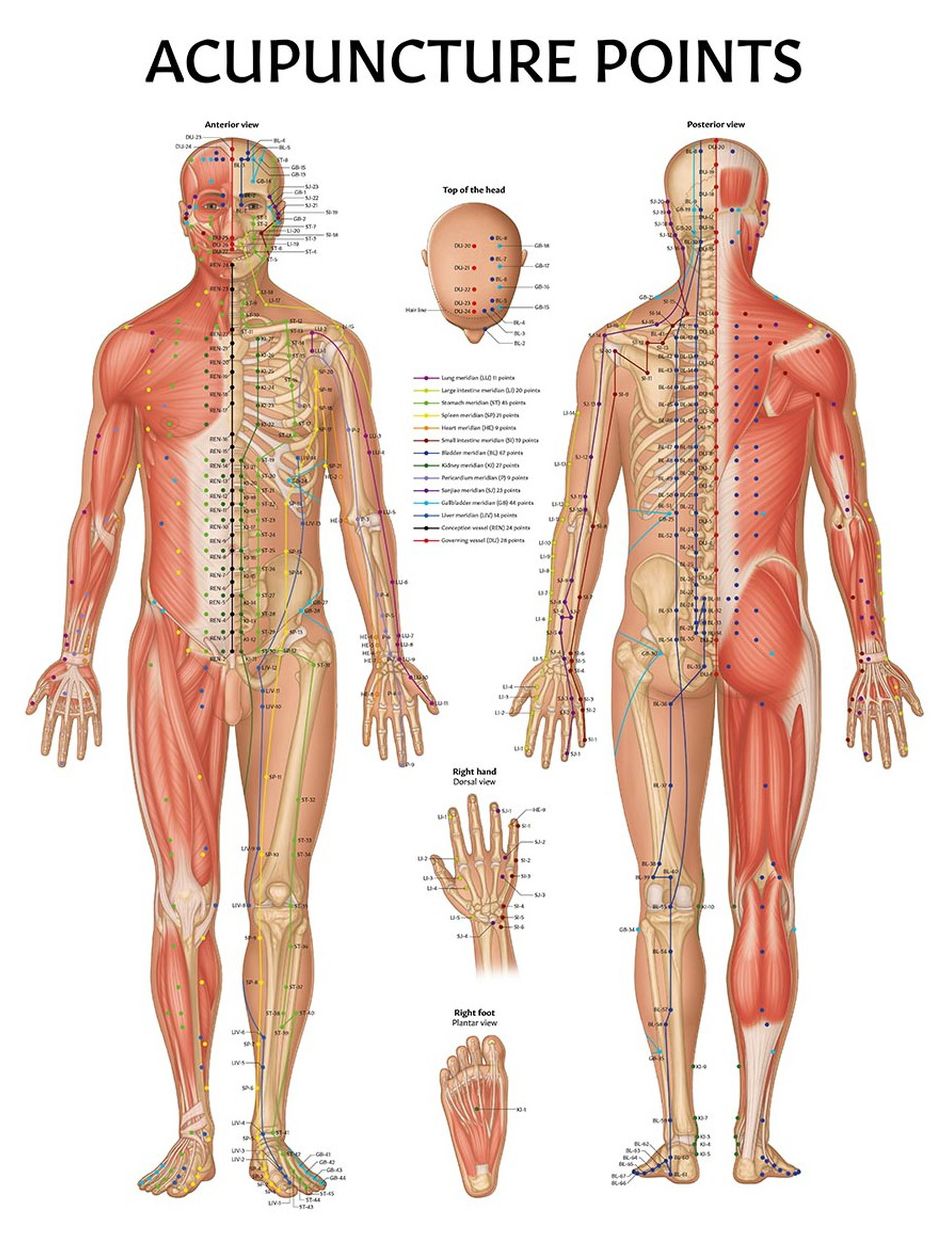
The body has more than 300 acupoints. You don’t need to learn them all. Start with these six — they cover the most common everyday needs. To find a point, use your own fingers as a ruler: one thumb-width is roughly 1 cun (a traditional Chinese body measurement, about one inch), and four fingers held together are roughly 3 cun. When you press the right spot, you should feel a dull, heavy, slightly sore sensation. That ache is your confirmation.
Zusanli (ST36): The Go-To Point for Digestion and Energy
On the outer side of the lower leg, 3 cun (about four finger-widths) below the knee, one finger-width outside the shinbone. Press there — the spot that feels sore and heavy is Zusanli. People who often feel bloated, have little appetite, or tire easily usually start here. Moxa it for 10–15 minutes per session.
Guanyuan (CV4): The Core Point for Warmth
Three cun — four finger-widths — straight below the navel. If your hands and feet are always cold, you dread winter, or you wake up several times a night to use the bathroom, Guanyuan is the classic choice. The skin on the belly is thin, so start the stick at least 3 centimeters away and lift it higher the moment it feels too hot.
Qihai (CV6): Just Above Guanyuan
One and a half cun below the navel, about two finger-widths down — halfway between the navel and Guanyuan. Qihai and Guanyuan are often moxaed together. It suits people who feel weak and drained, whose voice runs out of strength, or who break into a sweat after the slightest effort.
Shenque (CV8): The Navel Itself
Your navel is itself an acupoint, called Shenque. Moxa on the navel is usually done with ginger: cut a 2–3 millimeter slice of fresh ginger, poke a few small holes in it, lay it over the navel, and burn a small moxa cone on top of the ginger. It is the most common choice when the stomach has caught a chill or when diarrhea follows eating something cold.
Dazhui (GV14): The “Switch” for an Oncoming Cold
Bow your head and feel the most prominent bone at the back of your neck — that is Dazhui. When your nose first starts to stuff up, you sneeze, and the back of your neck feels tight, as if a cold is coming on, moxa Dazhui for about 10 minutes. Many people feel the warmth spread across their upper back and break into a light sweat. Once a fever passes 38.5°C, stop — do not moxa.
Yongquan (KI1): The “Charging Port” on the Sole
On the sole of the foot, about one-third of the way from the toes, in the hollow that appears when you curl your toes downward — that is Yongquan. It is a good choice before bed if cold feet keep you awake. The skin on the sole is thick, so the stick can sit about 2 centimeters away.
One rule for choosing points: don’t be greedy. At first, moxa only 1–2 points per session. Once you are comfortable, you can build up to 3–4. Never moxa all over your body in a single day.
Your First Session: Seven Steps
Preparation matters more than the moxibustion itself. Get everything ready first: 1–2 moxa sticks, a lighter, a moxa box if you use one, a ceramic or metal tray to catch ash, a dry towel, and a small cup of water. Open a window slightly for ventilation, and switch off any fan or air conditioner blowing directly at you — a draft scatters hot ash everywhere.
- Light the stick: Use a lighter to ignite one end of the moxa stick. Wait until the tip burns steadily and gives off an even wisp of pale smoke. A freshly lit stick is unsteady and drops sparks easily — don’t bring it near your body until the flame has settled.
- Test the heat first: Hold the stick near the back of your hand and feel the temperature. Only move it to the acupoint once you are sure it is warm, not scorching. Keep it 2–3 centimeters from the skin, and let “warm and comfortable, never burning” be your standard.
- Find the point: Locate the point using the finger measurements above, press with your fingertip, and confirm the dull ache. Then aim the stick at it. You don’t need millimeter precision.
- Suspended technique: Hold the stick and move it in slow circles or gently up and down — never roast one spot without moving. Give each point 10–15 minutes. Skin that turns slightly pink and feels warm to the touch is exactly right. Skin that turns red and burning, or raises a blister, means you have overdone it.
- Tap off the ash: After 3–5 minutes of burning, a layer of ash builds up on the tip. Thick ash blocks the heat and can fall off and burn you. When the ash reaches about 1 centimeter, tap it gently into the metal tray and continue.
- Finish properly: When the time is up, move the stick away and cover the point with the towel for 1–2 minutes to hold the warmth. Extinguish the stick completely — press it into the metal tray until it is out, or drop it in the cup of water, and check that no ember remains before you throw it away. Never toss a moxa stick straight into the bin: it can smolder for a long time and is a genuine fire hazard.
- After the session: For half an hour afterward, don’t shower, don’t stand in a cold draft, and don’t drink cold water. Sweating a little is normal — dry off, dress warmly, and drink a cup of warm water.
A full session takes a beginner about 30–40 minutes: 10 minutes of preparation, then 20–30 minutes of moxa on 1–2 points. Don’t rush it. Moxibustion is, by nature, slow work.
When to Moxa, and How Often
Timing matters. Between 9 and 11 in the morning, when yang energy is traditionally said to be rising, is considered the best window. After 9 in the evening, yang is withdrawing, and moxibustion is not recommended — especially if you have trouble sleeping, since an evening session can leave you feeling wired. If evenings are your only free time, finish before 9 p.m. and leave at least an hour before bed.
Frequency depends on your goal. For a specific concern — cold hands and feet, a weak stomach — go 2–3 times a week, every other day. After about 10 consecutive sessions, take a break of 1–2 weeks, then decide whether to continue. For general maintenance — moxaing Dazhui when the seasons change, or Zusanli as a regular habit — once a week is enough.
One point that is easy to miss: longer is not better. Keep each point to 10–15 minutes and the whole session under 40 minutes. Some people moxa for over an hour and end up with a dry mouth, dizziness, and exhaustion — that is over-moxibustion. Stop for a few days, drink plenty of water, and the symptoms usually pass within 1–2 days.
Safety: Eight Situations Where You Should Not Moxa Yourself
Moxibustion is a heat treatment, so the safety lines have to come first. In the following situations, either don’t moxa, or ask a doctor first.
- Pregnancy: Never moxa the abdomen or the lower back and sacrum area. For other parts of the body, consult a doctor first. The warming and blood-moving effects of moxibustion carry risks during pregnancy.
- Broken skin, burns, or an active eczema flare: Never moxa directly over damaged skin — the heat will make the injury worse. The same applies to skin that is inflamed or infected.
- Diabetes: Diabetes often dulls sensation in the hands and feet, so you may not feel a burn happening. If you moxa at all, someone should watch you the whole time, and the temperature should stay on the low side rather than the high side.
- Fever or acute infection: If your temperature is above 38°C, or you have an acute infection such as tonsillitis or pneumonia in its active phase, wait until the fever has passed.
- Uncontrolled high blood pressure or an active heart condition: Moxibustion speeds up circulation, which adds load to the heart. If your blood pressure is high and uncontrolled, or your heart feels unwell, don’t moxa.
- After drinking, within half an hour of a meal, or on an empty stomach: Alcohol already speeds up circulation, and adding moxa heat on top can cause dizziness. Right after eating, blood is concentrated in the stomach; moxibustion competes with digestion. On an empty stomach, you risk low blood sugar and dizziness. One hour after a meal is the best time.
- Exhaustion or strong emotions: After a sleepless night, or right after an argument when emotions are running high, rest first. Moxa only when you feel steady.
- The face and areas over major blood vessels: Don’t moxa points on your own face — a burn that leaves a scar there is a high price to pay. The sides of the neck, where large blood vessels run close to the surface, are also off-limits for self-treatment.
Fire safety matters just as much. A moxa stick must be fully extinguished before it is discarded, and ash must be completely cold before you throw it away. If there are children or pets in the house, keep them away from you while you moxa.
Start Simple: One Point, Two Weeks
Moxibustion is not difficult. What is difficult is persistence — and restraint. Remember three numbers: 2–3 centimeters from the skin, 10–15 minutes per point, 2–3 times a week. Pick one point to start — Zusanli or Guanyuan — and do it for two weeks. Then check: are your hands and feet warmer? Is your appetite better? Only then decide whether to add more points or more sessions.
If two weeks pass with no noticeable change, don’t reach for a bigger dose. Check three things first: did you find the right point? Was the heat enough? Was the time long enough? Those three matter far more than adding more points. And if something in your body feels clearly wrong, or you are unsure whether moxibustion is safe for you, ask a doctor first — don’t push through on your own.
You can start tonight: one moxa stick, one metal tray, and ten minutes on Zusanli, sitting on the sofa before 8 p.m.
Quick Answers
Does moxibustion hurt? It shouldn’t. You should feel a deep, spreading warmth, not pain. If it stings or burns, lift the stick higher or move it — the heat should always stay comfortable.
How do I know I found the right point? Press the spot with your fingertip. The right point usually feels sore, heavy, or slightly tender compared with the skin around it. That dull ache is your best confirmation.
Can I moxa every day? For a specific concern, 2–3 times a week is enough. Daily moxibustion over a long period can leave you dried out and tired — after about 10 sessions, take a 1–2 week break.
What if I get a small blister? Stop moxibustion and keep the area clean and dry. Don’t break the blister. If it is large, painful, or shows signs of infection, see a doctor.
Is the smoke a problem? Moxa smoke is part of the therapy, but it irritates some people’s lungs. Always ventilate the room, and if you have asthma or a respiratory condition, talk to a doctor before using moxibustion indoors — or consider a smokeless moxa stick.
Can I moxa during my period? Many people do, especially for cold-type menstrual cramps, often on Guanyuan. But if your flow is heavy, or you are unsure, ask a doctor first — and never moxa the abdomen if there is any chance you could be pregnant.
Disclaimer: This article is cultural and educational information about moxibustion. It is not medical advice. Moxibustion carries risks including burns, blistering, and allergic reactions. Work in a ventilated room, watch fire safety, and make sure every moxa stick is fully extinguished after use. Pregnant people, people with broken or infected skin, diabetes, uncontrolled high blood pressure, heart conditions, fever, or acute infection should use moxibustion with caution or follow a doctor’s advice. Moxibustion does not replace medication or professional medical treatment, and it makes no promise of any particular result. If symptoms persist or worsen, seek medical care promptly.