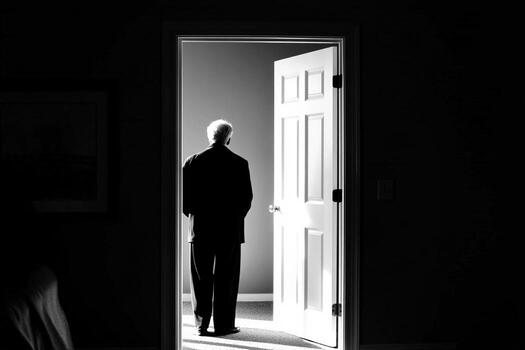
It was 3 a.m. when Mrs. Wang woke with a start. In her dream, her father, who had passed away five years earlier, was standing in the doorway of the old family house. He raised a hand toward her and said nothing. When morning came, she spent the whole day turning the dream over in her mind. Was it only a coincidence, or did he have something he wanted to tell her?
Dreaming of a loved one, especially a loved one who has died, is something most people experience at least once. Some wake up feeling warm inside. Others wake up with tears in their eyes. And some spend the rest of the day feeling uneasy, unable to shake the dream off. Folk tradition has plenty to say about these dreams, and modern psychology has its own explanation. This article puts the two views side by side, so you can decide for yourself what your dream might mean.
What Folk Tradition Says: A Visit, a Reassurance, or an Unfinished Wish
In many parts of China, dreaming of someone who has died is often called tuo meng, which literally means “a dream entrusted to you” – the idea that the person in the dream is using it to pass on a message. Older generations usually describe three kinds of such dreams, and each one carries a different meaning.
The first is a message of reassurance. In the dream, the person looks healthy and well-dressed, smiles at you, talks with you, or simply watches you from a distance. You wake up feeling calm. According to folk belief, this means the person is doing well in the other world and has come back to set your mind at rest. As many older people put it, “If you dreamed your grandfather was smiling, he must be doing fine over there, so stop worrying about him.”
The second is a visit from someone who still cares about you. In the dream, the person keeps reminding you of the same thing: “It is cold, wear something warm,” “Stop staying up so late,” or “Take good care of your mother.” When you wake up, you realize these are exactly the words they used to say when they were alive. Folk tradition reads this as a sign that the person is still looking out for the family. These dreams turn up most often around festivals and around Qingming, the Tomb-Sweeping Festival, when families traditionally remember the dead.
The third is an unfinished wish. In the dream, the person looks anxious, or stands in one particular place and does not move – the courtyard of the old house, or next to the chair they always used to sit in. The old explanation is that something has been left undone: a promise you made but never kept, a relative you have meant to visit for a long time, or an old object that has been sitting untouched in the house for years. When people have this kind of dream, some of them go back to the old house, keep the promise they made, and find that their mind settles afterward.
Folk tradition also has many smaller sayings about the details. In old dream-interpretation books such as Zhou Gong Jie Meng (Duke of Zhou Interprets Dreams), a classic Chinese dream manual that has circulated for centuries, a deceased loved one smiling in a dream is often read as a good sign, while a loved one crying is taken as a reminder to pay attention to the health of the family and to upcoming plans. These sayings have been passed down for hundreds of years, and they all come back to the same point: a sense of peace. Whether a dream is good or bad, what matters in the end is how the living go on with their lives.
Common Scenes, Different Meanings
The same kind of dream can feel very different depending on what happens in it. Below are the five scenes people report most often, along with the folk reading and what the experience usually feels like.
- Your loved one smiles and talks with you: This is the most common and the most comforting version. Many people say that when they wake up, it feels as if they really met the person again. These dreams often come at times when your life is steady and things are going well.
- Your loved one watches you from a distance and says nothing: Many people describe this exact scene – the person standing in a doorway, in a courtyard, or at the far end of a road. Folk tradition often calls this “coming back to see you.” Psychology reads it more as a projection of longing: you miss them, so they appear in your dream in this quiet way.
- Your loved one takes you somewhere: For example, they lead you back to your hometown, or down a road you have never walked before. In the old sayings, this kind of dream is taken especially seriously. Some people go back to the old family house the next day, or call home to ask how everyone is doing.
- Your loved one asks you for something: In the dream, they say they are cold or hungry, or they point at a particular old object. The folk response is usually very practical: check whether their old clothes are still there, burn some paper offerings for them, or tidy up the object they pointed at. After people do this, the dream usually stops repeating.
- You dream of the same person again and again: Two or three times in a week, or the same person appearing night after night. Folk tradition says “they still have something to say.” Psychology suggests a different check: look at your own state. Have you been under too much pressure lately? Has your sleep been poor? Is an anniversary or a memorial day coming up?

What Psychology Says: Longing, Memory, and Emotion
Modern psychology offers an explanation for dreaming of the dead that involves no supernatural claims at all. It comes down to three points.
First, grief has nowhere to go during the day. After a loved one dies, your days are filled with work and with looking after the family, so your grief gets pushed down under daily life. At night, when the brain relaxes, the words you never got to say and the things you never got to do come back up in the form of a dream. Researchers who study bereavement have found that in the first year after losing a loved one, more than half of people dream about the person who died, and many of them dream about that person more than once in the year. This is not abnormal. It is grief finding an outlet.
Second, the brain is sorting memories while you sleep. During REM sleep, the rapid-eye-movement stage of sleep, the brain re-files the day’s experiences together with old memories. During the day you might walk past a noodle shop your loved one used to like, catch a familiar smell, or come across an old photograph. Those fragments do not get fully processed while you are awake, so at night they get stitched together into a dream. That is why there is often a small trigger just before you dream of a loved one: a smell, a song, or a date connected with them.
Third, emotions are regulating themselves. Sadness, guilt, and regret do not simply disappear with time. A dream can work like a rehearsal: in the dream you get to say a few words to the person, finish the conversation you never finished in life, and when you wake up, the heaviness in your chest feels a little lighter. In grief counseling there is a well-known observation: if you feel better after dreaming of someone who has died, it is a sign that your mind is gradually accepting the fact that they are gone. That is part of how grief heals.
Psychology, then, does not deny that the dream means something. It simply points the meaning in a different direction. The dream is not the person speaking to you. It is your own mind speaking to you. It tells you that you still miss them, that you still have words left unsaid, or that you need some comfort right now.
Three Small Things You Can Do After Such a Dream
Whether you lean toward the folk explanation or the psychological one, there are a few practical things you can do after waking up that will help you feel steadier.
1. Write the dream down. Within ten minutes of waking, write a few lines in your phone’s notes app: who was in the dream, where it took place, what was said, and how you felt when you woke up. Look back a month later and you will probably notice a pattern: the dreams come more often in weeks when work pressure is high, and less often when life feels calm. Keeping a dream journal is not about fortune-telling. It is about seeing your own emotional ups and downs more clearly.
2. Do one small thing connected with them. Walk to a place they used to like, cook a dish they were good at, or wipe down that old family photograph and set it straight. In folk terms this is called fulfilling a wish; in psychological terms it is completing a farewell through action. Action works far better than turning the same dream over and over in your head. After doing it, many people find they sleep soundly that very night.
3. Call someone in the family. If you dreamed of your late father, call your mother when you wake up. If you dreamed of your grandmother, ask how the older relatives in the family have been doing lately. Dreams are often a reminder to pay more attention to the people who are still with us. Turning your longing for the person who has gone into care for the people who are still here is the most practical use of such a dream.

Conclusion: A Dream Is Another Shape of Missing Someone
Dreaming of a loved one is, in the end, another shape of missing them. Folk tradition describes it as a visit from the other world and a sign of care that crosses the boundary of life and death. Psychology describes it as memory sorting and emotional repair. Both point to the same thing: the person you loved has not yet gone far in your heart.
The next time you dream of them, there is no need to rush to ask whether it is lucky or unlucky. Ask yourself first: have I been too tired lately? Is there something I have been meaning to say but never said? Is there someone I have been meaning to look after but have not? Treat the dream as a mirror. What it shows you is your own life. Living your days well and looking after the people around you is the best answer you can give to the person in the dream.
Quick Answers
Is dreaming of a deceased loved one a bad sign? Not necessarily. In folk tradition, a loved one who smiles in a dream is usually read as a good sign, and in psychology these dreams are a normal part of grief. How you feel when you wake up matters more than any single interpretation.
Why do I keep dreaming of the same person? Folk tradition says they still have something to say. Psychology points to stress, poor sleep, or an approaching anniversary. Check your recent state first, and see whether a particular trigger keeps appearing before these dreams.
What should I do after such a dream? Write it down, do one small thing connected with the person, and call a family member who is still with you. These three steps turn a restless dream into something concrete and comforting.
Does this dream mean they are trying to tell me something? Folk culture says yes, and psychology says the message comes from your own mind – your longing, your unfinished words, and your need for comfort. Either way, the dream is worth listening to, not fearing.
The content above is an introduction to folk culture and psychology, for reference only. It is not a prediction about anyone’s fate, and it is not medical advice. If grief is affecting your sleep or daily life for a long time, consider talking to a qualified counselor.