You wake up at 3 a.m. and the fish is still there, flicking its tail through dark water. Maybe it was a red carp leaping out of a pond. Maybe it was a whole tank of fish circling lazily. Your first instinct, like millions of people in China, is to look it up: what does it mean to dream of fish?
In Chinese culture, the answer is never just “a fish.” It is a tangle of wordplay, old paintings, exam-day superstition, and grandmothers’ advice — and it is worth untangling, because a fish dream says more about how Chinese culture thinks about luck than about your future.
Why Fish Are Almost Always Good News in Chinese Culture
In Chinese, the word for fish, yu, sounds exactly like the word for “surplus” or “abundance.” That single coincidence has shaped centuries of art and custom. A New Year painting of a fat carp comes with the caption nian nian you yu — “may you have surplus year after year” — a wish that life stays comfortable and something is always left over.
But the symbolism goes deeper than a pun. Fish travel in schools and multiply fast, so in ancient times they became a natural emblem of children and a thriving family. Double-fish patterns appear on Han dynasty portrait bricks (206 BC–AD 220), and folk paper-cuts pair fish with lotus flowers in a motif called “surplus year after year.”
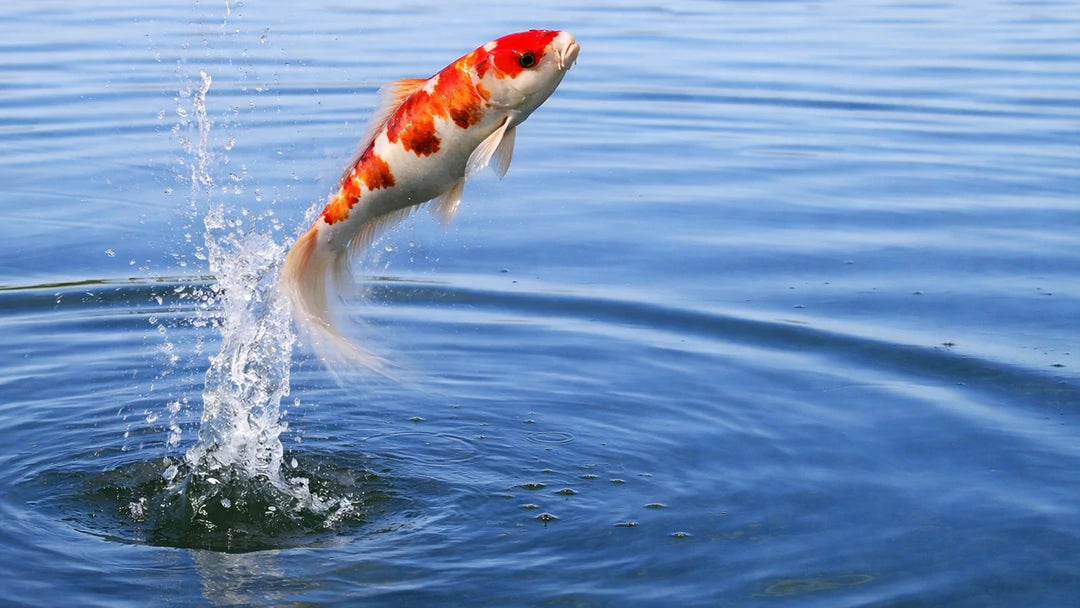
Then came the story that turned the fish into a symbol of ambition. In the legend of the carp leaping the Dragon Gate, an ordinary carp that jumps over a waterfall gate transforms into a dragon. For centuries, scholars preparing for the imperial civil service exams took it as a metaphor for rising from a humble background — the poor student who passes the exam and changes his family’s fate. Even today, parents slip a carp motif onto a child’s pencil case before a big test.
Stack those three layers — surplus, family, and rising in the world — and it is no surprise that traditional dream books, such as the classic Zhou Gong’s Dream Interpretation (Zhou Gong Jie Meng, a folk dream manual attributed to the Duke of Zhou, a revered statesman of the Western Zhou dynasty), usually read a fish dream in a positive light, linking it to wealth, opportunity, or good news. A note of caution, though: these are folk sayings passed down through generations, for reference only. A dream reflects what you have been thinking and feeling during the day far more than it predicts anything.
The Most Common Fish Dreams — and What Folk Tradition Says About Each
The same fish can mean very different things depending on what it is doing. Here are the scenarios people ask about most:
- Live fish swimming in clear water: The most common fish dream of all. In folk readings, a school of fish gliding through clear water stands for a life running smoothly and a comfortable household. If one fish is especially large or brightly colored — a golden carp, say — older generations would call it a sign that good luck is on its way. There is a plainer explanation too: when life has been going well and you feel at ease, your sleeping mind is more likely to paint this kind of vivid, lively picture.
- Catching fish or fishing: A net full of fish or one catch after another on a line is traditionally read as “ask for wealth and receive it, ask for success and get it.” But there is a counter-reading: if the fish keep slipping through your fingers, it may mirror a goal you are chasing in real life — something you are working hard toward but have not landed yet.
- Eating fish: Sitting down to a plate of fish and enjoying every bite is usually interpreted as a sign of good food and incoming fortune. There is even an old saying, “fish eat fish,” about competition among people in the same trade. More often, though, the simplest explanation is the right one: you wanted fish during the day, or your family just had fish for dinner.
- Dead fish, or a fish stranded on land: The rarest and most unsettling kind of fish dream. Tradition reads dead fish as an opportunity slipping away, or as a hint to pay attention to your health. Look at it from another angle: these dreams tend to show up when the dreamer is anxious or exhausted — after a week of overtime and three late nights, a beached fish in a dream looks a lot like your body telling you to rest.
Who Is Dreaming Matters, Too
Traditional dream interpretation insists on “different readings for different people.” The same fish dream lands differently depending on whose head it appears in:
Business owners. Folk wisdom says “fish are wealth,” so a businessperson dreaming of a tank full of live fish or a net bursting with catch is usually told to expect income or a deal taking shape. Then again, a fishmonger or a fishing-tackle shop owner dreams about fish often simply because fish fill their working day — what you handle all day tends to show up again at night.
Students and job seekers. The carp-leaping-the-Dragon-Gate story seems made for them. Dreaming of a carp clearing the gate the night before an exam can send a student into the hall with an extra measure of confidence. Psychologically, it is a form of self-suggestion: the dream gives shape to the thought “I can do this.”
Pregnant women. This is the most widely repeated fish-dream saying of all. Older generations often call a fish dream during pregnancy a sign of “good news,” with many large fish read as a healthy baby and a smooth delivery. Some local versions go further: a black fish means a boy, a red fish means a girl. There is no scientific basis for any of that — it is pure folk color, for reference only, and should never be used to guess a baby’s sex.

Older people. When an elderly person dreams of fish, the folk reading usually leans toward children doing well and good news for the family. At festival dinners, when children and grandchildren fill the table, a fish dish is always served — so a fish in an elder’s dream is often tied to longing for reunion. Sometimes, too, it is simply a memory: fishing by the river in younger days, replayed in sleep.
Regional Variations: The Same Dream, Different Readings
Move the same dream to another part of China and the interpretation can change completely — which is part of what makes folk dream culture so interesting.
In the water towns of Jiangnan (the canal region south of the Yangtze River), fish are everyday life, so dreams about them get practical readings: netting a big fish means “a good harvest this year,” while a dried-up fish pond is taken as a warning to watch household spending. In parts of the north, where fish are less common, dreaming of one is treated as more significant. In coastal fishing villages, dreaming of a school of fish the night before a voyage is read as “this trip will not come back empty,” while dreaming of fish belly-up is a warning to mind the weather.
Even the species matters. Carp stand for leaping the Dragon Gate, goldfish for “wealth pouring in,” and crucian carp — ji in Chinese — sounds like the word for “auspicious,” so they are said to bring good luck. Underneath all of it is the same game of homophones and association: Chinese culture loves a lucky pun, and fish happen to offer more of them than almost anything else.
What to Do After Dreaming of Fish
Whatever the dream seemed to promise or threaten, the most useful thing you can do after waking is to treat it as a chance for self-observation:
- Write it down first: Within five minutes of waking, jot two lines in your phone’s notes — what the fish looked like, what the water looked like, and how you felt in the dream. Keep it up for two or three weeks and patterns start to emerge on their own.
- Compare it with your life right now: Are you waiting for a result — an exam score, a job interview reply, an answer about a business deal? The fish in your dream is often that waiting made visible. Waiting is hard, and dreams tend to amplify whatever you are holding onto.
- Use a good dream as fuel: If the dream felt lucky, let it lift you: study the way you planned to study, prepare the way you planned to prepare. A good mood after a good dream genuinely makes you more effective — and that is far more practical than sitting at home waiting for luck to arrive.
- If the dream left you uneasy: If you keep dreaming of dead or stranded fish for several nights and wake up feeling heavy, don’t rush to a dream book first — look at your routine. Have you been staying up late, eating irregularly, or under heavy pressure? Catching up on sleep and eating a proper meal helps more than any interpretation. If anxiety persists for more than two weeks and starts affecting your work or sleep, talk to your family or seek help from a qualified mental health professional.
- Never use a dream to make a big decision: Buying lottery tickets because you dreamed of fish, or quitting your job to start a business on the strength of one, is using folk sayings in the wrong place. Dreams can offer mood and inspiration, but decisions involving money and your future should rest on real numbers and real circumstances.

Quick Answers
Is dreaming of fish a good sign in Chinese culture? In folk tradition, usually yes. Fish sound like “surplus” in Chinese, so dream books generally link them to wealth, opportunity, and family good news. It is a cultural saying, for reference only — not a prediction.
What does a dead fish in a dream mean? Tradition reads it as a missed opportunity or a hint to watch your health. In practice it often shows up during periods of stress and exhaustion, so checking your sleep and stress levels is the more useful first step.
Do pregnant women dreaming of fish mean anything special? Folk sayings link it to a healthy baby and a smooth delivery, with some local versions even claiming to predict the baby’s sex. None of that has any scientific basis — treat it as folk color, not information.
Should I act on a fish dream? Use it as a mirror, not a map. Write the dream down, notice what it reflects about your current worries or hopes, and then make decisions on real-world evidence. A dream can lift your mood; it should not decide your money or your career.
A fish dream mirrors your life, not your fate. In Chinese culture, fish have never lacked for good sayings: surplus year after year, the carp leaping the Dragon Gate, a house full of gold and jade — the idioms and New Year paintings turned fish into shorthand for good fortune long ago. Dreaming of a fish, waking up, and looking it up for a bit of luck is entirely human.
But what a fish dream is really worth noticing is never what it predicts — it is what it reflects: the tug of waiting for a result, the calm of a life going well, the warning of a tired body. Treat the dream as a mirror, see your own state clearly, and then do what needs doing. That is the most practical way to greet a fish dream. The next time one swims through your sleep, try asking yourself first: how have I been doing lately?
Traditional cultural knowledge, for reference only. Folk dream interpretations in this article are cultural sayings, not predictions, and should not be used as a basis for decisions.