It’s 6 a.m. and the moving truck is already parked downstairs, boxes stacked on the curb. A neighbor leans out of her window and says, “Good day you picked — the almanac says it’s fine for moving.” One sentence, and the whole family breathes out. In China, choosing a moving date is how people give one of life’s biggest transitions — starting over in a new place — a proper beginning.

Yixi and Ruzhai: Two Words in the Almanac That Don’t Mean the Same Thing
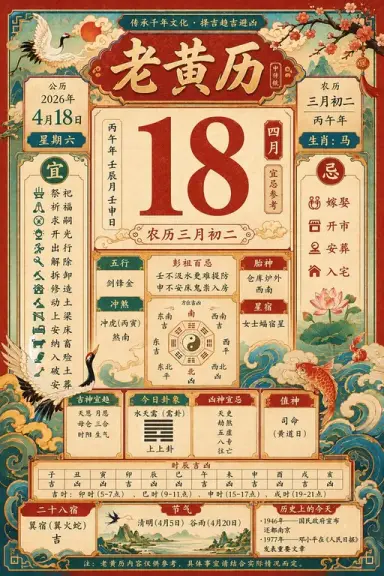
Open the Huangli — the traditional Chinese almanac that still hangs in many kitchens — and you’ll find two terms next to moving: yixi (移徙), which means moving your belongings and leaving the old home, and ruzhai (入宅), which means formally settling into the new home. Some families treat them as two separate dates; others do both on the same day. It depends on which interpretation the elders in the family follow.
When picking a date, the usual method is straightforward: first check whether the day is marked as suitable for yixi or ruzhai, then check the “avoid” list for clashes like “ground-breaking” or “earth-moving.” A practical approach is to circle 3 to 5 suitable days in the month, then narrow it down by the family’s free time and the moving company’s availability. The best date in the almanac is useless if nobody can take the day off work or the truck can’t get into the compound.
There are also days the older generation tends to avoid. Around the 1st and 15th of each lunar month, some families consider those days better suited to ancestor worship than to moving. Around Qingming (Tomb-Sweeping Day) and the Ghost Festival, many places likewise advise against big moves. There is no single national standard — two streets in the same town may follow different rules. Follow your own family’s customs.
Choosing the Hour: Move in the Morning, Settle in the Afternoon
Once the date is set, the hour is the second layer of tradition. The old saying is to move while the yang energy — the bright, active force in traditional Chinese thought — is strongest, which means the morning. Experienced movers often aim to set off between 7 and 11 a.m., get the big furniture into the new home before 11, finish the main work by noon, and leave the afternoon for unpacking and cleaning.
This schedule has practical sense behind it, too. Morning light is better, so movers can see stairwell corners clearly and valuables are less likely to get knocked. The freight elevator is easier to book in the morning, before the afternoon rush. And if the move is more than 20 kilometers, leaving in the morning helps you dodge the evening traffic and save an hour or two on the road.
One concept that comes up often is chongsha — the daily “clash” noted in the almanac, such as “clashes with people born in the Year of the Tiger.” If a family member was born in that zodiac year, they might skip carrying heavy items that day and let someone else do it. This is a folk custom, meant for peace of mind — not a rule that should decide whether you move at all.
Moving-Day Order: What Goes In First Matters
On moving day, the older generation often insists on a particular order: bring in the things that symbolize the household’s livelihood first, then everything else. Common practice is to carry in the rice jar or rice bag first, then the bed and the stove, then the rest. Rice stands for food and livelihood in Chinese culture; a full rice jar crossing the threshold first symbolizes a new home that will never run short.
After entering, there are a few small rituals that have been passed down for generations. Some people carry in a bucket of clean water, symbolizing good fortune flowing in. Some boil a kettle of water in the kitchen first — called “lighting the fire” — to mark the new home’s first cooking. Others leave a lamp burning in the living room all night, called “warming the house.” Versions differ by region; some families do one or two of these, some do the full set. Do what feels right and what you can manage.
One detail that’s easy to overlook is the bed. Tradition says the bed should be set in place on moving day, and someone should sleep in the new home that first night — the “house-warming” custom. If that’s genuinely impossible, leaving a lamp on and a set of bedding in the new home overnight works as a substitute, with the formal move-in the next day. For young renters, this is worth remembering: once the bed is in place, the new place finally feels like somewhere you live.
Setting Up the New Home: Three Places Worth the Effort
Once you’re in, the decorating effort usually concentrates on three places: the entryway, the living room, and the bedroom. The entryway is the first thing you see when you come home — a potted plant or a framed piece of calligraphy with a hopeful meaning can change the mood of every arrival. The living room is where the family gathers, so fix the sofa and television positions first and add the small things gradually. The bedroom should be quiet and tidy; a long-standing habit in many families is to keep the bed away from the window and not facing a mirror.
Don’t try to buy everything at once. People who have moved three times will tell you the same thing: in the first week, sort out just four things — bed, table, lights, and curtains — so you can actually live there. In the second week, add storage boxes, hooks, and doormats. After a month, you’ll know exactly which corners work and which don’t, and you can adjust then.
One more practical reminder: within the first week, check five things one by one — water, electricity, gas, internet, and door locks. Does the gas stove light properly? Is the water heater temperature steady? Does the lock turn smoothly? These small things shape daily comfort far more than any decorative object.
Five Common Mistakes to Avoid
- Checking the date but not the weather: You pick an auspicious day, then it rains — boxes get soaked and floors turn slippery. Check the forecast before fixing the date, and reschedule if rain is coming.
- Entering the new home empty-handed: Tradition says the first time you walk in, you should carry something — a bag of rice, a fruit basket, a red envelope — for the good omen of arriving “fully loaded.”
- Arguing on moving day: Many elders remind the family to keep the peace on the day. Something gets dropped or scratched — let it go. Don’t let a bad mood spoil a good day.
- Mixing valuables in with the boxes: IDs, jewelry, bank books, and hard drives should go in a bag you carry yourself, never into the moving company’s truck.
- Bringing everything from the old home: Broken furniture and clothes you never wear — declutter before you pack. An 80-square-meter flat cannot hold two households’ worth of belongings.

A Date Is a Ritual, and a Ritual Is a Wish
Choosing a moving date is, in the end, a way of taking the act of starting a new life seriously. Picking a suitable day in the almanac, choosing a morning hour, carrying the rice jar in first and setting the bed before nightfall — behind all of it is a simple wish for a steady, settled life.
If you’re preparing to move soon, here’s a three-step plan. First, open the almanac and circle 3 to 5 suitable days in the month, then fix one by checking the weather forecast and the moving company’s schedule. Second, pack a week ahead, and keep valuables in a bag you carry yourself. Third, set off in the morning, get the big items settled by noon, and sleep in the new home that night. Get the date right, get the flow right, and the new life starts on a calm footing.
Quick Answers
What is the difference between yixi and ruzhai? Yixi means moving your belongings out of the old home; ruzhai means formally settling into the new one. They can fall on the same day or two different days, depending on family custom.
What time of day is best for moving? Morning, ideally between 7 and 11 a.m. — the light is better, the freight elevator is easier to book, and you avoid evening traffic.
What should be carried into the new home first? Traditionally the rice jar or rice bag, symbolizing food and livelihood, followed by the bed and the stove.
What if someone’s zodiac sign clashes with the chosen day? The almanac’s daily clash note is a folk custom. The person concerned can simply avoid carrying heavy items that day — it is not a reason to cancel the move.
Should I sleep in the new home on the first night? Yes, if you can — tradition calls it “warming the house.” If not, leave a lamp on and bedding in place, and move in properly the next day.
These customs are cultural traditions, not predictions about the future. Treat them as a way to mark a fresh start — the real work of settling in is the packing, the planning, and the first quiet evening in your new home.