In old Shanghai, in the 1930s, there was a restaurant owner who had started out as a cook. When guests came for dinner, he could talk about every dish on the table — why this fish needed Shaoxing wine to cut the smell, why that soup had to simmer on low heat for three full hours. Guests listened, spellbound, and business kept growing. An old fortune-teller who read his birth chart would have said, “This man has a strong Shishen. He was born knowing how to make good things — and how to talk about them — so that people feel at ease.” Shishen, one of the Ten Gods in BaZi, is the one most gifted at enjoying life and sharing that enjoyment with others.
BaZi, literally “Eight Characters,” is a traditional Chinese system that reads a person’s birth date and time — year, month, day, and hour, each expressed as two characters — to map out personality tendencies and life patterns. It is a cultural framework, not a verdict. Shishen, often translated as “Eating God,” is one of its Ten Gods, the ten relationships the system uses to describe how the elements of a chart interact. This guide explains what Shishen means, what kind of person the tradition associates with it, and how it shows up in talent, relationships, and family life.
What Is Shishen? The “Growing Star” of the Ten Gods
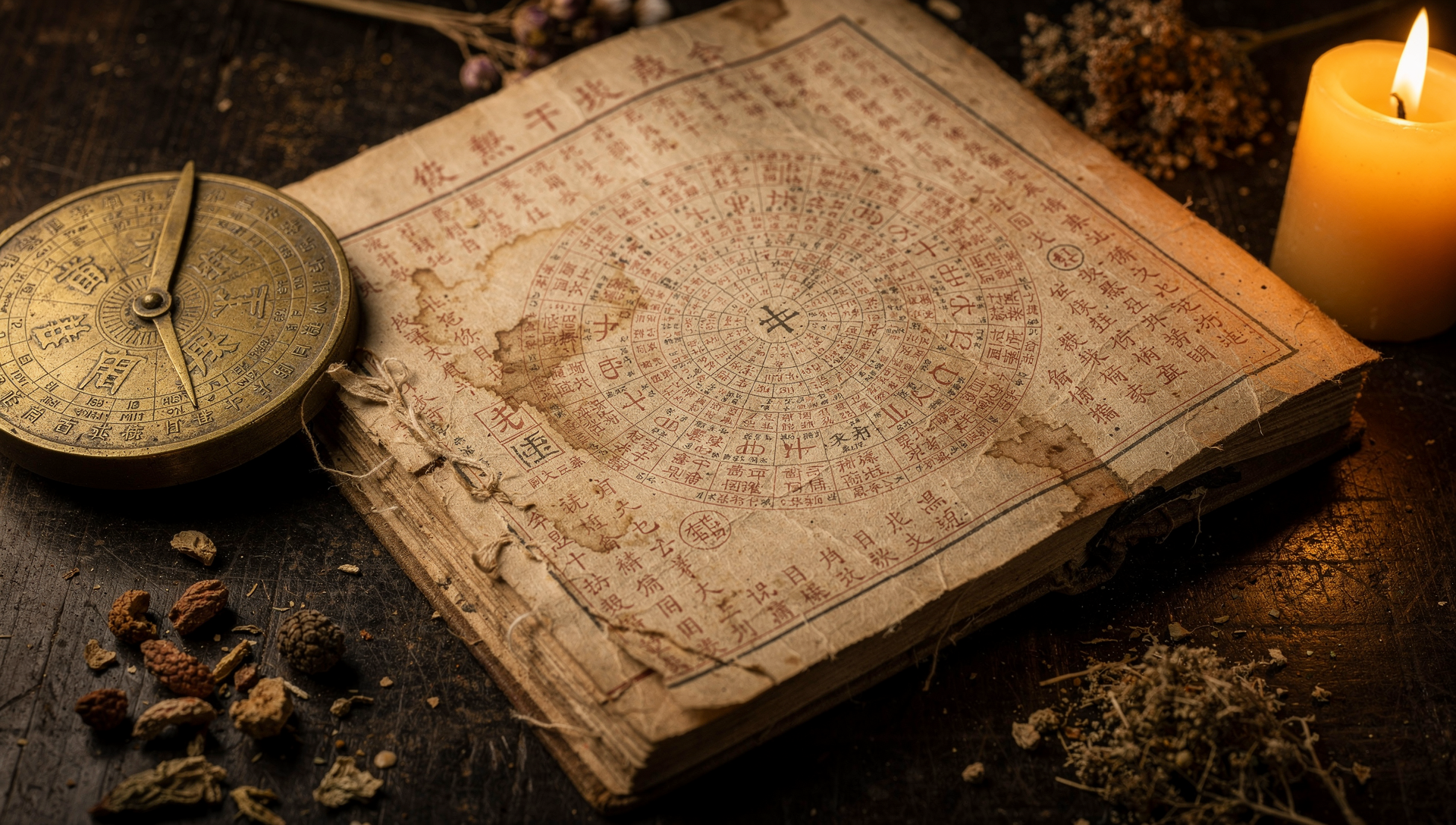
The Ten Gods are ten relationships worked out from the Day Master — the Heavenly Stem of the day a person was born, which the chart treats as the center of the self. The element the Day Master produces is called “Food and Hurt” (Shi-Shang). The one that shares the Day Master’s yin or yang polarity is Shishen. For example, if the Day Master is Jia Wood (yang Wood), Jia produces Bing Fire (yang Fire), so Bing Fire is Jia Wood’s Shishen. If the Day Master is Yi Wood (yin Wood), Yi produces Ding Fire (yin Fire), so Ding Fire is Yi Wood’s Shishen. Each of the ten Heavenly Stems has its own Shishen, and the derivation rules are laid out clearly in classical texts such as the Sanming Tonghui (Compendium of the Three Fates) — you can look them up in a table.
The name itself is telling. “Shi” means to eat, to enjoy; “shen” is the spirit, the energy that grows outward. Think of a tree bearing fruit: whether the fruit is edible, and how good it tastes, is Shishen’s business. Classical texts often call Shishen the “Star of Longevity,” because it stands for appetite, nourishment, and the flow of life force. Among the Ten Gods, Shishen and Zhengyin (Direct Seal) are often named the two “auspicious gods” — one governs creation and expression, the other protection and nourishment.
How does a traditional reader judge whether someone’s Shishen is strong or weak? Three things: how many times it appears in the chart, whether it sits in a strong position (its own prosperous seat), and whether it is being restrained. This is an empirical summary from within the cultural tradition — interesting to read about, but not a basis for judging yourself or anyone else.
People with Strong Shishen: Gentle, Sensual, and Generous
The traditional portrait of a strong-Shishen person is vivid: mild-mannered, generous with others, good at enjoying life, and happy to share the good things. The Ming-dynasty text Yuanhai Ziping (The Deep Sea of Ziping) describes Shishen’s nature as “warm and good” — people of this type rarely come at you aggressively; when a disagreement arises, their first instinct is to step back. In a modern setting, they are the one at the dinner table who serves food to everyone else, the one whose social feed shows a hand-poured coffee or a pot of soup they made themselves, living a life with flavor in it.
People with strong Shishen usually have a natural sensitivity to things that taste good, look good, and feel good. Consider a noodle-shop owner who has been at it for twenty years, getting up at four every morning to simmer his broth, adding a few slices of ginger and a few Sichuan peppercorns purely by the memory of his tongue. When customers ask why he never expands the shop, he says, “The broth reaches this point, the crowd is this size — it’s just right.” That sense of “just right” is the quality Shishen culture prizes most: no greed, no overreaching, knowing how to make a good life within limits.
Shishen and Talent: Turning “Knowing How” into “Being Seen”
Shishen has a special place among the Ten Gods: it is something the Day Master “gives birth to,” so it stands for the urge to express and create. A painter painting, a chef cooking, a writer writing, a host speaking — any act of turning something inside into a work and handing it to others falls under Shishen in this tradition. The Qing-dynasty master Ren Tieqiao wrote in his commentary on the Di Tian Sui that Shishen is the symbol of “talent made visible” — whether talent gets seen often depends on how well Shishen is doing its job.
What directions suit a strong-Shishen person, according to tradition? Food, art, education, performance, design, and craftsmanship — any trade that lives on skill and taste. The potter who works in silence, thinking only of the clay’s moisture and the glaze’s temperature, is the classic Shishen style of talent: slow, careful, and content to let the work speak.
It is worth comparing Shishen with its sibling, Shang Guan (Hurting Officer). Both are produced by the Day Master and both govern expression, but their temperaments could not be more different. Shang Guan is a sharp knife: direct, cutting, willing to say what others won’t. Shishen is a pot of soup on a slow flame: gentle, rounded, easy to take in. Two writers make the point clearly — the Shang Guan type writes criticism that cuts to the bone; the Shishen type writes essays that unfold slowly and warmly. Neither style ranks above the other. In this cultural system, the point is that each finds its own place.
Shishen in Relationships and Family Life
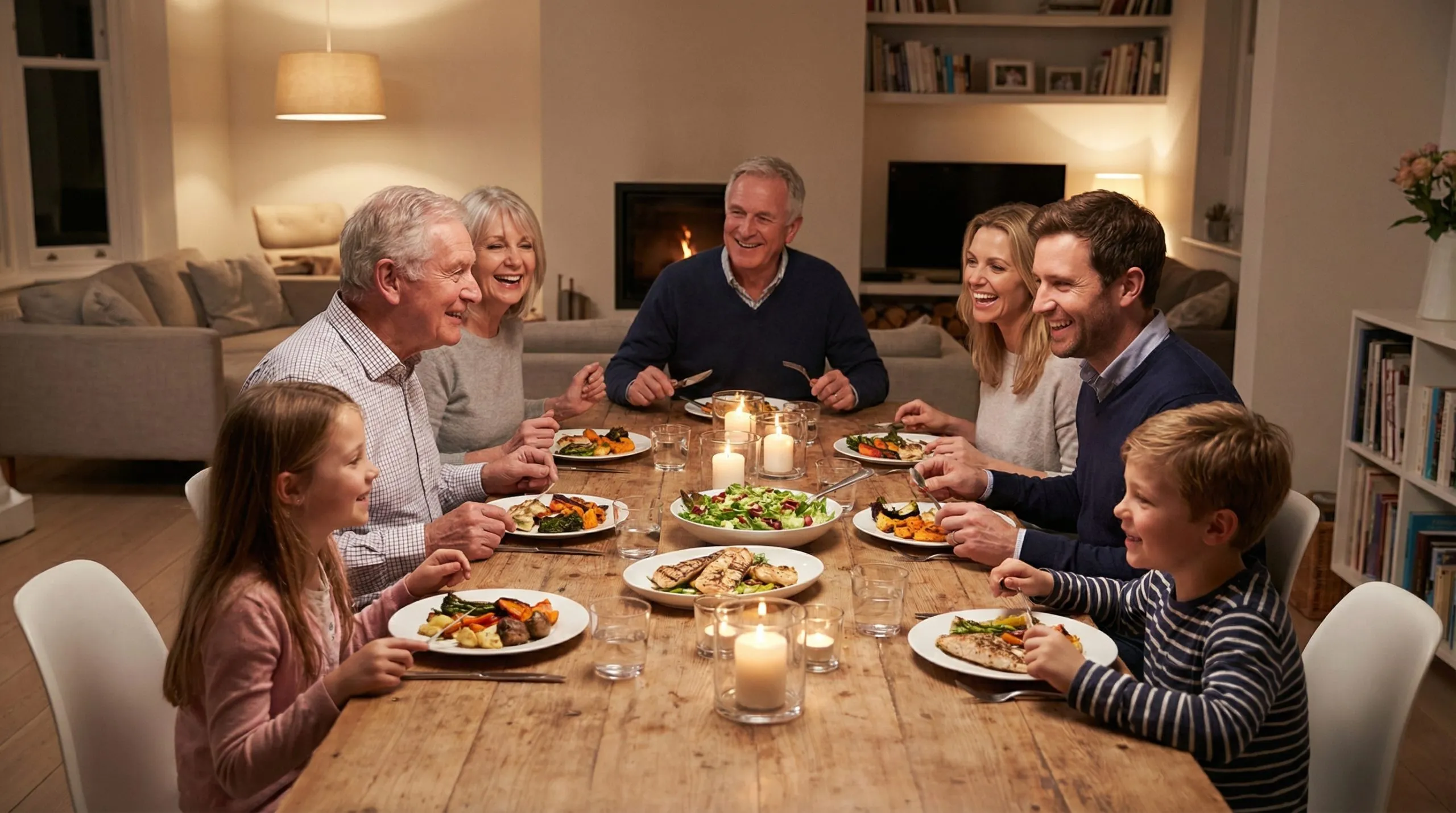
In social life, a strong-Shishen person is often the “lubricant.” When guests arrive, they are the one pouring tea and arranging seats; when colleagues fall out, a cup of hot tea from them softens the atmosphere by half. The old texts say Shishen governs “popularity,” because being around such a person feels comfortable — there is no pressure. At a dinner party, the most welcome guest is often not the best talker but the one most attentive to how everyone else feels.
Inside the family, Shishen’s image becomes concrete: it stands for “feeding” and “caring for.” In traditional readings, a woman with strong Shishen was often described as “good for her children,” meaning skilled at raising them and keeping the household running smoothly. In modern language, that is the mother who makes a different breakfast for her child every morning and takes the whole family out for a picnic on the weekend. The family role of Shishen comes down to one word: nourish.
The pairing of Shishen with Zhengyin is especially interesting in family life. Zhengyin represents shelter and care; Shishen represents giving and sharing. When the two auspicious gods sit together, the household is often harmonious. But if Shishen is restrained by Pian Yin, the tradition calls it “Xiao Shen Duo Shi” — the Owl God snatching the food. Translated into everyday language, it means wanting to give but constantly being met with cold water: a table full of dishes nobody praises, enthusiasm dampened again and again, until the person stops bothering to host at all. The saying is a reminder that recognition and response inside a family are themselves a form of nourishment.
Shishen in Combination: One Star Is Never Enough
BaZi is all about combinations, and Shishen is no exception. Shishen paired with Zhengyin is a combination the tradition rates highly: Zhengyin backs Shishen up, and Shishen turns talent into finished work — a person with both grounding and output. Many literati and artists of the past are cited as examples of this pairing: they could read deeply, write well, and still enjoy the refined pleasures of life.
Shishen paired with Zhengcai (Direct Wealth) is another frequently mentioned combination: Shishen generates wealth, meaning talent turns into real income. The illustrator running her own studio, the pastry chef who lives by her craft, the food writer with a newspaper column — all are modern portraits of this pattern.
What does Shishen fear? It fears being restrained by Pian Yin, and it fears being too strong with nothing to check it. Shishen with no restraint, the tradition says, becomes “indulgence in pleasure” — days spent only on eating, drinking, and play while real work falls apart. Shishen restrained by Pian Yin becomes “talent with nowhere to go.” So a reader of Shishen never asks whether stronger is better; the question is balance — “with generation and with restraint.” It is the same cultural logic as yin-yang balance in Chinese medicine, or the balance of sparse and dense in calligraphy.
Reading Shishen Is Reading a Way of Life
Lift Shishen out of the old texts and it turns out to be a simple philosophy of living: enjoy life, and share the enjoyment; have talent, and be willing to polish it slowly; be gentle with people and measured in what you do.
If BaZi culture interests you, try a small exercise starting with Shishen: look up your birth year, month, and day, find out which Heavenly Stem is your Day Master’s Shishen, and compare it with the descriptions above — which traits feel familiar, which feel unfamiliar? Treat this as a doorway into a traditional culture, not as a label to stick on yourself. BaZi is a cultural text left by earlier generations; the best way to read it is with curiosity, not with anxiety about matching yourself to it.
Next time you share a meal with friends, watch for the person at the table who orders best and looks after everyone’s tastes. They may know nothing about BaZi, but the easy, comfortable energy they bring is exactly what Shishen culture most wants to preserve: live your days well, and share a little of that goodness with the people around you.
Quick Answers
What is Shishen in BaZi? Shishen (Eating God) is one of the Ten Gods in BaZi, the traditional Chinese birth-chart system. It is the element produced by the Day Master — the Heavenly Stem of your birth day — that shares the Day Master’s yin or yang polarity. It represents expression, creativity, enjoyment, and sharing.
What kind of person has strong Shishen? In the traditional portrait, someone gentle, generous, and attuned to taste and pleasure — good with food, art, and hospitality, and happiest when creating something others can enjoy. This is a cultural description, not a personality diagnosis.
How is Shishen different from Shang Guan? Both are produced by the Day Master and both govern expression, but Shang Guan is direct and sharp, while Shishen is gentle and rounded. One cuts; the other soothes. The tradition treats both styles as equally valid.
Does Shishen mean I will be rich or famous? No. Shishen paired with Zhengcai is traditionally read as talent converting smoothly into income, but that is a symbolic pattern in a cultural text — it promises nothing about any individual. Read it as a lens on how the tradition thinks about talent, not as a prediction.
How can I find my own Shishen? Find the Heavenly Stem of your birth day (your Day Master), then look up which stem it produces with the same yin-yang polarity — that stem is your Shishen. Treat the result as the start of cultural exploration, not a label.