It is 6:30 in the morning and the alarm has gone off three times. Aunt Zhang is still curled under the covers, unwilling to move. Her hands and feet are cold; she has to rub them together for a while after getting up, and only a sip of warm water makes her feel alive again. At the office, her colleagues wear a single sweater while she needs two plus a vest. The air conditioning is set to 26 degrees and everyone else complains it is too hot, but her back still feels chilled. If any of this sounds familiar, the problem may not be that you are underdressed. In traditional Chinese medicine, your constitution may lean toward yang deficiency.
Yang deficiency is one of the nine body constitutions described in traditional Chinese medicine (TCM), a system that classifies people by their typical patterns of warmth, energy, digestion, and resilience. “Yang” here means the body’s warming, activating energy — think of it as the furnace that keeps you warm, powers digestion, and drives you through the day. When that furnace burns low, cold creeps in first. This guide explains how to recognize the pattern, what drains yang in everyday life, and how to support it through food, movement, and seasonal habits — especially in autumn and winter, when yang-deficient people feel it most.
What Yang Deficiency Looks Like: Signs Worth Checking
The most obvious sign is feeling cold — not just in winter, but all year round. Your hands and feet stay cold even in summer. While others enjoy the air conditioning, you avoid sitting under the vent. A few bites of cold food or an iced drink can upset your stomach and send you to the bathroom. Mornings are hard: you wake up groggy, feel drowsy through the afternoon, speak in a quieter voice than most people, and tire quickly from ordinary work.
There are smaller clues too. The tongue looks pale and slightly swollen, sometimes with teeth marks along the edges. You urinate more often than others, including once or twice during the night. Stools tend to be loose or unformed. Women may notice lighter periods and a chill during menstruation. If three or four of these signs apply to you, it is worth taking the pattern seriously and starting to care for it.
One important caveat: these signs are only a reference point. Yang deficiency shares symptoms with hypothyroidism, anemia, and chronic fatigue, among other conditions. If your hands and feet are persistently cold, your weight has changed noticeably, or fatigue is interfering with work, see a doctor first and rule out any underlying medical condition before focusing on constitution-based care.
How Yang Gets Drained: Five Common Causes
Some of it is constitutional. Certain people have been more sensitive to cold since childhood — cold hands and feet every winter, often with a parent who has the same tendency. This is a naturally weaker yang from birth, and it simply means care needs to be more patient and consistent. There is nothing wrong with you; your furnace just starts smaller.
The most common acquired cause is overexposure to cold. Sleeping all summer with the air conditioning at 22 degrees under a thin blanket, drinking iced water and iced milk tea every day, wearing short skirts with bare ankles in winter — none of this causes trouble in a year or two, but over five or ten years it slowly wears down the spleen and stomach (in TCM, the spleen governs digestion and the transformation of food into energy) and the kidney yang, the body’s deep reserve of warmth.
Staying up late is another major drain. Between 11 p.m. and 1 a.m., yang is meant to be stored and restored overnight. People who regularly sleep after 1 a.m. wake up feeling as though their battery never charged. After months of this, the whole body starts to feel cold and depleted from the inside.
Overwork and long illness also injure yang. After a serious illness or two months of nonstop overtime, many people suddenly find themselves feeling cold all the time. That is the body signaling that its yang reserves have been overdrawn.
Finally, there is diet. Living on raw vegetable salads, eating large amounts of fruit as meals, or crash dieting leaves the spleen and stomach unable to transform food into warmth. The body produces less and less yang, and the more cold food you eat, the colder you feel. It is a cycle that feeds on itself.
Eating Warm: Building Warmth Into Everyday Meals
The first step in caring for yang deficiency starts at the table. The principle is simple: eat warm, easy-to-digest food and cut back on raw and cold things. No dramatic tonics are needed — eating right day to day is enough.
For staple foods, millet, glutinous rice, yam, and pumpkin are all good choices. A bowl of millet porridge with a few red dates is one of the best breakfasts for a yang-deficient person: warming to the stomach and easy to digest. Steamed yam, or yam in soup three or four times a week, genuinely supports the spleen and digestion.
Among meats, lamb, beef, and chicken are all warming. In winter, a bowl of lamb soup once or twice a week, with white radish to cut the richness and a small handful of goji berries, is a classic combination. When stewing chicken soup, add two or three slices of fresh ginger. If you tend to feel overheated easily, halve the portion and eat it with plenty of vegetables.
Ginger is a yang-deficient person’s best friend in the kitchen. A small cup of ginger and red date tea in the morning — three slices of ginger, five red dates, a small spoon of brown sugar, simmered for ten minutes — warms the hands and feet quickly once you drink it. Sichuan pepper, cinnamon, and black pepper can also be used in moderation in stews.

What to cut back on is equally clear: iced drinks, ice cream, cold bitter melon salad, and large amounts of raw, cold fruit. Fruit is not forbidden — apples and oranges eaten at room temperature are fine. Just let fruit from the fridge sit out for half an hour first. Cooling drinks like mung bean soup and chrysanthemum tea are best set aside for the autumn and winter months.
Here is a simple test: after a meal, your body should feel warm and energized. If you feel colder, sleepier, or bloated after eating, that meal was wrong for you. Adjust the next one.
Movement and Daily Habits: Getting Yang Moving — and Keeping It
For yang-deficient people, exercise should be gentle and steady, never a sweat-drenched effort. Brisk walking is the best choice: 30 minutes a day, at a pace where you break a light sweat and can still hold a conversation. Tai chi and Baduanjin (the “Eight Brocades,” a classic qigong routine) are also excellent. Two Baduanjin movements in particular — “Holding Up the Sky to Regulate the Triple Burner” and “Single Lift to Regulate the Spleen and Stomach” — take about 15 minutes for a full round, once a day.
The best time to exercise is between 9 and 11 in the morning, when yang is rising most strongly during the day. Avoid vigorous exercise after 9 p.m.: finishing a run covered in sweat and then catching a cold draft drains yang instead of building it.
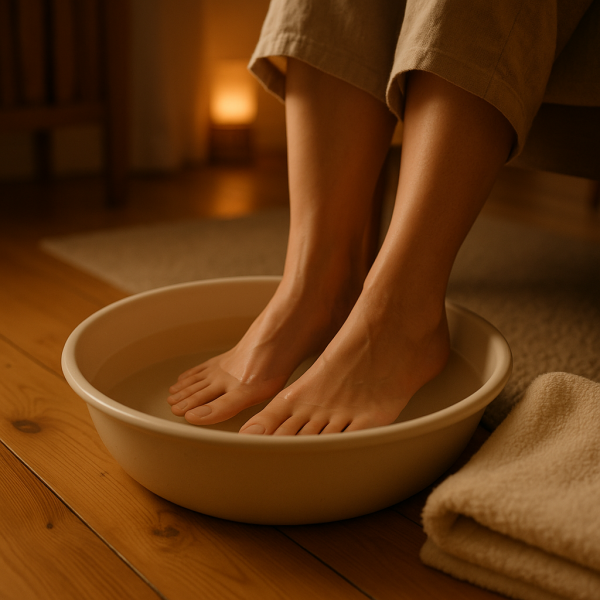
Daily habits matter just as much, especially keeping warm in the right places: the lower back, the abdomen, and the soles of the feet. In autumn and winter, wear high-waisted thermal underwear. Before bed, soak your feet in water at around 40 degrees for 15 minutes, with the water covering your ankles, until your forehead breaks a light sweat. Dry off immediately and put on socks. After a month of this, many people notice their nighttime bathroom trips drop noticeably.

Sleep seven to eight hours and aim to be in bed before 11 p.m. A nap of about 20 minutes is enough — longer naps leave you groggier in the afternoon. Keep your blankets warm enough, the bedroom at 18 to 22 degrees, and never let the air conditioning blow directly onto the bed while you sleep.
Autumn and Winter Care: The Three Months That Matter Most
Autumn and winter are the hardest season for yang-deficient people — and the best season to care for the pattern. As temperatures fall, yang is stored away, and the body’s depletion shows more clearly: greater sensitivity to cold, colder hands and feet, aching joints. But the other side of the same coin is that warming care works best in these months. The old saying “winter storing” (dong cang) captures exactly this idea: what you build up now carries you through the year.
First, add layers early. Do not wait until you are freezing. Once the Autumn Equinox passes, swap the thin jacket for something warmer, and protect three areas in particular: the neck, the waist, and the ankles. A scarf, a waist warmer, and thick socks are three things not worth skipping in autumn and winter.
Second, let your diet follow the season. Around the Start of Winter, stew lamb or beef soup once a week, rotating yam, carrot, and white radish. Keep breakfast a hot porridge, and finish dinner early — before 7 p.m. — so the spleen and stomach have time to digest before bed.
Third, get some sun. Autumn and winter sunlight is weak, but the sun around 10 in the morning is ideal for yang-deficient people. Fifteen to twenty minutes of sun on your back each day works even through clothing, and it is the cheapest way to “supplement yang” there is. On rainy days when there is no sun, do some indoor stretching and soak your feet instead.
One thing people often overlook: emotions need “storing” in autumn and winter too. When the weather turns cold and gray, it is easy to feel low and irritable. A little outdoor activity and sunlight every day beats staying indoors scrolling on your phone.
Quick Answers
How do I know if I am yang deficient? The clearest signs are feeling cold all year round, cold hands and feet, morning grogginess, a pale and slightly swollen tongue, frequent urination, and loose stools. Three or four of these together point toward the pattern — but only a doctor can rule out conditions with similar symptoms, such as hypothyroidism or anemia.
What foods help most? Warm, cooked, easy-to-digest foods: millet porridge with red dates, yam, pumpkin, lamb and chicken soups, and ginger tea. Cut back on iced drinks, ice cream, and large amounts of raw, cold food, especially in autumn and winter.
What is the best exercise? Brisk walking for 30 minutes a day, or a gentle routine like tai chi or Baduanjin. Keep it moderate — a light sweat is enough. The best time is between 9 and 11 in the morning.
Does foot soaking really help? Many people find it does: 15 minutes in water at around 40 degrees before bed, water covering the ankles, until the forehead sweats lightly. After a month, nighttime urination often decreases and sleep improves. It is simple, safe, and easy to keep up.
How long until I feel a difference? Yang deficiency care is slow work. With a warm breakfast, a daily walk or qigong practice, and an early bedtime with a foot soak, most people notice less coldness and more energy within two to three months. There is no shortcut — but there is also no need for perfection.
The Three Small Things
Caring for yang deficiency comes down to small daily habits: a bowl of hot porridge and a cup of ginger and red date tea for breakfast; a 30-minute brisk walk in the morning or one round of Baduanjin; bed before 11 p.m. with a 15-minute foot soak. Keep those up for two or three months, and the cold hands, cold feet, and low energy will gradually ease.
You can start today: soak your feet tonight, switch tomorrow’s breakfast to millet and red date porridge, and find one morning this week to sit in the sun for twenty minutes. Fix one small habit first, then add the second.
Disclaimer: This article is for general information and cultural education only. It is not a substitute for medical diagnosis or treatment, and it makes no promise of any therapeutic effect. If your symptoms are pronounced, getting worse, or accompanied by significant weight change, heart palpitations, or persistent diarrhea, please see a doctor promptly. Any dietary or exercise suggestions here should be adapted to your own condition, and you should consult a qualified medical professional when in doubt.