It is 6:30 in the morning. In the park, a woman in her seventies slowly raises both hands above her head, palms facing up, as if she were holding a ball of invisible air. She pauses for three seconds, then lets them float down again. What she is practicing is the first movement of Baduanjin – “Hold Up the Heavens to Regulate the Triple Burner.” It looks almost too simple to matter. That is exactly why so many people do it wrong.
Baduanjin, the “Eight Brocades,” is a set of eight gentle qigong movements that has been practiced in China for more than 800 years. This first movement is the opening of the whole set: it wakes up the spine, opens the chest, and sets the breathing rhythm for everything that follows. Done well, it takes three to five minutes and leaves you feeling taller, looser, and more awake than when you started. This guide breaks it down step by step – what the “Triple Burner” actually means, how to do the movement, how to breathe with it, and the five mistakes almost every beginner makes.
First, What Is the “Triple Burner”? It Is Not an Organ
Most people hear “Triple Burner” for the first time and ask the same question: is there an organ in the body with that name? The answer is no. In traditional Chinese medicine, the Triple Burner – Sanjiao in Chinese – is a way of dividing the torso into three sections, rather than a single physical organ. The Upper Burner covers the chest and above, where the heart and lungs live and where breathing and the circulation of qi and blood are governed. The Middle Burner covers the area around the navel, where the spleen and stomach sit and where food is digested and absorbed. The Lower Burner covers everything below the navel, where the liver, kidneys, and bladder manage water metabolism and elimination.
To “regulate the Triple Burner,” then, means to use one upward lifting motion to gently stretch and smooth all three sections at once. Anyone who sits at a desk all day knows the feeling: after a morning of sitting, the chest feels tight, the stomach feels bloated, and the lower back feels stiff. Those three discomforts line up neatly with the Upper, Middle, and Lower Burners. The two-hands-lifting movement works through all three in a single gesture, getting qi – the body’s vital energy, in the traditional Chinese view – moving again. Once you understand this, you stop practicing with just your arms. You know what you are stretching and what you are letting go of.
The Movement in Three Parts: Ready, Lift, Lower
Start with the ready stance. Stand with your feet parallel, shoulder-width apart, toes turned very slightly outward, knees soft and never locked. Let your arms hang naturally at your sides, palms facing inward toward your thighs. Drop your shoulders, tuck your chin slightly, and look straight ahead. Before you move, take two or three natural breaths and bring your attention back from whatever was on your mind into your body. The ready stance looks trivial, but it is the foundation of the whole movement: if your feet are unsteady, you will wobble the moment you lift.
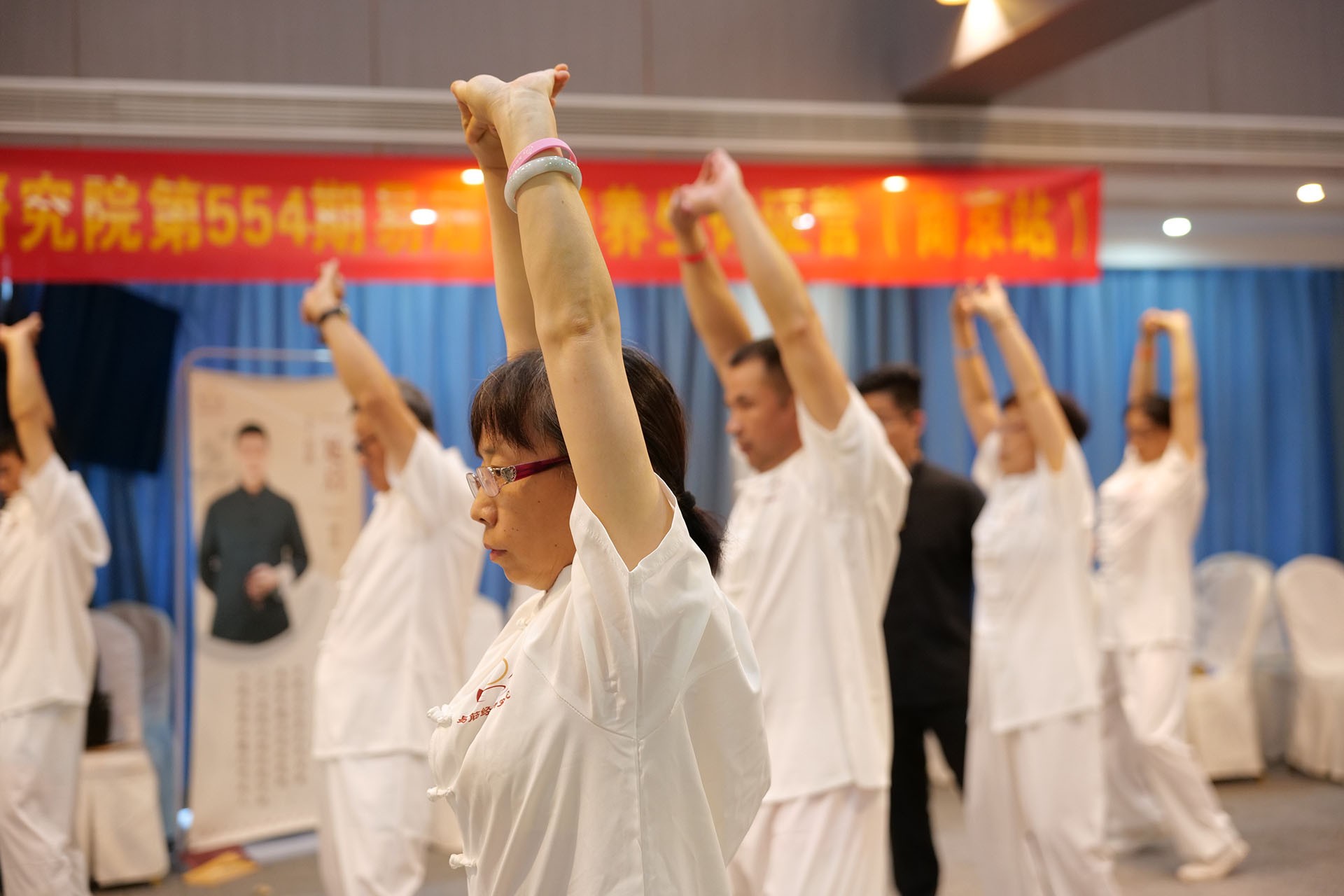
The lift is the heart of the movement. As you breathe in, slowly raise both hands from your sides, palms facing up, as if you were carrying a tray of water. When your hands reach chest height, turn the palms fully upward and keep pressing toward the sky, fingers pointing toward each other. As your arms approach full extension, you may gently rise onto your heels, lengthening your whole body upward, as if a thread were pulling the crown of your head toward the ceiling. When your palms reach their highest point, hold for two to three seconds and feel your chest open and your waist and abdomen lengthen. That pause matters. Many people reach the top and drop straight down, throwing away the most valuable two seconds of the whole movement.
The lowering is just as important, and it should be slower than the lift. As you breathe out, let both hands float down along the sides of your body, palms facing down, as if you were pressing a ball of cotton toward the floor. When your hands reach your thighs, let your heels settle gently back onto the ground and return to the ready stance. The whole lowering takes about four to five seconds – slower than the rise. Repeat six to eight times for one set; one or two sets is enough. Throughout the movement, keep your shoulders dropped – never let them creep up toward your ears – and keep a slight bend in your elbows. Your arms should never be locked straight like sticks.
How to Breathe: Inhale as You Lift, Exhale as You Lower
Breathing is the soul of this movement, and the rule is only six words long: inhale to lift, exhale to lower. As your hands rise, breathe in slowly through your nose and feel your chest open. As your hands fall, breathe out gently through your nose or mouth and feel your shoulders, waist, and abdomen relax. The inhale lasts about three seconds; the exhale lasts four to five. The exhale is a little longer than the inhale, and that extra length is what helps the body let go.
The most common beginner mistake is holding your breath. You press your hands up to the top, lock your breath, your face turns red, and your arms freeze in place. If you catch yourself holding your breath, slow the whole movement down by half and reduce the range by a third. Higher is not better: the correct height is whatever you can reach without shrugging your shoulders or arching your lower back. After two or three weeks of practice, try stretching the inhale to four seconds and the exhale to six, letting the movement follow the breath instead of the breath chasing the movement. Once the breathing is smooth, the movement becomes smooth on its own.
Five Common Mistakes – and How to Fix Them
Mistake 1: Shrugging your shoulders. The moment your hands go up, your shoulders climb toward your ears and your neck disappears. You finish feeling worse in your neck than when you started. The fix: drop your shoulders before you begin the lift, as if two small sandbags were hanging from them, and check throughout the lift whether they have started creeping up again.
Mistake 2: Arching your lower back. Once the hands reach overhead, some people bend backward at the waist to “reach higher,” and the lower spine takes all the strain. The fix: gently draw your abdomen in and tuck your hips, keeping your spine naturally upright. The lift comes from the arms and the upward lengthening of the spine, not from bending the waist backward.
Mistake 3: Rising onto the heels too aggressively. When the heels come up suddenly, your center of gravity shifts and you sway from side to side like someone standing on a boat. The fix: for the first two weeks, do not lift your heels at all. Practice with both feet firmly on the ground, and only add a gentle heel lift once the movement feels steady. When you do lift, keep it small enough that the balls of your feet still feel the ground.
Mistake 4: Dropping the hands too fast. The lift took five seconds; the drop takes one. That means you only practiced half the movement. The lowering is the part where the body relaxes and the breath returns, so it should be slower than the lift. Let your fingers, palms, and arms relax one after another on the way down.
Mistake 5: Moving only the arms. The arms move, but the chest and waist stay completely still, and all you feel afterward is tired arms. The fix: as you lift, imagine your chest opening forward and upward; as you lower, imagine your navel drawing gently toward your spine. Let the torso move with the hands.
How Much to Practice, and When
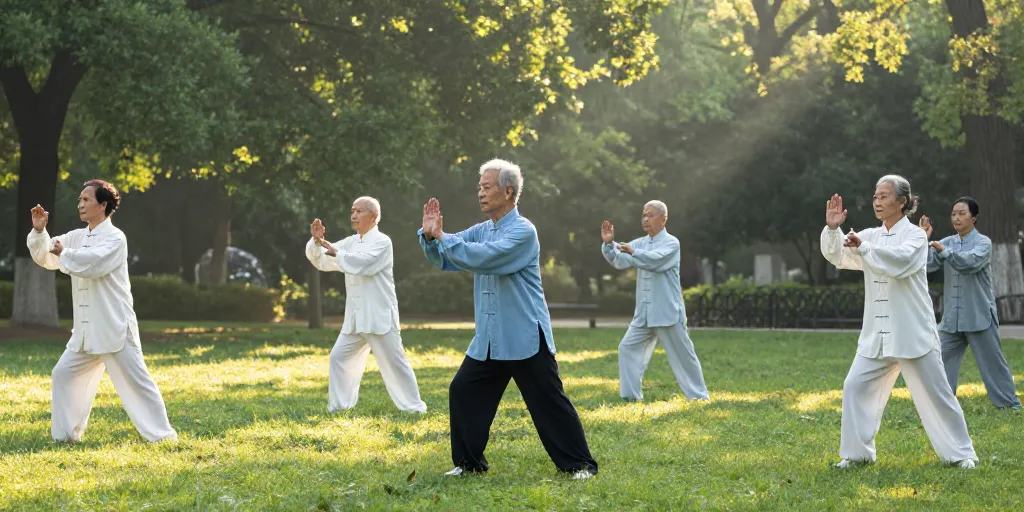
When you are just starting, one set of six to eight repetitions a day is enough – about three to five minutes. The best time is right after you wake up. After a night of rest, the joints and muscles are stiff, and this one movement opens the chest, abdomen, and waist all at once. It also works well after a lunch break: a single set at three or four in the afternoon, when drowsiness sets in, can ease that heavy feeling in the chest.
After two or three weeks, when the movement feels familiar and the breathing flows naturally, you can add a second set, resting for one minute in between. After a month, you can link “Hold Up the Heavens” with the other seven movements of Baduanjin. The full set takes about fifteen minutes. If you have knee problems or lower back discomfort, halve the heel lift and lower the height of the raise – the rule is to stop before any pain. Do not practice within half an hour after a meal, and avoid practicing on a completely empty stomach or right after eating a heavy one.
Quick Answers
How high should I lift my hands? As high as you can go without shrugging your shoulders or arching your lower back. For most people, that means arms nearly straight, palms flat to the sky, with a soft bend left in the elbows.
Should I lift my heels? Not at first. Practice with flat feet for the first two weeks. Add a small, gentle heel lift only when you can stay steady, and keep the balls of your feet in contact with the ground.
What if I keep holding my breath? Slow down and shrink the movement. Halve the speed, reduce the range by a third, and let the breath lead. Breath-holding is a sign you are pushing too hard, not a sign you need more effort.
Morning or afternoon? Morning is best, right after waking, when the body is stiffest. A single afternoon set also works well for desk workers who feel heavy-chested by mid-afternoon. Avoid the half hour after meals.
How long until I feel a difference? Many people notice their chest feels less tight in the morning and their lower back less stiff after sitting, within about two weeks of daily practice. The change is gradual – a little easier each day, not a sudden transformation.
Can I do just this one movement? Yes. It is the first movement of Baduanjin, and it stands on its own. After a month, try linking it with the other seven movements for the full fifteen-minute set.
The takeaway: one movement, practiced for whole-body ease. “Hold Up the Heavens to Regulate the Triple Burner” looks like the simplest movement in Baduanjin, and that is exactly why it is the easiest to get wrong. Remember three things: drop your shoulders before you lift, inhale as you rise and exhale as you lower, and make the lowering slower than the lift. Three to five minutes a day, six to eight repetitions, and after two weeks many people find that their chest feels less tight in the morning and their waist less stiff after a long sit. That is the most practical effect of “regulating the Triple Burner”: not a sudden change, but the body getting a little smoother every day.
Start tomorrow morning. Give yourself five minutes: stand steady, drop your shoulders, lift slowly, then lower slowly. Afterward, notice how your body feels. Are your shoulders looser? Is your breathing deeper? Is your waist still tight? Write those small changes down, and look back after two weeks – you will be able to see your progress clearly.
Safety note: Practice within your limits and progress gradually. The movement should always feel comfortable and pain-free. If you have high blood pressure, a neck or spinal condition, a herniated disc, or any other chronic condition, consult a doctor before practicing. If you feel dizzy, short of breath, or experience chest discomfort or a racing heartbeat during practice, stop immediately and rest. This article is an introduction to a traditional health practice for general information only. It makes no promise of any therapeutic effect and is not a substitute for medical advice.