A child comes home from school, puts the schoolbag away neatly, then opens the textbook and starts the homework. An adult faces a hard problem, reads three books and asks two people first, and only then gets to work. This habit of “absorb first, act second” is exactly how traditional Chinese culture describes Zhengyin, the Direct Resource, in BaZi.
BaZi, literally “Eight Characters,” is a classical Chinese system that reads a person’s birth year, month, day, and hour as four pairs of characters and interprets the relationships between them. Within that system, the Ten Gods are ten patterns describing how each element relates to the Day Master, the central character that stands for the person. Zhengyin, the Direct Resource, is one of them: the force that nourishes and supports the Day Master, the way a mother raises a child, a teacher passes on knowledge, or a seal certifies a document. In modern language, it is a person’s way of taking in knowledge, winning support, and building credibility.
What Zhengyin Means Among the Ten Gods
Picture two people learning the same new skill. One jumps straight in, tries things, and fixes mistakes as they go. The other reads the whole tutorial first, turns the notes into a single neat table, and then follows the steps one by one. That second rhythm is very close to the portrait of Zhengyin: it values accumulation, respects method, and lays the foundation before building on it.
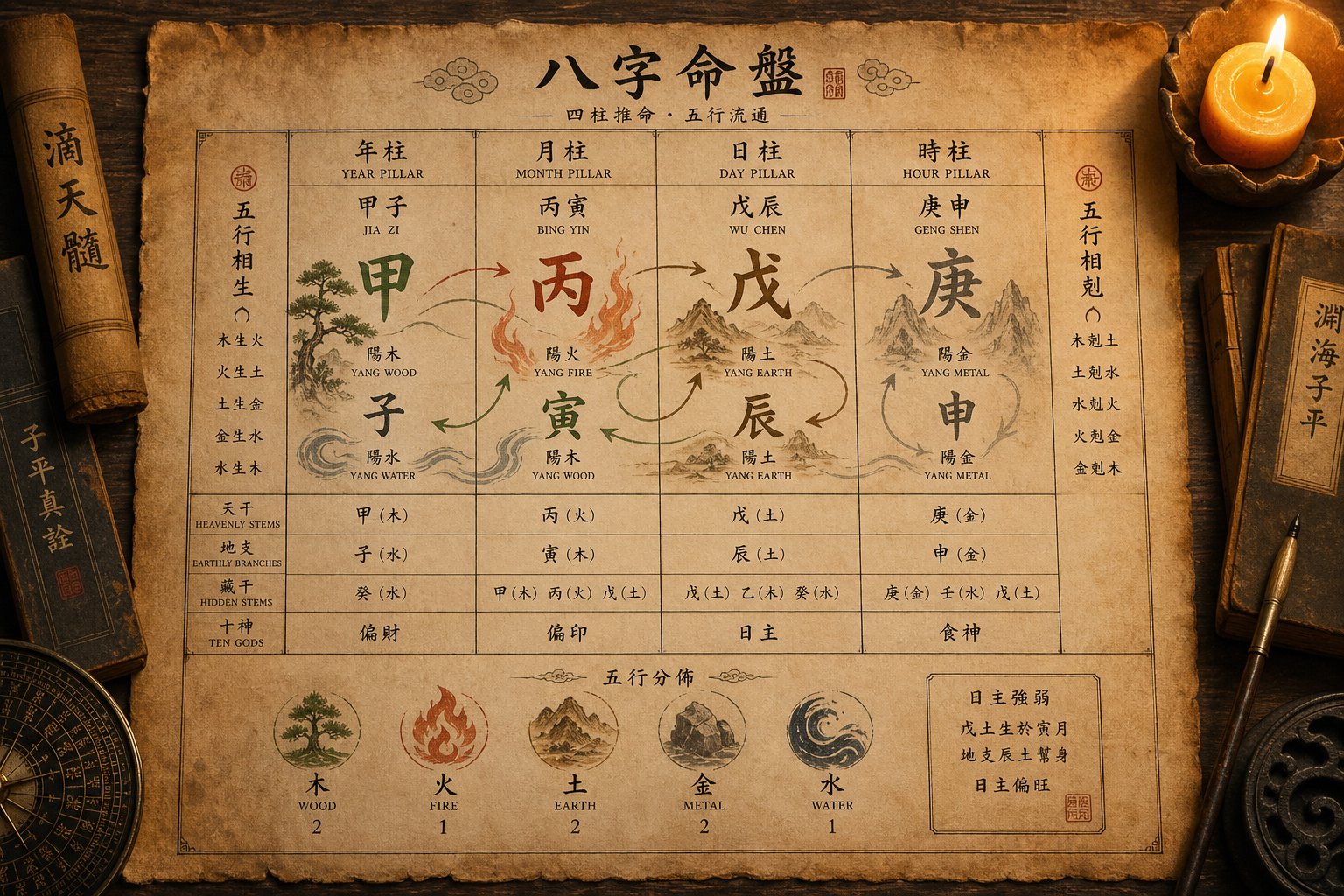
In traditional readings, Zhengyin is also linked to diplomas, certificates, professional titles, and the backing of senior mentors — in short, the credentials that show other people are willing to vouch for you. A school award, or a reputation built up over years in a trade, can both be seen as Zhengyin in everyday life. It does not equal success by itself. It is more like a pass that someone is willing to endorse.
A Personality Sketch: Steady, Careful, Patient
People with a strong Zhengyin quality often come across as calm and dependable. They do not rush to speak; they listen to the end before answering. They like making lists, and they write important dates in a calendar three days ahead. When a disagreement comes up, their first instinct is not to win the argument but to ask, “Where does that claim come from?”
This character shows up in concrete, everyday ways. When renovating a flat, some people choose by feeling; a Zhengyin-leaning person measures three times and compares five quotes first. When taking over a new project, some people call a meeting to discuss it; others read through three years of related files first and mark the three spots where mistakes are most likely. Steady is the label that fits them most often.
The other side of steady is slow. Too much thinking and too much preparation, and the opportunity can slip away. One reader who wanted to switch careers into data analysis signed up for two courses, bought four books, and bookmarked more than twenty tutorials — and six months later, the resume still showed the old job. Preparation itself is not the problem. The problem is when preparation becomes an excuse for delay. A saying in Zhengyin culture goes, “Too much Resource becomes a burden” — accumulation should serve action, not replace it.
Three Everyday Scenes: The Strengths and the Weak Spots
- Learning something new: the strength is remembering firmly and understanding deeply; the weak spot is a slow start, always wanting to be “fully ready” before beginning.
- Dealing with people: the strength is thoughtfulness and care; the weak spot is caring too much about what others think — one casual remark can be turned over all night.
- Under pressure: the strength is staying composed and following the steps even when things get urgent; the weak spot is bottling feelings up, calm on the surface while a dozen thoughts race underneath.
Study and Zhengyin: Why These Learners Suit “Slow Work, Fine Results”
In traditional BaZi culture, Zhengyin is most often mentioned in connection with study, exams, and scholarship. An old saying calls the Resource star “the school hall,” meaning that people with strong Zhengyin tend to have an affinity with books, classrooms, and teachers. That does not mean they are born top students. It means their way of learning fits the rules of school well: step by step, strong on basics, willing to spend time wrestling with hard material.
Take a class of 40 students with two weeks left before the final exam. Some sprint through practice questions. Others spend a fixed two hours a day, first copying out the table of contents, then writing out the three core ideas of each chapter in their own words, and only then doing the exercises. The second group may not score highest on ordinary tests, but in a big comprehensive exam they are often the steadier ones — because they carry a complete map of the subject in their heads.

The learning advantage of Zhengyin shows most clearly in fields that demand long-term accumulation. Languages, history, medicine, and law each hold thousands of facts; last-minute cramming rarely survives three or five years, while one steady hour a day carries you much further. In fast-changing fields that demand quick trial and error, it helps to pair this rhythm with a more action-oriented pace.
The practical advice for students is simple: set aside a fixed 45 minutes a day to read one chapter or organize one page of notes; once a week, explain what you learned that week to someone else — if you can explain it clearly, you truly understand it; before an exam, sort your mistakes into three types — unclear concepts, careless errors, and questions you had never seen — and fix each type separately. Keep it up for three months, and the difference is usually visible.
Zhengyin in Relationships: Trusted, and Easily Leaned On
People with strong Zhengyin often play the role of “the reliable one” among friends and colleagues. A friend moving house asks them to check the contract; a colleague facing an uncertain decision asks, “Do you think this will work?” That trust is built up over dozens of times of doing what they said they would do.
A good relationship with elders is a point that Zhengyin culture often mentions. Many people with this quality get along well with teachers, mentors, and older relatives: they are willing to listen to the experience of their seniors and know when to ask for advice. Respecting teachers is not a slogan here — it is daily action: homework handed in on time, mistakes followed up with questions.
Being trusted has its cost, though. Zhengyin-leaning people easily become “the one who picks up the slack”: they take on everyone else’s work and push their own tasks to the back of the queue. In a team of five, the finishing work of three people can end up on one person’s shoulders. Over time, that is exhausting. The cultural reading offers a reminder: the Resource nourishes, but it is also a load. Saying no to one or two unreasonable requests is not coldness — it is what keeps that reliability sustainable.
In close relationships, the Zhengyin way of expressing care is understated. They rarely say grand romantic words, but they remember something their partner mentioned in passing: the noodle shop you said you wanted to try last week, and this week they take you there. That kind of attentiveness is worth more than ten sweet phrases.
Too Much or Too Little Zhengyin: Both Extremes Deserve Attention
BaZi culture values balance, and Zhengyin is no exception.
When Zhengyin is too strong, the common pattern is thinking a lot and doing little, with a heavy reliance on others. Before making a decision, the person asks three people — and still cannot decide. There are five or six options on the table, and none gets chosen. Another pattern is insisting on the “correct” way: nothing starts until the perfect method is found, so in the end nothing gets done. The traditional remedy is called “using Wealth to break the Resource,” which in everyday language means: set a firm deadline for yourself, such as “the first draft must go out by this Friday,” and let action interrupt the over-preparation.
When Zhengyin is too weak, the pattern may be impatience and a shaky foundation: skipping ahead in study before the earlier part is understood, acting by feeling, and rarely reviewing or keeping records. The cultural advice is to “strengthen the Resource” — in practice, to build habits of accumulation: write a 200-word review each day, organize your files once a week, and finish one book related to your field each month. The amount does not need to be large. What matters is keeping it unbroken for 30 days, and the foundation naturally grows thicker.

One reminder matters here: all of this is a cultural portrait of character, not a verdict on fate. The same Zhengyin plays out very differently in different people and different circumstances. It is far more useful as a mirror than as a label stuck on a person.
Quick Answers
What is Zhengyin in BaZi? Zhengyin, the Direct Resource, is one of the Ten Gods in BaZi, the classical Chinese birth-chart system. It stands for the force that nourishes and supports the Day Master — the central character representing the person — and is traditionally compared to a mother, a teacher, and a seal: care, knowledge, and credentials.
What kind of person does Zhengyin describe? Steady, careful, and patient: someone who likes to prepare thoroughly, values basics, and earns trust by keeping promises. The weak spots are slowness, over-preparation, and caring too much about others’ opinions.
Is Zhengyin good for study? Traditionally, yes — its steady, cumulative style suits fields like languages, history, medicine, and law, where knowledge builds over years. The suggested habit is a fixed daily study slot, weekly self-explanation, and sorting mistakes by type before exams.
What should I watch out for with strong Zhengyin? Overthinking and delay. The traditional advice, translated into everyday language, is to set a hard deadline and ship a first version, so preparation does not become a substitute for action.
Does Zhengyin decide my fate? No. In this cultural reading it is a portrait of tendencies, not a prediction. The same pattern can lead to very different lives depending on the person and the environment — use it as a mirror, not a verdict.
Zhengyin tells a story about a way of living: absorb first, then produce; lay the foundation first, then build upward. It trusts that one hour of accumulation a day grows into a tree in three years. If you recognize Zhengyin in yourself, put it where it counts: choose a field worth investing in for the long term, and set a small goal you can finish every day.
Start this week: keep 30 minutes a day for one chapter of a book or one page of notes; take one thing you have been hesitating over, set a deadline within 48 hours, and produce a first version before polishing it; each week, ask one specific question to an elder or a mentor, write the answer down, and look back at it a month later. Steady does not mean slow — steady means every step counts.
This article presents BaZi as traditional Chinese culture for general knowledge only. It is not a prediction of any individual’s fate, and it is not professional, medical, or financial advice.