It is 6 p.m. You have been sitting at a desk for nine hours. Your neck feels like a rusted hinge, your shoulders are up around your ears, and something small — a slow email, a colleague’s sigh — is enough to set your temper off. You are not angry, exactly. You are wired and stiff at the same time, and you cannot seem to shake it off.
There is a movement in Baduanjin for exactly this state. Baduanjin, the “Eight Pieces of Brocade,” is a set of eight gentle qigong exercises — qigong being traditional Chinese practice that combines slow movement, breathing, and attention — that has been practiced in China for more than 800 years. Its fifth movement is called “Shake Head and Wag Tail to Dispel Heart Fire.” The name sounds poetic, but the practice is practical: slow down, loosen the spine, and let the breathing do the calming.
“Heart fire” is a term from traditional Chinese medicine. It describes the restless, irritable, overheated feeling that comes with stress, poor sleep, or too much screen time — the sense that your mind is racing while your body is locked up. This movement does not literally put out a fire. It gives your nervous system a reason to shift gears, from tense to relaxed.
Nine out of ten people who practice Baduanjin get stuck on this one movement. They shake their head like a rattle drum and sway their waist like they are dancing, then finish with a sore neck, a sore lower back, and the same irritability they started with. The problem is not that the movement is hard. It is that this movement is really about slowness and relaxation, not about how far you can swing your head.
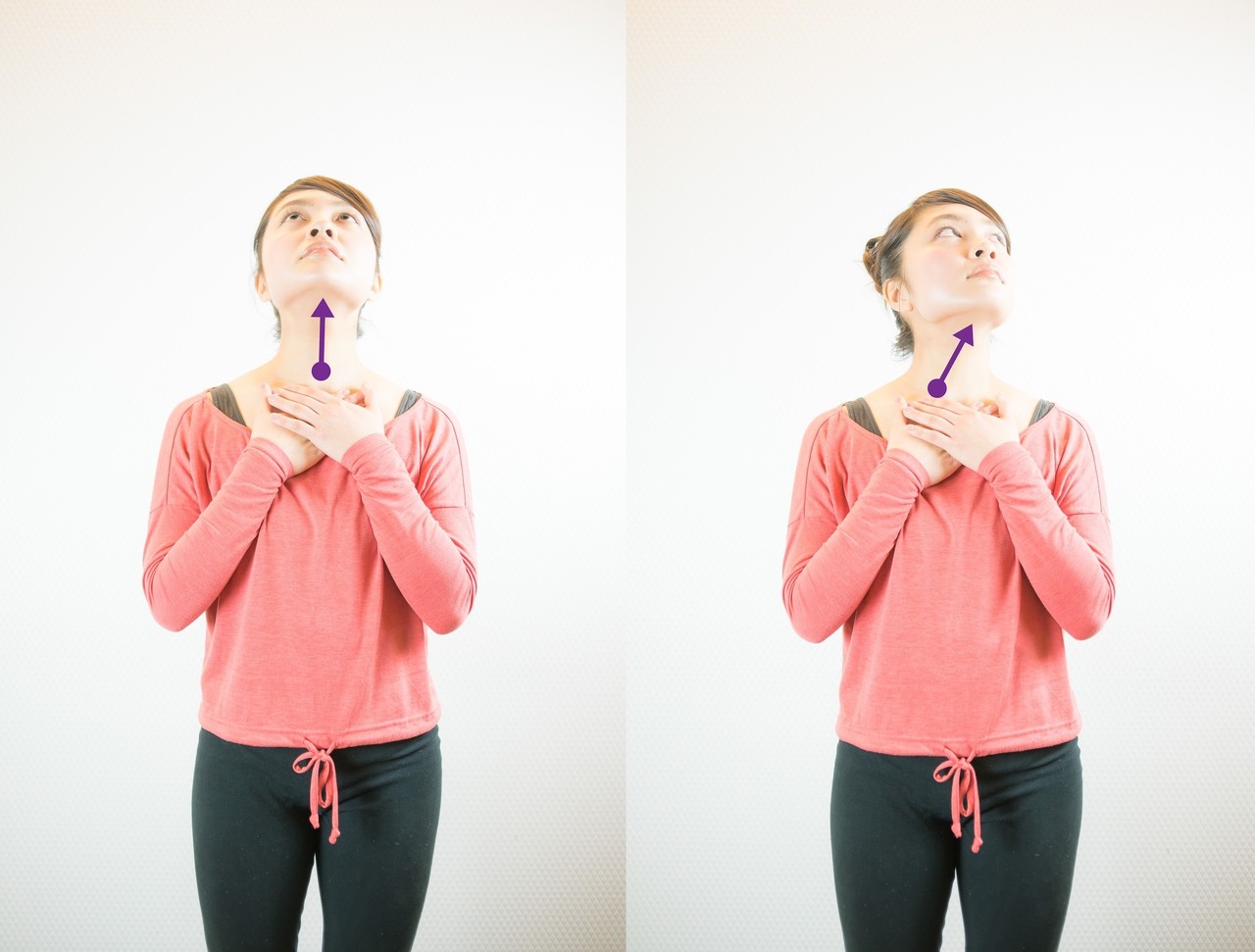
The Movement in Four Steps: Stand Steady First, Then Shake
Start with your feet a little wider than shoulder-width apart, toes turned slightly outward, knees softly bent. Before you move anything, relax your whole body for three seconds. Most people skip this step and start shaking their head while their shoulders are still tight and their neck is stiff — all they end up doing is forcing a rigid neck to twist.
Here is the movement, broken into four steps:
- Rest your hands on your knees and lean slightly forward. Place both hands lightly just above your knees, palms down, fingers naturally spread. Lean your torso forward by about fifteen degrees — no more. Keep your back flat and straight; do not round your back or hunch your shoulders.
- Turn your head to the left and let your upper body follow. Lead with your chin, turning it toward your left shoulder, and let your eyes follow to look over your left side. Your shoulders and chest turn slowly with your head. Stop when you reach a comfortable maximum — never force it — and hold for two seconds. You should feel a gentle stretch on the left side of your neck and the right side of your waist.
- Sway the tail in an arc, led by the waist and hips. With your head turned left, swing your hips gently toward the right and back, as if tracing a small arc behind you. This sway must be driven by your waist and hips, not by twisting your buttocks on their own. When the waist moves, the spine follows, twisting lightly from bottom to top, like wringing out a towel — each section of the spine opens in turn.
- Return to center, then switch sides. Come back to the middle slowly, pause for one beat, then repeat the whole sequence to the right. Three to six repetitions on each side make one set. One or two sets a day is enough.
One detail that is easy to miss: as you turn your head, tuck your chin slightly inward, as if a thread at the back of your neck were gently pulling upward. This keeps your neck long while it turns, instead of compressing it. If you turn with your chin jutting forward, your neck will feel stiff the next morning.
Breathing: One Circle, One Breath
There is a simple rule for the breathing in this movement: inhale as you turn, exhale as you swing back. As your head starts turning to the left, breathe in slowly through your nose, letting the breath sink down to your lower belly so it rises slightly. As your hips swing and your body returns to center, breathe out gently through your mouth — a long, thin stream of air, like blowing on a feather without letting it fall.
The speed of your breath has to match the speed of the movement. One full circle takes about six to eight seconds: three to four seconds to inhale, three to four seconds to exhale. The most common beginner mistake is breathing faster than moving. The head has not reached its position yet, but the lungs are already full, so you end up holding your breath and waiting for the movement to catch up — and your chest feels more and more stuffy. The fix is simple: slow the movement down by half, so your breath has enough time to complete a full round trip.
There is one more thing worth trying on the exhale. As you breathe out, imagine your shoulders dropping two centimeters and the muscles on both sides of your waist letting go. Many people finish this movement feeling as if their “heart fire” has gone down. The fire was not really extinguished — it is that once the breathing slows, the heart rate follows, the body switches from tense to relaxed, and the feeling of irritation naturally fades.
Breathing Rhythm Reference
- Inhale: the 3 to 4 seconds while your head turns to one side. Breathe in through your nose; your lower belly rises slightly.
- Pause: hold at the maximum turn for 2 seconds. Breathe naturally; do not hold your breath.
- Exhale: the 3 to 4 seconds while your hips sway and your body returns to center. Breathe out through your mouth in a steady, even stream.
- Between sets: after one rep on each side, stand up straight, take two deep breaths, then begin the next round.
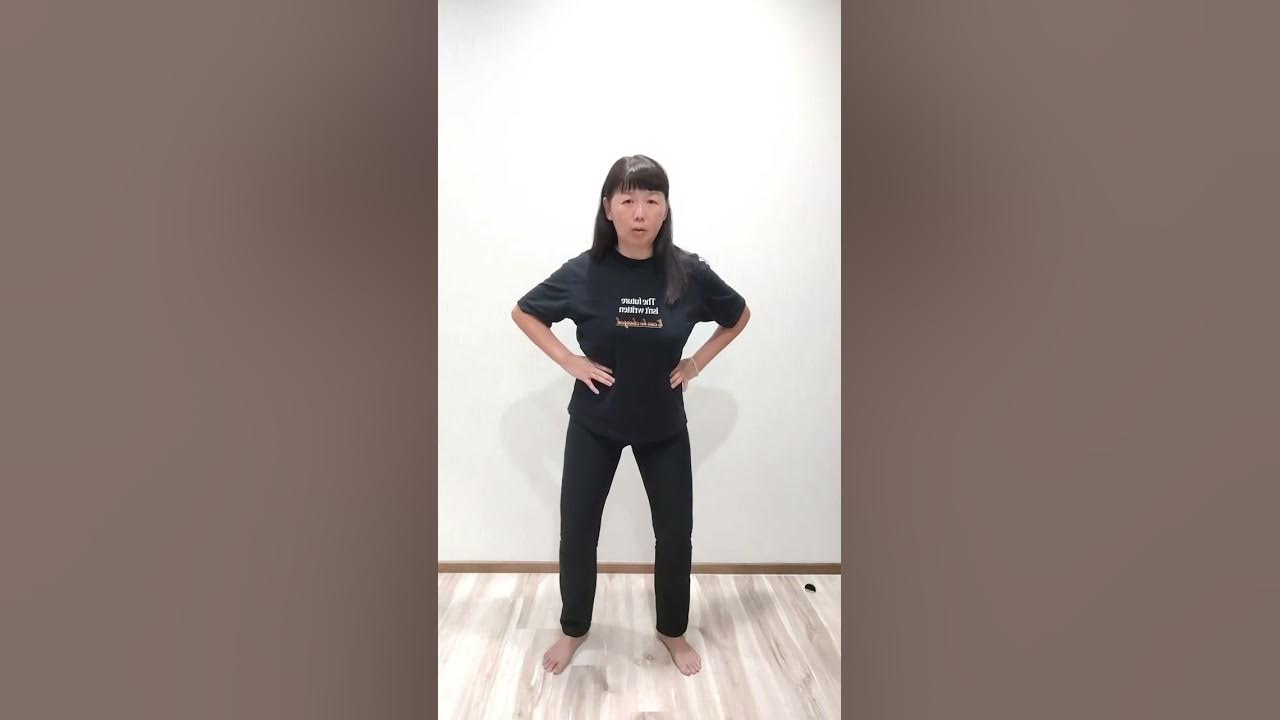
Four Mistakes That Waste Your Practice
If you have practiced for months and felt nothing, check the four mistakes below. Most people will find themselves in at least one of them.
Mistake 1: Turning only the neck while the waist stays still. This is the most common error. The head swings wide, but the hips are nailed in place and the spine never joins the turn. The movement’s name includes “wag tail,” and the tail is your waist and hips. If the waist does not move, you are only doing half the movement. The fix is easy: with your hands resting on your knees, first try swaying your hips left and right in a small arc on their own, until you feel the waist driving the motion. Then add the head turn back in.
Mistake 2: Moving too fast, like shaking your head off. Some people manage ten or more swings a minute, their head whipping through the air. That does nothing except wear out the neck. Baduanjin is built on slowness, and this movement most of all — six to eight seconds per circle is the minimum. If you cannot control the speed, count silently in your head: one, two, three, four. Your head should only arrive at the turn when you reach four.
Mistake 3: Leaning too far forward and letting the waist collapse. Fifteen degrees of forward lean is right; past thirty degrees, the pressure on your lower back climbs sharply, and you finish with a sore waist and back. The test is simple: after leaning forward, can you still take a deep breath easily? If you feel your waist blocking the breath and you cannot fill your lungs, you are leaning too low. Stand a little taller and try again.
Mistake 4: Sitting or lying down immediately after practice. When you finish this movement, blood and energy are flowing through your limbs and waist. Sitting down right away cuts that flow short. After practice, walk slowly for a minute or two and swing your arms gently a few times, letting your body settle back on its own.
A 10-Minute Daily Routine: How to Fit It In
You can practice this movement on its own, or as part of the full Baduanjin set. On its own, try one set in the morning and one in the evening — three to six reps on each side per set, about five minutes total. Inside the full set, it is the fifth of the eight movements. By then the first four have already warmed your body up, so your waist and neck are loose and the turns come more easily.
For timing, half an hour after waking is a good slot. After a night’s sleep, your neck and waist are stiff, and slow turning helps your body open up bit by bit. An hour before bed works too — slow the movement down, halve the repetitions, and you will finish with your body slightly warm, which makes falling asleep easier. Avoid practicing within an hour after a meal: the forward lean presses on your stomach and can make you feel queasy.
Any flat, non-slip surface will do — living room, balcony, park. Wear flat shoes with soles that are not too soft, so your feet grip the ground firmly and your lower body stays stable while your waist drives the movement. In winter, if you practice outdoors, march in place for a minute or two until your hands and feet are warm before you start turning your waist.
How long before you notice a change? It varies. Practice every day for two to three weeks, and most people find that the creaky, catching feeling when they turn their neck starts to fade, and their shoulders stop stiffening so easily.
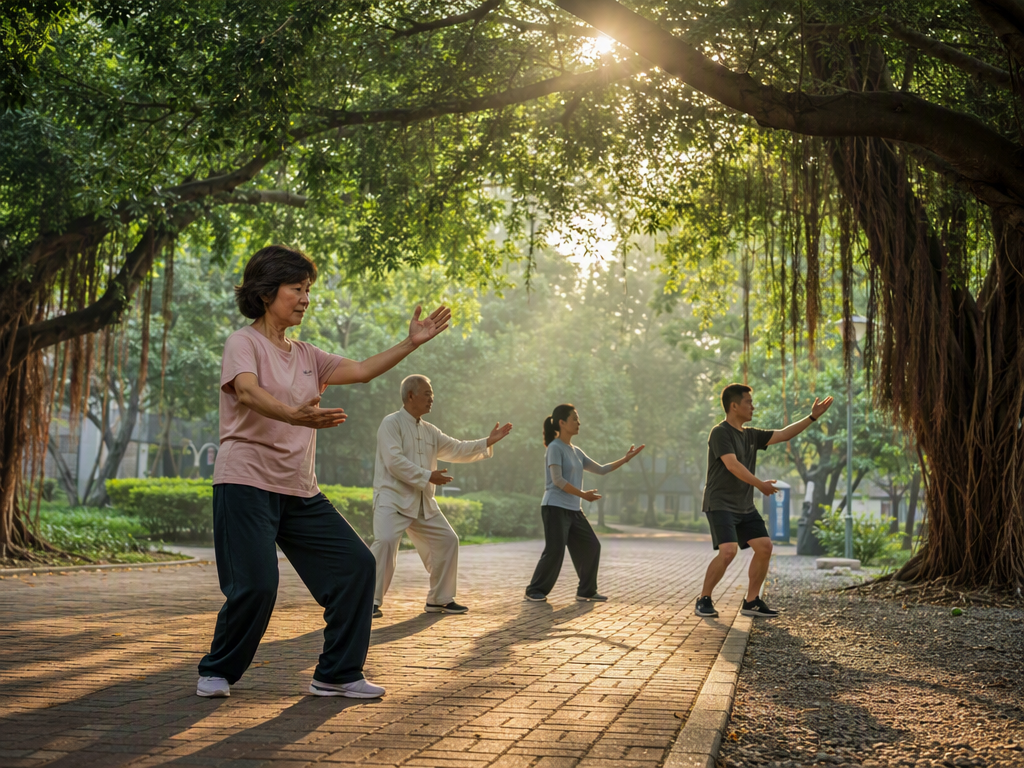
What “Dispelling Heart Fire” Really Means
“Shake Head and Wag Tail to Dispel Heart Fire” sounds like a slogan. Once you practice it properly, you realize what it actually teaches is slowing down: the head turns slowly, the waist sways slowly, the breath leaves slowly. When heart fire is high, what you usually lack is not a set of movements — it is a reason to slow down. Spend ten minutes a day doing this movement properly, three careful repetitions, with the movement right, the breath matched, and the speed slow. When the body relaxes, the mind follows.
Start today, and do not try to do too much at once. First get the sequence smooth: hands on knees, head to the left, hips to the right. Three reps on each side, feeling the waist drive the spine. Once the movement is smooth, add the six-to-eight-second breathing rhythm. After two weeks, check yourself against the four common mistakes above and fix any bad habits you find. Only then has the movement truly sunk in.
Quick Answers
How many times should I do it each day? Three to six reps on each side per set, one set in the morning and one in the evening. That is about ten minutes a day. More is not better — the benefit comes from doing it slowly and correctly, not from extra repetitions.
Why does my neck hurt after practicing? Usually one of two reasons: you are turning only your neck while your waist stays still, or your chin is jutting forward as you turn, compressing the neck. Tuck the chin slightly, let the waist lead, and slow down to six to eight seconds per circle. If pain persists, stop and consult a doctor.
Can I practice it on its own, without the other seven Baduanjin movements? Yes. It works well as a standalone five-minute routine. Doing it inside the full set is also good, because the first four movements warm the body up first — but it is not required.
Morning or evening — which is better? Morning, about half an hour after waking, is the classic choice: it loosens a stiff neck and waist after sleep. An hour before bed also works if you slow down and halve the reps; the gentle warmth afterward can help you fall asleep.
Should I practice after eating? No. Wait at least an hour after a meal. The forward lean presses on the stomach and can cause nausea if you have just eaten.
How long until I feel a difference? Most people who practice daily notice their neck turning more smoothly and their shoulders stiffening less after two to three weeks. The calming effect on mood can come sooner — often within a single session, once the breathing slows down.
Safety note: Practice gently and within your limits. Never force your head or waist to their maximum range. If you have cervical spine problems, a herniated lumbar disc, high blood pressure, or a history of dizziness, consult a doctor before practicing, and learn under professional guidance. Stop immediately and rest if you feel dizzy, sharp neck pain, stabbing lower back pain, or chest tightness during practice, and seek medical help if needed. This article is a cultural introduction to a traditional exercise; it does not promise any therapeutic effect.