At 7:30 on a cold November morning, a woman at a neighborhood market stall picked up a handful of walnuts and asked the vendor, “How many should I eat each day?” The vendor waved a hand and said, “Eat as many as you like, they are good for the brain.” She went home with two kilos, snacked on them freely, and finished most of the bag in three days. Then came the mouth ulcers and the bloated stomach.
Autumn and winter are the classic season for nuts and dried fruit in China. The cold makes people crave warm, energy-dense food, and three ingredients show up in almost every household: walnuts, black sesame, and red dates. They are cheap, versatile, and genuinely nutritious, but each one has a sensible amount and a group of people who should be careful. Get the portions, the pairings, and the storage right, and they work for you instead of against you.
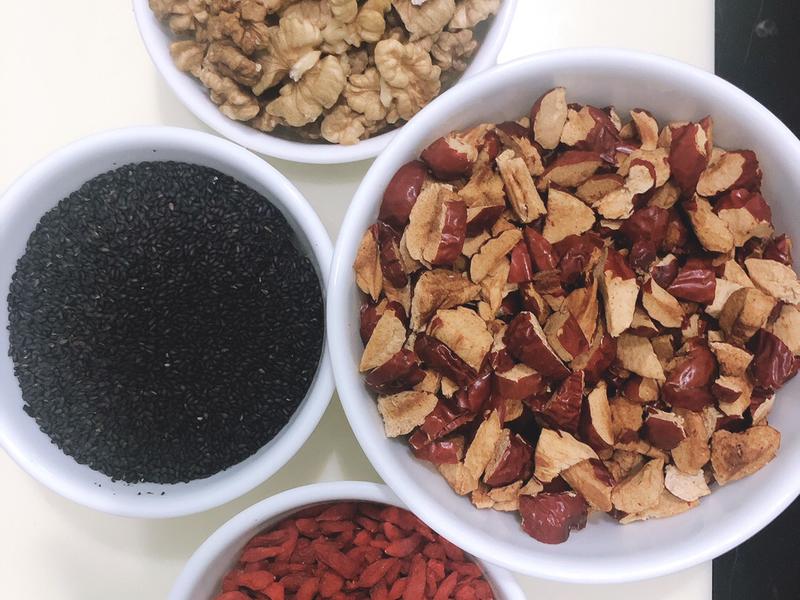
Three Ingredients, Three Different Ways of Eating
Walnuts are the most straightforward of the three. Crack them and eat them as they are, crush them into porridge, or cook them with oats. Walnuts in the shell stay fresh longest, so crack only what you need for the day. Shelled walnut kernels should be finished within about two weeks of opening the bag. The thin brown skin on the kernel is fine to eat, so there is no need to peel it off.
In Chinese food culture, walnuts carry a long-standing reputation as a brain tonic, partly because the kernel looks a little like a brain. That folk image is part of why market vendors still tell customers to “eat more, it is good for the brain,” but the real nutritional value is simpler: walnuts are rich in unsaturated fats and plant protein, and that value does not increase just because you eat more of them.
Black sesame depends on one word: roasted. Raw sesame seeds taste flat and are hard to digest. Roasted black sesame, sold ready to use, can be sprinkled over rice, noodles, or cold salads at about 10 to 15 grams a day, roughly one tablespoon. Another classic preparation is black sesame paste: grind roasted seeds into a powder, stir in hot water, and drink it as a warm snack in the morning or evening.
Black sesame holds a special place in Chinese dietary tradition, where it is associated with nourishing the hair and kidneys. You will find it in black sesame soup served as dessert, in tangyuan fillings, and in sesame paste drinks sold at breakfast stalls. Treat the tradition as cultural background rather than a medical claim: the seed itself is a solid source of calcium, iron, and healthy fats.
Red dates, known in Chinese as hongzao and often sold abroad as jujubes, are the most flexible of the three. Eat them straight as a snack, steep them in hot water, cook them into porridge, or add them to soup. Three to five dates a day is enough when eaten directly. In porridge, tear four dates open and remove the pits first so the sweetness cooks out evenly. In soup, add the dates about 20 minutes before the pot comes off the heat; boiled too long, they fall apart and turn mushy. For date tea, tear the dates open and steep for about 10 minutes, or the flavor stays locked inside the skin.
Red dates are one of the most symbolic foods in Chinese culture. They appear in wedding celebrations as a wish for fertility and sweetness, and they are a standard ingredient in tonic soups served to new mothers and to anyone recovering from illness. Their deep red color and natural sweetness made them a symbol of vitality long before anyone analyzed their sugar content.
How Much Per Day: Remember Three Numbers
Walnuts: 2 to 3 a day. Black sesame: 10 to 15 grams a day. Red dates: 3 to 5 a day. These are everyday reference amounts, not quotas you must hit. One medium walnut kernel weighs about 4 to 5 grams, so three walnuts come to roughly 90 calories, about the same as a small bowl of rice. If you have already eaten peanuts, cashews, or sunflower seeds that day, cut back the walnuts, or your total nut intake will quietly exceed what you planned.
The sesame number is easier to picture once you measure it. A level tablespoon holds about 8 grams, a heaped tablespoon about 12 grams. Red dates vary by size: three large ones are plenty, while five small ones are a reasonable portion. Eating these foods four or five days a week, and rotating in other ingredients on the remaining days, is a more sustainable rhythm than eating all three every single day.
The most common trap is treating nuts as a “healthy snack” and eating without limit. Most nuts are more than 50 percent fat by weight, so they are calorie-dense even though they do not feel filling. A single handful of walnut kernels, about 30 grams, carries close to 200 calories, roughly what a 25-minute jog burns. With less outdoor activity in cold weather, body weight already tends to creep up, which makes portion control even more important.

Who Should Be Careful: Three Groups to Watch
People who run hot. If you are prone to mouth ulcers, a sore throat, or dry mouth, keep both walnuts and red dates in check. Walnuts are warming by nature in traditional Chinese dietary terms, and eating seven or eight at once plus drinking red date tea can leave you with a dry throat and ulcers the next day. Try cutting back to 1 or 2 walnuts and 2 or 3 dates a day, or eating them every other day, and watch how your body responds. If symptoms appear, pause for a few days and resume at a smaller amount once they clear.
People with a sensitive stomach. Black sesame is high in oil, and more than 30 grams in one sitting can speed up digestion enough to cause loose stools. Red date skins are also hard to digest, so anyone with a weak stomach will do better eating dates cooked into porridge or peeled rather than whole. During a bout of diarrhea, pause all three ingredients and restart at small amounts only after your stomach settles.
People watching their blood sugar. Red dates deserve the most attention here, because they are about 60 to 70 percent sugar by weight. Three dates already carry a meaningful amount of sugar, and date tea counts too: the sugar dissolves into the water, so “it is only tea” is not a safe excuse. If your blood sugar runs high, walnuts and black sesame are the safer everyday choices, and red dates can stay an occasional treat of 1 or 2 pieces rather than a daily drink.
Allergy and Safety Notes
Anyone with a tree nut allergy should treat even a small bite of walnut seriously. Tingling lips, a skin rash, or breathing difficulty means stop eating immediately and seek medical help if the reaction is severe. For children under three, never hand over a whole walnut kernel: crush the nuts into porridge to avoid choking. The same applies to pregnant women and older adults, for whom crushed or ground nuts are both easier to chew and safer.
Two pairing tips round out the picture. Walnuts and black sesame go well together: sesame walnut paste is a classic combination, and since neither contains added sugar, it suits people who dislike sweet flavors. Red dates, on the other hand, should not be paired with lots of other sweets. The dates are already sweet enough, so adding cake or sweetened drinks pushes the sugar load well past reasonable. After eating nuts, a glass of warm water helps with dry mouth and gives your stomach a hand with the fat.
Storage: Good Ingredients Go Bad When Stored Wrong
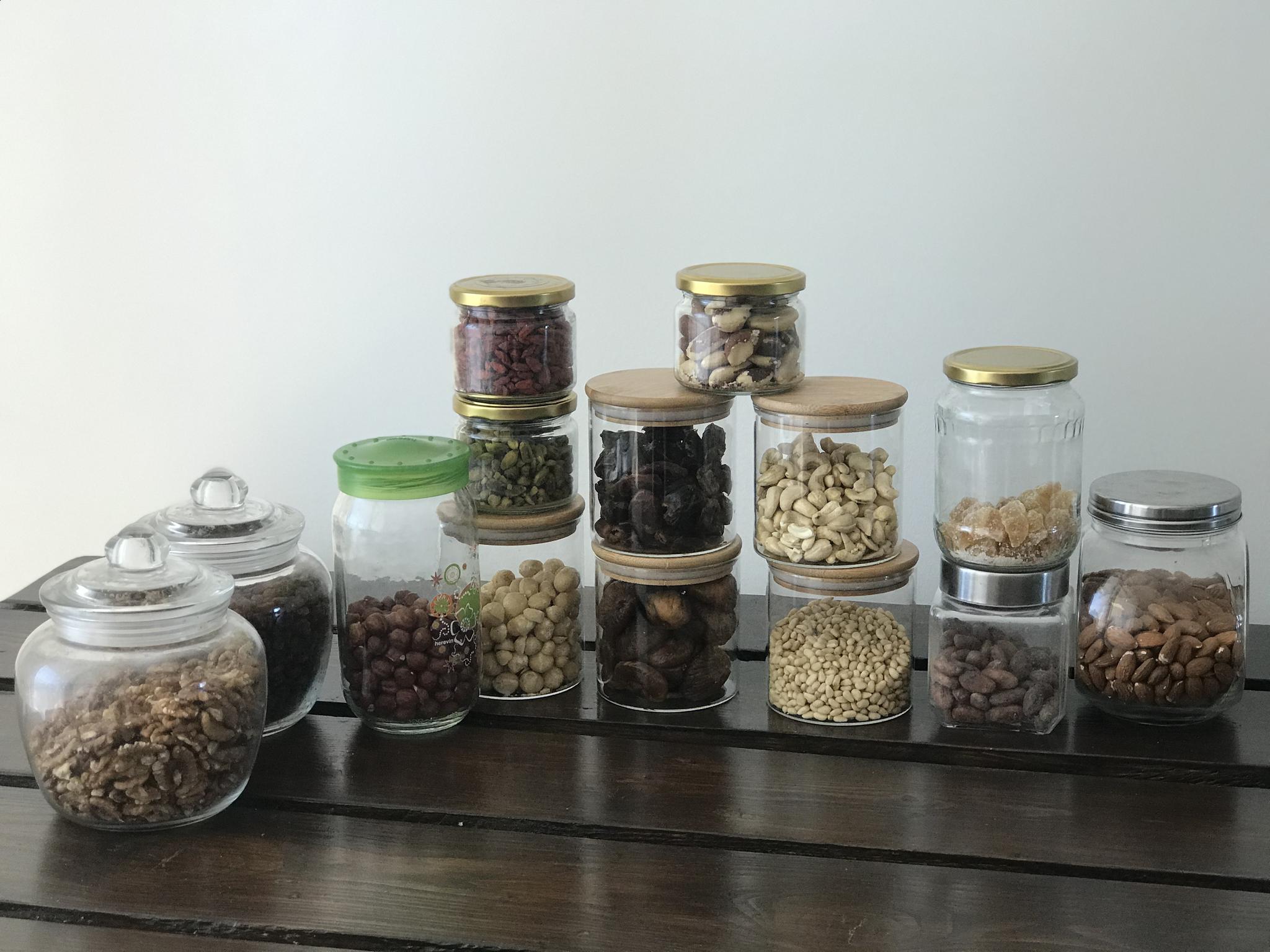
Nuts fear two things: moisture and oxidation. Walnut kernels that absorb dampness turn soft, and after long storage they develop a rancid smell, the telltale sign of oxidized oil. Throw those away. The better approach is to keep walnuts in the shell in a cool, dry place and crack only what you need. Shelled kernels belong in an airtight jar or bag in the fridge, where they keep for about a month. If you buy in bulk, divide the bag into small portions and open only one at a time.
Ground black sesame goes stale fastest of all, so store the powder in a sealed jar in a cool spot and finish it within two weeks. Whole roasted sesame seeds last longer, about a month sealed, but keep them away from the stove and radiators since heat speeds up oil spoilage. Red dates need a dry, ventilated spot, and in humid climates they are better sealed and refrigerated to prevent insects and mold. When buying dates, give them a sniff: fresh ones should have no sour or musty smell.
One shopping trap deserves a warning: candied dates. The glossy, very sweet dates sold in supermarkets, sometimes called candied jujubes or honey dates, are soaked in large amounts of added sugar and are not equivalent to natural red dates. The same goes for sugar-coated walnuts and honey sesame candy. They are fine as an occasional treat, but they should not stand in for the plain versions in a daily routine. Check the ingredient list: if it lists only “walnuts” or “black sesame,” you have the plain product.
A Simple Autumn and Winter Routine
You do not need a complicated system. Remember three numbers: 2 to 3 walnuts, 10 to 15 grams of black sesame, 3 to 5 red dates a day. Remember two principles: choose plain versions, and control the total amount. Remember one habit: store them sealed, and take out only what you will eat. A practical day looks like this: crushed walnuts and black sesame over morning porridge, and three red dates in the afternoon when hunger strikes.
Three small changes are a good place to start this week. Divide a big bag of walnuts into small sealed portions and open only one at a time. Move black sesame powder into a small jar and plan to finish it within two weeks. Take candied dates out of your everyday snack drawer and replace them with plain red dates. Stick with the routine for two weeks, notice how your stomach and weight respond, and adjust the amounts from there.
Quick Answers
- How many walnuts a day? Two to three, crushed into porridge or eaten plain. If you eat other nuts the same day, eat fewer walnuts.
- How much black sesame? About one tablespoon, 10 to 15 grams, of roasted sesame, or the same amount ground into a warm paste.
- How many red dates? Three to five a day, or fewer if they are large. Tear them open before cooking or steeping so the flavor comes out.
- Who should be cautious? People prone to mouth ulcers should limit walnuts and dates; people with weak digestion should go easy on sesame and date skins; people watching blood sugar should treat dates as an occasional treat, not a daily drink.
- How do I store them? Sealed containers, cool and dry. Shelled walnuts in the fridge for up to a month, sesame powder within two weeks, red dates sealed and refrigerated in humid climates.
- What should I avoid buying? Candied dates, sugar-coated walnuts, and honey sesame candy. Choose products whose ingredient list names only the nut or seed itself.
Disclaimer: This article offers general dietary information for reference only. Individual health conditions vary. If you have a medical condition, blood sugar concerns, digestive problems, or a nut allergy, please consult a doctor before changing your diet. Nothing here promises any health benefit or treatment effect. If you feel unwell after eating any of these foods, stop and seek medical attention.