It is 3 p.m. on a Saturday. You sit down at your desk with a book and a cup of tea, determined to finally read for an hour. Twenty minutes later, your back aches, the sun is glaring off the page, and you have already stood up twice to hunt for a pen. Across town, a friend with the exact same desk and the exact same book reads for two undisturbed hours. The difference is rarely the furniture. It is where the desk sits, how the light falls, and how much clutter is competing for your attention.
In traditional Chinese culture, this is the territory of feng shui, a centuries-old practice of arranging a space so that it feels balanced and supports the people who use it. Translated into modern, practical language, its old phrase cang feng ju qi — roughly, “shelter from harsh wind and gather a calm atmosphere” — means something very simple: sit steadily, see clearly, and find what you need without a search. This guide turns that idea into five concrete changes you can make in a study room today. No renovation required, and no promises about luck or destiny — just a room that is easier to sit in.
1. Desk Direction: Back to a Solid Wall, Side to the Window
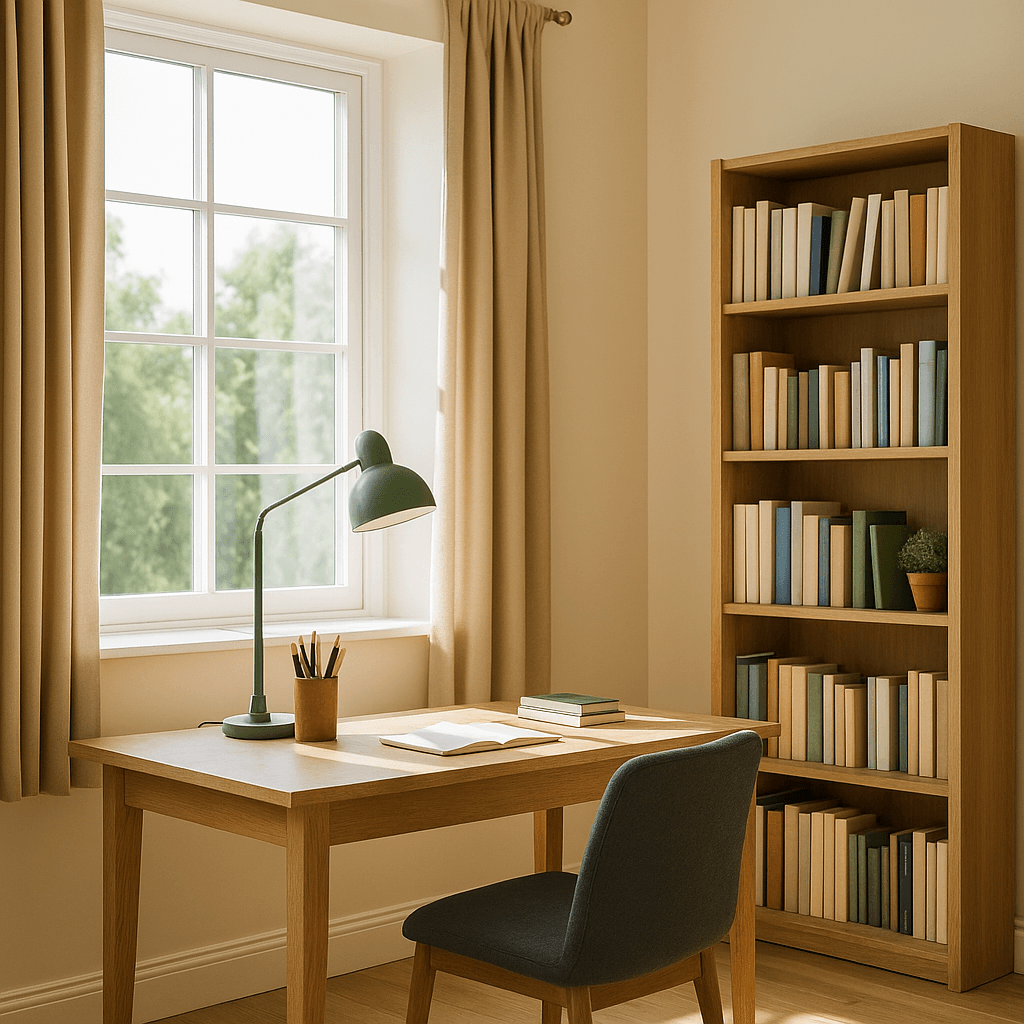
The single most common mistake is sitting with your back to the door or to the window. With your back to the door, every sound behind you breaks your concentration. With your back to the window, sunlight hits your screen or your page directly, and your eyes tire fast. The steadier arrangement is this: your chair back against a solid wall, and the window to your side, so daylight comes in at an angle from your left or right.
Take a concrete example. Imagine a 12-square-meter study with the door on the east wall and the window on the south wall. Put the desk against the west wall, sit facing east with your back to that wall, and the window falls on your left hand. You get plenty of daylight without glare, and reaching for a book on the shelf takes only a half-turn. If your room forces the desk under the window, add a sheer curtain to soften direct sun, and choose a high-backed chair — the extra support makes a surprising difference to how settled you feel.
There is a name for this in feng shui: kaoshan, literally “backing mountain,” which means having something solid and dependable behind you. You do not need to believe in any symbolism to feel the effect. When nothing is moving behind you and no one can walk up unseen, your body relaxes, and it is easier to stay with a book. One more trap to avoid: wedging the desk into a corner where cabinets hem you in on both sides. That cramped feeling is real, and the fix is simple — pull the desk out about 30 centimeters so your shoulders have room to move, and the sense of pressure disappears.
2. Lighting: Daylight First, Then a Lamp That Actually Helps
During the day, use natural light, but never let direct sun fall on the desk itself. Morning light from an east-facing window is gentle and suits long reading sessions. In a room with strong afternoon sun from the west, draw the sheer curtain after about 3 p.m., or the page will reflect, the screen will wash out, and your eyes will protest within half an hour.
At night, one desk lamp alone is not enough. The setup that works is “one main light, one task light”: a ceiling light gives the room its overall brightness, while the desk lamp lights only a patch of desk about 60 centimeters wide. Choose a neutral color temperature around 4000K — too warm and you will feel sleepy, too white and the light feels harsh. Set the lamp head high enough that its light covers a fully opened book, not just half a page.
One detail most people miss: do not put the lamp directly in front of you. Place it on the opposite side from your writing hand — if you write with your right hand, put the lamp on the left — so your own shadow never falls across the pen tip. It is a tiny adjustment, and it matters most for children doing homework, but any writer will notice the difference within a day.
3. Storage: Three Things on the Desk, Shelves Sorted by Frequency
A messy desk makes a busy mind. Here is a standard you can actually keep: no more than three permanent items on the desk — the book you are currently reading, a pen holder, and a cup of water. Everything else goes on the wall or into a cabinet. Reference books you reach for often belong on the middle shelf, at arm’s reach. Old materials you open less than twice a year go into labeled boxes on the top shelf or in another storage area.

A practical way to sort a bookshelf is by week, month, and year. Books you need this week go at eye level in the middle. Books you might need this month go on the upper or lower shelves. Books you touch once a year get boxed, labeled, and archived. Here is the test: if finding a book takes you more than a minute, your system needs adjusting.
Drawers deserve the same discipline. The top drawer holds daily small items — pens, sticky notes, scissors. The second holds chargers and spare notebooks. The bottom holds things you rarely use. A cheap drawer divider in each drawer will do more for your study than an expensive new bookcase, because it stops small things from sliding into one tangled pile.
4. Traffic Flow: Leave a Path, and Keep the Door From Aiming at Your Back
If the study door opens directly onto your desk, every person who walks in looks straight at you while you are reading, and your attention breaks. When you have the choice, turn the desk 45 degrees or move it to a side wall, so that someone entering first sees a bookshelf or a plant, and only then reaches your desk.
Leave enough room behind the chair, too: at least 80 centimeters between the chair and anything behind it, so you can stand up and pull the chair out without hitting a cabinet door or a wall. In a small study, choose a chair without armrests, or one that slides fully under the desk — saving even 20 centimeters makes the room noticeably easier to move in.
Floor clutter is the other silent distraction. Cardboard boxes, old delivery packaging, and out-of-season clothes should not live permanently in the corner of a study. They make a room feel a full size smaller than it is. Spend ten minutes once a week clearing anything that is not directly connected to reading or working, and the room — or in feng shui terms, its atmosphere — feels lighter and clearer right away.
5. Plants and Objects: Few and Chosen, Not a Display Table
One or two plants in a study genuinely rest the eyes, but a collection quickly becomes a chore. A pothos or an asparagus fern on the windowsill or on top of a bookshelf is enough. Keep large pots off the desk itself, where watering can splash onto books and leaves can block the light.
The same “few and chosen” rule applies to decorative objects. In Chinese study culture, items such as a Wenchang tower — a small pagoda-shaped ornament traditionally associated with study and writing, named after Wenchang, the deity of literature — or a brush rest carry a cultural meaning of encouraging scholarship. Looked at practically, their real job is ritual: seeing a brush rest on the shelf is a quiet cue that it is time to sit down and write something. Pick one or two pieces you genuinely like, place them where you can see them from the desk, and stop there. A desk crowded with ornaments scatters attention and is harder to clean.
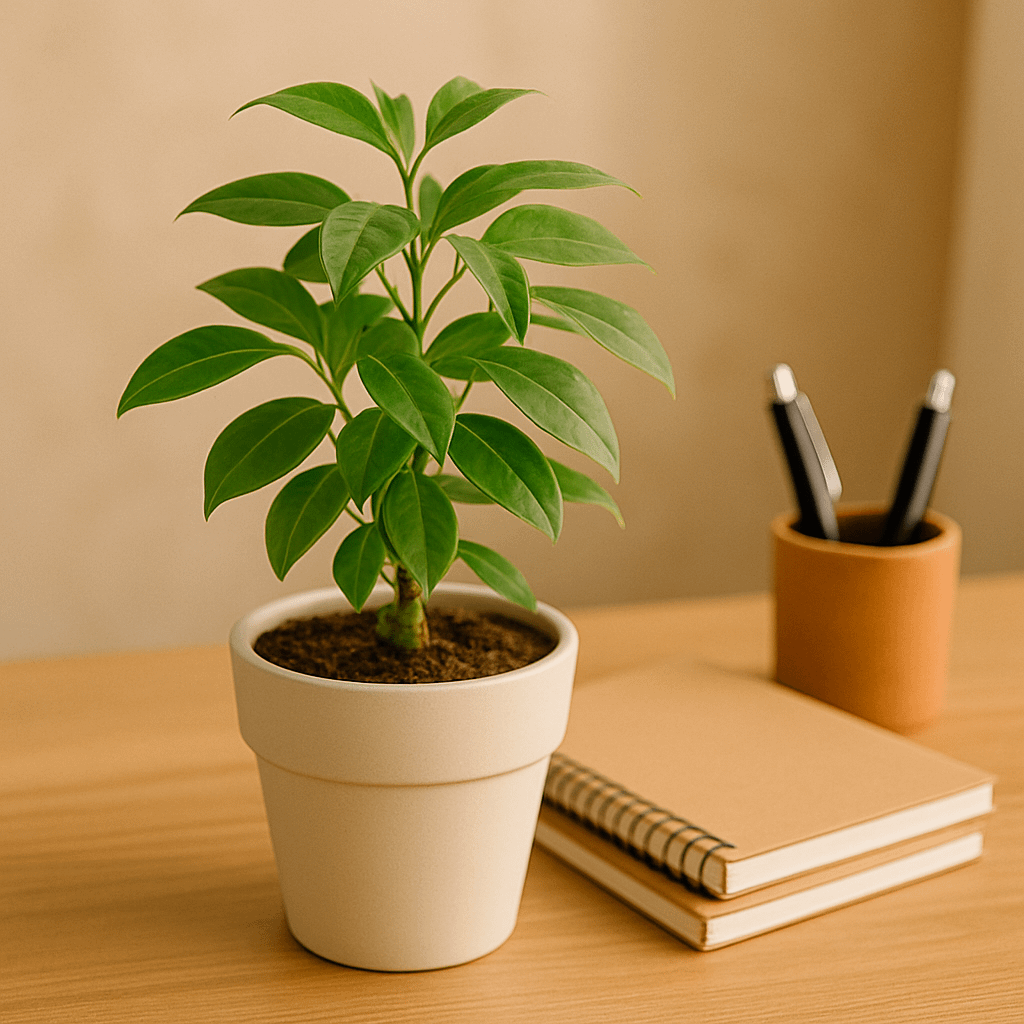
One maintenance note: deal with yellowing plants promptly. Dry leaves left on a desk look untidy and collect dust and tiny insects. If a species keeps dying on you, swap it for something drought-tolerant. A study is meant to be a place where you feel calm enough to read — not a botanical garden.
Start Today: Three Changes in Under an Hour
There is no single perfect layout for a study, and anyone selling one is overselling. The test that matters is simple: can you sit comfortably, see clearly, and find what you need? If you can only change three things today, do them in this order:
- Give your back a wall. Move the chair so it rests against a solid wall, and notice how much steadier sitting feels.
- Fix the lamp. Check its position — opposite your writing hand — and its color temperature, and make sure one even, bright patch covers your open book.
- Clear the desk to three items. Everything else goes onto shelves sorted by week, month, and year.
These three changes take less than an hour, yet they change how the room feels the moment you sit down. Plants, ornaments, and wall decoration can wait. In feng shui, a room where qi flows smoothly — where energy, or more plainly, a person’s movement and mood, moves without obstruction — is simply a room where you can act easily and feel at ease. Arrange your study so that you actually want to walk in and sit down every day, and you have already made the best possible layout.
Quick Answers
What if my desk can only go under the window? Add a sheer curtain to turn direct sun into soft light, and use a high-backed chair so your back still feels supported. The combination solves most of the glare and the exposed-back feeling at once.
What color temperature should my desk lamp be? Around 4000K, a neutral white. Warmer light invites drowsiness during study; colder light feels clinical and strains the eyes over a long session.
How many things should stay on the desk? Three: the book you are reading now, a pen holder, and a drink. If a fourth item earns its place by daily use, keep it — but audit the desk weekly, because clutter creeps back quietly.
Do I need a Wenchang tower or other traditional objects? No. They are cultural symbols, not requirements. One or two objects you like can add a sense of ritual to your study routine, but a tidy desk and good light matter far more than any ornament.
What is the fastest single change if I have only ten minutes? Clear the desk to three items and pull the chair back to a solid wall. Those two moves alone usually make the room feel calmer and more focused.
This guide presents feng shui as traditional Chinese cultural knowledge about arranging living spaces. It is not a guarantee of academic success, career outcomes, or good fortune, and it does not replace professional advice on lighting, ergonomics, or eye health. If you experience persistent back pain or eye strain, consult a qualified professional.