Lidong, the Start of Winter, is still two weeks away, but the lamb stall at the morning market already has a line. Old neighbors have changed their greeting from “Have you eaten?” to “Are you doing your winter tonics this year?” In China, dongling jinbu — the tradition of winter tonic-eating — is no longer just for grandparents. Sleep-deprived twenty-somethings and office workers whose hands never seem to warm up are all joining in. Think of winter as nature’s savings account: you deposit nourishment now, and your body draws on it all year. This article covers why winter works, what to eat, and what not to get wrong.
Why Winter Is the Season for Tonics
Traditional Chinese medicine describes the year in four phases: spring births, summer grows, autumn harvests, winter stores. In winter, the body’s yang energy turns inward and rests in the kidneys. Metabolism slows, and — counterintuitively — the digestive system handles food better than in summer, when cold drinks and chilled fruit constantly strain the stomach. A bowl of hot soup in winter is absorbed and put to work far more easily than the same nutrition would be in July.
Modern nutrition tells a similar story from the other direction: keeping the body warm burns extra fuel, and the basal metabolic rate in winter runs about 5 to 10 percent higher than in summer. The body simply needs more heat.
But the deeper point is rhythm. A winter tonic program is not one big feast — it is a three-month charging plan. Start laying the foundation at Lidong (early November), step it up around the Winter Solstice (late December), and peak during the sanjiu period (the third nine-day stretch after the solstice, roughly early-to-mid January, traditionally the coldest days of the year). When your eating matches the body’s winter storing rhythm, the nourishment actually stays in the bank.
What Does “Sanjiu” Mean, Exactly?
Sanjiu literally means “the third nine days” — in the old Chinese calendar, the days after the Winter Solstice were counted in blocks of nine. Sanjiu, falling around early to mid January, is considered the dead of winter, when cold is at its peak and the body’s yang is at its lowest. The old saying goes: “Tonic in sanjiu, no illness next year.” The logic is plain: warm nourishment delivered at the exact window when the body needs it most is like sending coal in a snowstorm.
Two caveats come with the saying. First, it assumes you have been building up gradually since Lidong — not that you wait until sanjiu and then try to make up for it in one week. Second, “tonic” here means gentle, warming, balanced nourishment, not a meat orgy. Plenty of people eat hot pot and barbecue back to back all winter and call it “tonic eating.” That is just overloading the stomach.
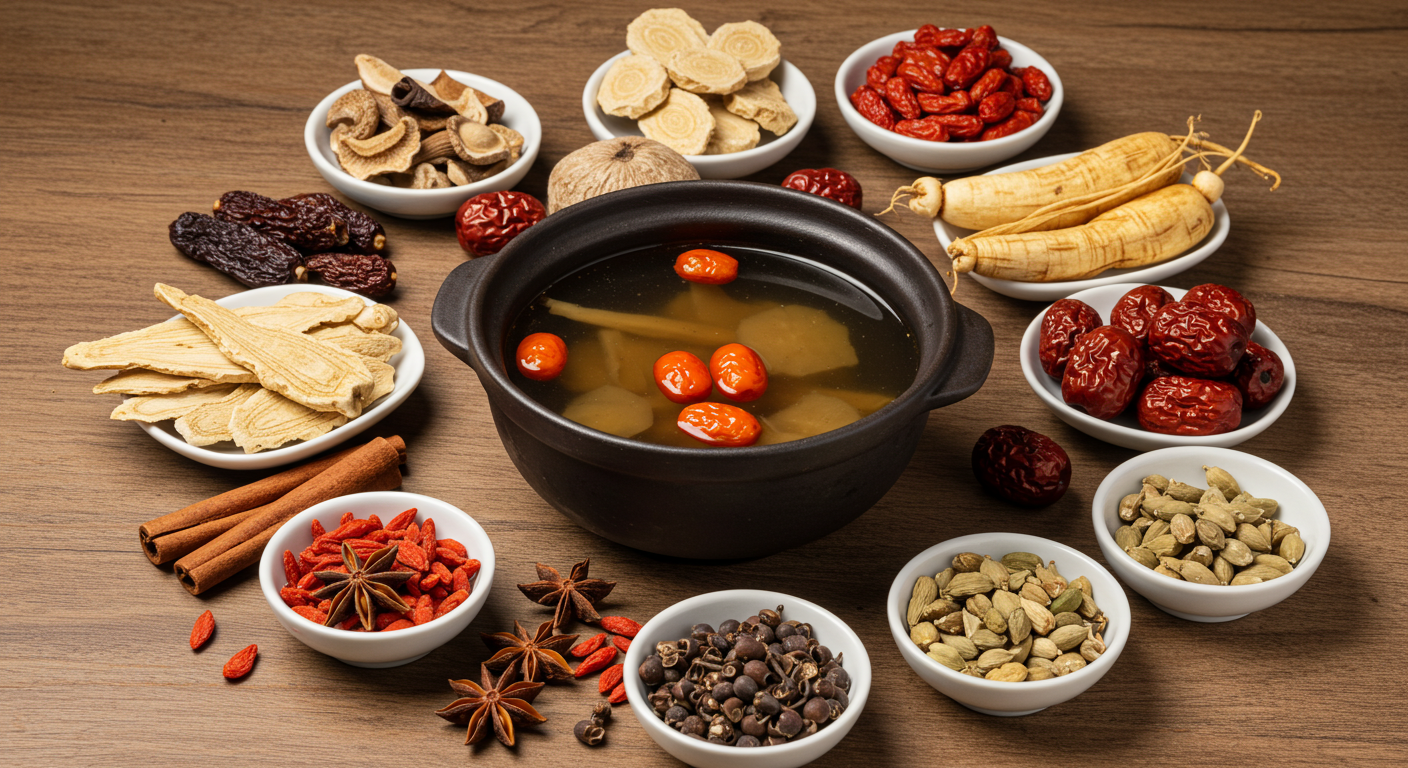
Three Warming Recipes: Ingredients, Method, and Who They Suit
These three are time-tested classics — a lamb soup, a chicken soup, and a porridge — all simple enough for a home kitchen. Between them, they cover nearly every household.
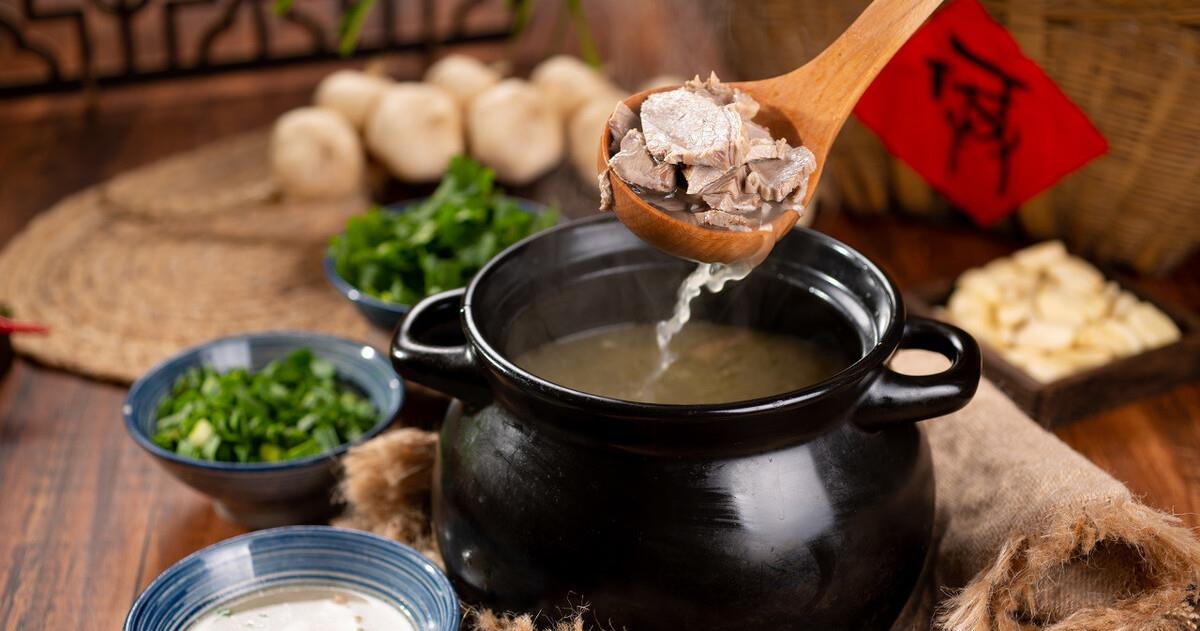
1. Angelica-Ginger Lamb Soup: The Cold-Chaser
This recipe comes from Zhang Zhongjing, the Han-dynasty physician often called the Sage of Medicine, in his classic Synopsis of the Golden Chamber. It has been in use for nearly two thousand years. Danggui (angelica root) is a classic blood-nourishing herb in TCM, and paired with ginger it is the textbook answer to cold hands, cold feet, and winter abdominal chill.
Ingredients (serves 3–4):
- 500 g lamb (leg meat has the mildest flavor)
- 15 g danggui (angelica root), 30 g fresh ginger (about two thumb-sized pieces)
- 1 tablespoon cooking wine, a pinch of salt, 1500 ml water
Method:
- Cut the lamb into chunks, cover with cold water, bring to a boil and blanch for 3 minutes to remove blood foam; rinse clean.
- Put the lamb, danggui, and sliced ginger into a clay pot with the water and cooking wine.
- Bring to a boil, then simmer on low heat for 90 minutes until the lamb is tender.
- Add salt 10 minutes before serving.
Who it suits: people who feel cold easily — cold hands and feet, winter diarrhea. When to eat: one bowl at dinner, with the meat and the broth, 2–3 times a week, from Lidong through sanjiu. Pause it when you have a cold, fever, or sore throat.
2. Astragalus-Yam Chicken Soup: Gentle, Family-Friendly
If lamb feels too “warming” for you, try this one. Huangqi (astragalus root) is a qi-tonifying herb — in TCM, qi is the body’s vital energy — and it pairs here with Chinese yam for the spleen and chicken for gentle warmth. None of the three ingredients is harsh, so it suits older people and children alike.
Ingredients (serves 3–4):
- Half a free-range chicken (about 600 g) or 3 chicken legs
- 20 g huangqi (astragalus root), 200 g fresh Chinese yam (peeled and cut into chunks), 6 red dates
- 3 slices of ginger, a pinch of salt, 1500 ml water
Method:
- Blanch the chicken to remove blood foam; rinse clean.
- Put the chicken, huangqi, red dates, and ginger into a clay pot with the water; bring to a boil.
- Simmer on low for 60 minutes, add the yam, and simmer 20 minutes more.
- Season with salt. The astragalus slices can be fished out and discarded.
Who it suits: people with low qi — tiring easily, weak voice, catching colds all winter. When to eat: lunch or dinner, twice a week. If you run hot — dry mouth, warm palms, restless sleep at night — halve the astragalus or switch to the porridge below.
3. Red Date and Longan Glutinous Rice Porridge: The Easiest Warm Breakfast
No time to stew soup? Put your tonic program into breakfast. A bowl of hot porridge keeps your hands warm all morning — ideal for office workers who cannot run a stew pot on a weekday.
Ingredients (serves 2):
- 80 g glutinous rice, 40 g regular rice
- 8 red dates (pitted), 15 g dried longan flesh, 10 g goji berries
- 1 small piece of brown sugar (about 15 g), 1000 ml water
Method:
- Soak the rices for 30 minutes; halve the pitted red dates.
- Put everything except the brown sugar and goji berries into a pot with the water; bring to a boil.
- Simmer on low for 40 minutes until thick and creamy, then stir in the goji berries and brown sugar and cook 5 minutes more.
Who it suits: weak digestion, poor morning appetite, pale complexion from low blood. When to eat: breakfast, 3–4 times a week. People with diabetes should be cautious — brown sugar and longan raise blood sugar quickly — and consider leaving the sugar out or asking a doctor first.
Three Tonic Mistakes — Most People Make the First One
Mistake 1: the pricier, the better. Ginseng, deer antler, and cordyceps are genuinely precious — but expensive does not mean right for you. For someone with a cold-type constitution, a bowl of angelica lamb soup can do far more than ginseng taken at random. The wrong premium tonic is at best a placebo and at worst gives you heat symptoms like mouth sores and restlessness. Match the tonic to the constitution, not the price tag.
Mistake 2: tonifying a body that needs nothing. If you feel fine, eat well, and sleep well, ordinary meals are the best “tonic.” Forcing daily tonic soups and herbal pastes on a healthy body easily backfires into damp-heat symptoms: dry mouth, constipation, breakouts, poor sleep. The precondition for tonic eating is a deficiency to address — no deficiency, no tonic.
Mistake 3: replacing meals with medicine. Some people equate tonic eating with medicinal stews and supplements while eating carelessly the rest of the time. But food-as-medicine works precisely because it is everyday — every meal, every day, a slow trickle of nourishment. A medicinal stew is an occasional bonus, not the foundation. Get it backwards and nothing sticks.
Quick Answers: Match Your Body Type
Cold-type (yang-deficient) — always chilly, cold hands and feet: lean into warming foods like lamb, ginger, and chives; the angelica-ginger lamb soup is your best match.
Low-energy type (qi-deficient) — tire easily, weak voice: focus on qi tonics, make the astragalus-yam chicken soup a weekly fixture, and cut back on raw and cold foods.
Dry-heat type (yin-deficient) — dry mouth, warm palms, insomnia: keep tonics moist and mild, avoid anything too spicy or hot in nature; porridge suits you better than meat soup.
Damp-phlegm type — heavier build, thick tongue coating: strengthen the spleen and clear dampness first, then talk about tonics — otherwise you just add congestion. Chinese yam and Job’s tears are your friends.
Stagnant type (blood stasis) — dull complexion, purplish lips: pair warming tonics with blood-moving touches — a few slices of ginger and a little brown sugar in your soup.
Balanced type — nothing wrong at all: regular meals and a regular sleep schedule are your winter storage plan. Don’t chase trends.
Winter Tonics Are a Slow Art
The winner of the winter tonic game is not whoever eats the biggest feast — it is whoever keeps the rhythm all winter: foundation at Lidong, full force at sanjiu, the right recipe for the right body, two or three times a week, steady and slow.
Your action plan: first, use the body-type list above to figure out which type you are. Second, pick the one recipe that fits you best and cook it this week. Third, put “tonic meal 2–3 times a week” on your calendar and keep it up until sanjiu — then look at how you feel.
Disclaimer: This article is a cultural introduction to traditional Chinese food therapy and is not medical advice. Food therapy is not a substitute for medical treatment, and no effects are guaranteed. If you have a chronic condition, are pregnant or breastfeeding, or are taking medication, consult a doctor or registered dietitian before trying these recipes. Stop eating them and seek medical attention promptly if you feel clearly unwell during the tonic season.