You brush your teeth in the morning and your throat feels tight and parched; one big glass of water doesn’t fix it. No cold, no fever, but you keep letting out a dry little cough. By evening, your cheeks feel stretched and tight, and your lips are starting to flake. You might already know what this is — not an illness, but “autumn dryness” (qiu zao, a traditional Chinese medicine term for the way autumn’s arid air drains the body’s moisture) knocking on the door. In TCM thinking, dryness harms the lungs first: the lungs handle breathing and are directly exposed to the air, so when the air dries out, they feel it first. The good news? The lungs are delicate, but they love moisture — and eating the right foods is basically giving them a drink of water. The five recipes below use ingredients you can find at any Asian grocery or market. Prep once on the weekend and you’ll be eating comfortably all week.
4 Classic Signs of Autumn Dryness — How Many Do You Have?
In TCM, the lungs govern both breathing and the skin, so dryness announces itself in a few familiar places:
- Dry mouth and throat: you wake up with a dry, bitter mouth, and water only helps for a few minutes. Your throat feels like it’s wrapped in paper.
- Dry cough, little phlegm: no cold, no fever, just an itchy throat that makes you want to cough — a dry, unproductive cough.
- Dry, flaking skin: white flakes on your legs and hands, tight cheeks, and moisturizer that only lasts half a day. In TCM, the lungs “rule the skin and hair,” so when the lungs dry out, the skin shows it first.
- Dry stools: harder, drier bowel movements that take effort. TCM pairs the lungs with the large intestine (the lung–large intestine interior-exterior relationship), so when lung moisture drops, the intestines dry out too.
Autumn dryness tends to be mild and gradual — it creeps in slowly and leaves slowly. That’s exactly why slow, steady food-based nourishment fits it so well. One guiding rule for the season: cut back on spicy foods, favor sour and lightly sweet flavors, drink plenty of warm water, and let moistening foods show up every day.
5 Lung-Soothing Recipes: Amounts and Steps, All in One Place
Each recipe serves 1–2 people, and the steps are kept simple enough for beginners and busy weeknights.
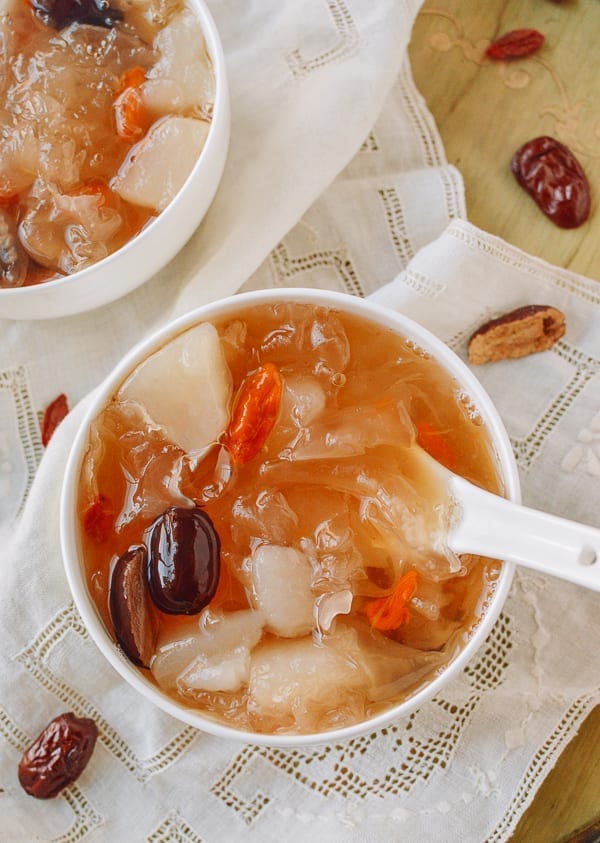
1. Tremella and Lotus Seed Soup — the “Poor Man’s Bird’s Nest”
Tremella (yin er, also called snow fungus or white wood ear) is a jelly-like edible fungus prized in Chinese kitchens for its moistening quality. Simmered long, it turns silky and soupy — which is why it’s nicknamed the poor man’s bird’s nest.
Ingredients: dried tremella, half a flower (about 15 g / 1/2 oz); lotus seeds, 20 g (about 2 tbsp), pith removed; red dates, 6; rock sugar, 15–20 g (about 1 tbsp); water, 1,200 ml (about 5 cups).
Method: soak the tremella for 2 hours, then tear it into small pieces. Rinse the lotus seeds and red dates. Put everything in a pot, bring to a boil, then simmer on low for 40 minutes. Add the rock sugar in the last 10 minutes.
Good for: office workers with dry mouth and dry skin; anyone whose throat feels rough after a late night. Two to three times a week works well — a small bowl in the evening also helps you wind down.
Shopping tip: pick tremella that is pale yellow (not bleached white), with intact fronds and no sharp sulfur smell. Lotus seeds with the green pith taste bitter — buy pith-removed ones if you dislike bitterness, or pop the pith out with a toothpick yourself; it takes minutes.
2. Steamed Pear with Fritillaria — an Old Friend for Dry Cough
Fritillaria (chuan bei mu, the bulb of a lily-family plant) is a classic TCM herb for coughs. Ground into powder, it dissolves right into the pear.
Ingredients: 1 snow pear or Asian pear; fritillaria powder, 3 g (about 1 tsp); rock sugar, 10 g (about 2 tsp); water, about 60 ml (1/4 cup).
Method: wash the pear but don’t peel it (the skin has moistening properties too). Slice off the top as a lid and scoop out the core. Put the fritillaria powder and rock sugar inside, replace the lid, set the pear in a bowl, and steam over boiling water for 30 minutes. Eat the pear and drink the broth together.
Good for: dry cough with little or no phlegm, and itchy throats from autumn dryness. Important: this one is only for dry, phlegm-free coughs — don’t use it if your cough produces lots of yellow phlegm or comes with a fever.
Shopping tip: buy the pre-ground powder at an herb shop or Chinese pharmacy; whole fritillaria bulbs need grinding and are more work. Any thin-skinned, juicy pear works.
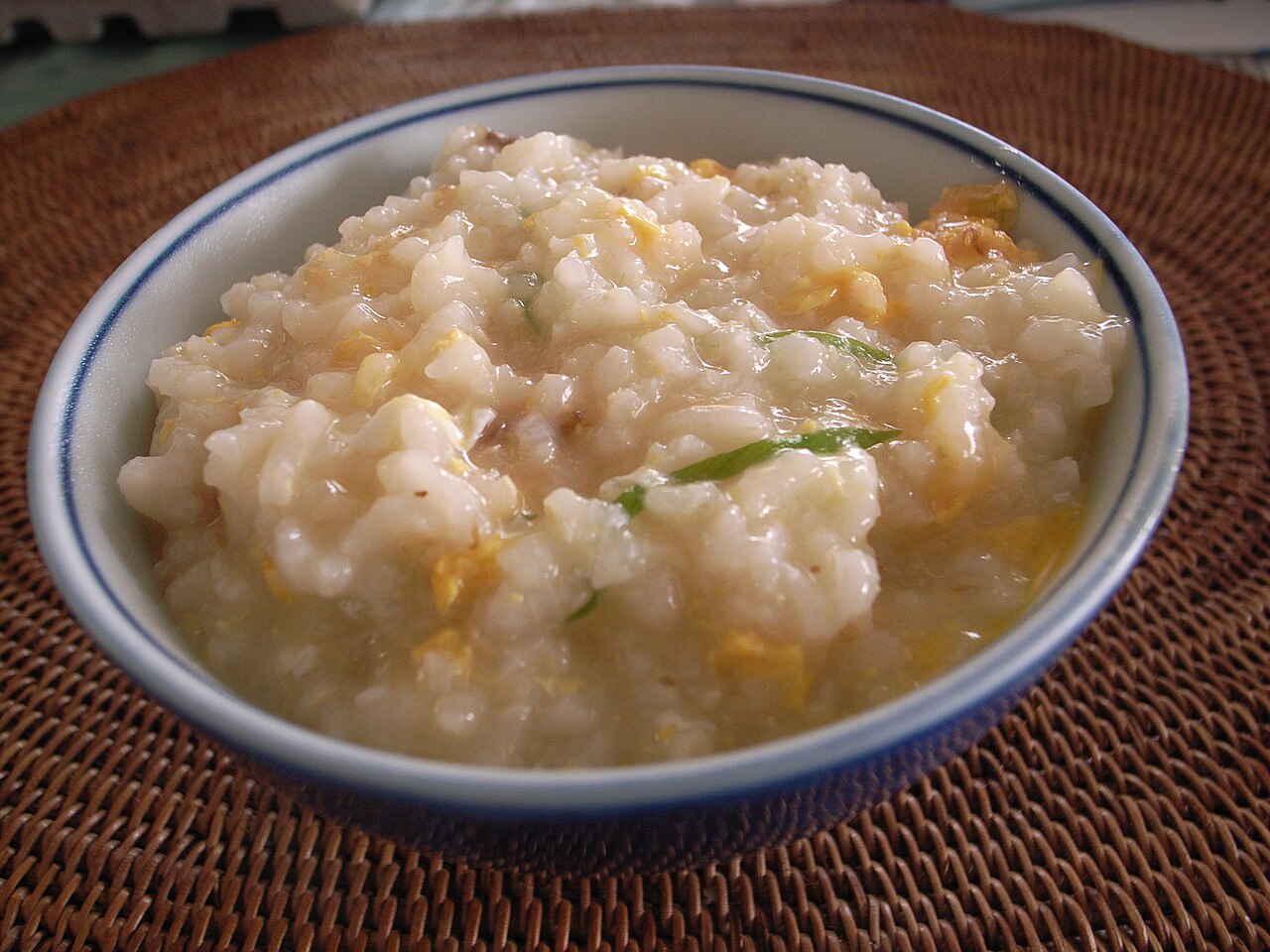
3. Lily Bulb and Almond Congee — Start the Day Moisturized
Dried lily bulbs (bai he) are a mild, starchy flower bulb used in Chinese cooking for their soothing, moistening reputation. The almonds here are sweet apricot kernels (nan xing), not the bitter medicinal variety (bei xing) — keep them straight when shopping.
Ingredients: dried lily bulb, 15 g (about 2 tbsp); sweet apricot kernels, 15 g (about 2 tbsp); rice, 60 g (about 1/3 cup); water, 800 ml (about 3.5 cups); a little rock sugar, optional.
Method: soak the lily bulb and apricot kernels for 1 hour. Rinse the rice and add everything to a pot. Bring to a boil, then simmer 30–40 minutes until the rice breaks down and a starchy film (mi you, “rice oil”) floats on top.
Good for: people with sensitive stomachs who don’t love soup, and breakfast people. The lily bulb soothes, the sweet kernels are gentle on digestion, and congee itself is easy to absorb.
Shopping tip: choose large, white-to-pale-yellow lily slices with fine lines on the cross-section. And remember: use the sweet apricot kernels (nan xing) — the bitter ones are stronger medicinally and don’t belong in everyday cooking.
4. White Radish and Honey Drink — the Fastest Fix
This is the quickest of the five: five minutes, no cooking. White radish (daikon) is cooling and juicy in TCM terms, and honey smooths the throat.
Ingredients: half a white radish (about 300 g / 10 oz); honey, 1–2 tbsp; warm water, 200 ml (about 3/4 cup).
Method: peel the radish, cut into chunks, and juice it (a juicer works, or grate it and squeeze out the juice). Dilute the juice with warm water. Let it cool below 40 C (104 F), then stir in the honey. Drink fresh, right away.
Good for: dry, itchy throats and slightly hoarse voices. A glass in the morning can feel immediately soothing. Go easy if your stomach runs cold — radish is cooling, and people prone to loose stools should drink less.
Shopping tip: pick radishes with smooth skin that feel heavy for their size — that means they’re full of water. Pinch the tail end: crisp and tender means juicy. Any plain honey works; no need for an expensive brand.
5. Chinese Yam and Goji Pork Rib Soup — Moistening Plus Substance
Chinese yam (shan yao, the long iron-stick variety known as tie gun shan yao is the most prized) and goji berries (gou qi) are both gentle everyday tonics in Chinese food culture — starchy, mildly sweet, and easy to eat often.
Ingredients: pork ribs, 300 g (about 10 oz); Chinese yam, 1 root (about 200 g / 7 oz); goji berries, 10 g (about 1 tbsp); ginger, 3 slices; salt to taste; water, 1,500 ml (about 6.5 cups).
Method: blanch the ribs in cold water brought to a boil to remove impurities. Peel the yam and cut into chunks (wear gloves — the yam’s slime can make skin itch). Simmer ribs, ginger, and yam together on low for 1 hour. Add the goji berries in the last 10 minutes, season with salt.
Good for: people who run low on energy in autumn, and the whole family. The yam supports digestion, the goji berries add gentle nourishment, and this pot is the most nutrient-dense of the five.
Shopping tip: good iron-stick yam has rust-colored patches on the skin and a fine, sticky cross-section — that’s the starchy, flavorful kind. Ask for meaty center-cut ribs (zhong pai) with small bones.
4 Things to Ease Off During Dry Season
- Spicy food: chili, Sichuan pepper, and hot pot for now. Pungent flavors disperse and dry you out — people with dry coughs often cough worse the same night after spicy food.
- Deep-fried and grilled: fried chicken and skewers are heating and drying; expect a parched mouth afterward. If the craving wins, keep it to once a week with plenty of warm water and vegetables.
- Overly salty or sweet: pickles, candied snacks, and milk tea all “steal water” from your body. You’re already dehydrated — don’t add work for your kidneys and gut.
- Iced drinks: in autumn the body’s energy is drawing inward, and cold drinks can upset the stomach. Want something to drink? Warm honey water or light tea beats iced cola.
Sample week: tremella lotus seed soup on Monday, Wednesday, and Friday evenings; lily almond congee for breakfast on Tuesday and Thursday; the yam goji rib soup on the weekend; add the steamed pear on days the cough bothers you; make the radish honey drink whenever you like. Rotate through them — nothing gets boring, and nothing gets overdone.
Notes for Special Groups: Check with a Doctor First
- Diabetes: cut back or skip the rock sugar, honey, and red dates in these recipes. The sweetness is optional — the moistening comes from the ingredients themselves.
- Cold-sensitive digestion: if you’re prone to loose stools or cold hands and feet, use less of the cooling ingredients like pear and radish, add ginger, or stick to the warm soups and congee.
- Pregnancy and breastfeeding: don’t self-use medicinal ingredients like fritillaria; even food-grade herb amounts are worth checking with your doctor first.
- On medication: herbs and foods can interact with both Chinese and Western medicines. One question to your prescribing doctor costs nothing.
Quick Answers
Can I eat these every day? The congee and the tremella soup are gentle enough for regular eating — many families in China have them weekly through autumn. The steamed pear with fritillaria is more targeted: use it when the dry cough shows up, and stop when it eases.
Do these recipes cure a cough? They’re food-based home care, not treatment. A dry, mild, seasonal cough often settles with rest, hydration, and gentle foods — but a cough that lasts more than two weeks, brings up bloody phlegm, or comes with fever, wheezing, or chest tightness needs a doctor.
Why rock sugar instead of regular sugar? In Chinese food culture, rock sugar (bing tang) is considered milder and more moistening than white sugar, and it dissolves into a cleaner-tasting sweetness in slow-cooked soups. In practice, it’s a flavor preference — small amounts of any sugar work the same in the recipe.
Can children have these? The congee, the tremella soup, and the rib soup are ordinary foods and generally fine for children in family-size portions — just watch the sugar. Skip the fritillaria pear for young children unless a pediatrician or TCM doctor says otherwise.
Disclaimer: The recipes in this article are everyday food-based home care. They are common foods, not medicine, and no health effects are promised. If you feel unwell — a cough that doesn’t improve, fever, chest discomfort, or shortness of breath — please see a doctor. People with chronic conditions, pregnant or breastfeeding women, and young children should consult a doctor or dietitian before trying herb-containing recipes.