Three inches below your kneecap, a finger’s width outside your shinbone, there’s a spot that traditional Chinese medicine has prized for over 2,000 years. Its name is Zusanli — “Leg Three Miles” — and the legend says that exhausted soldiers who pressed it could march three more miles. Modern fans call it the “longevity point.” The truth is simpler and more useful: it’s the most studied acupressure point on the human body, and pressing it correctly takes three minutes a day.
Zusanli is acupoint ST36 on the Stomach meridian. In TCM theory, the stomach is the body’s “granary” — the source of qi and blood made from food — so a point that regulates stomach function was naturally seen as foundational to overall vitality. You don’t need to believe the theory to use the point; you just need to find it.
Finding It: The “One-Fist” Method
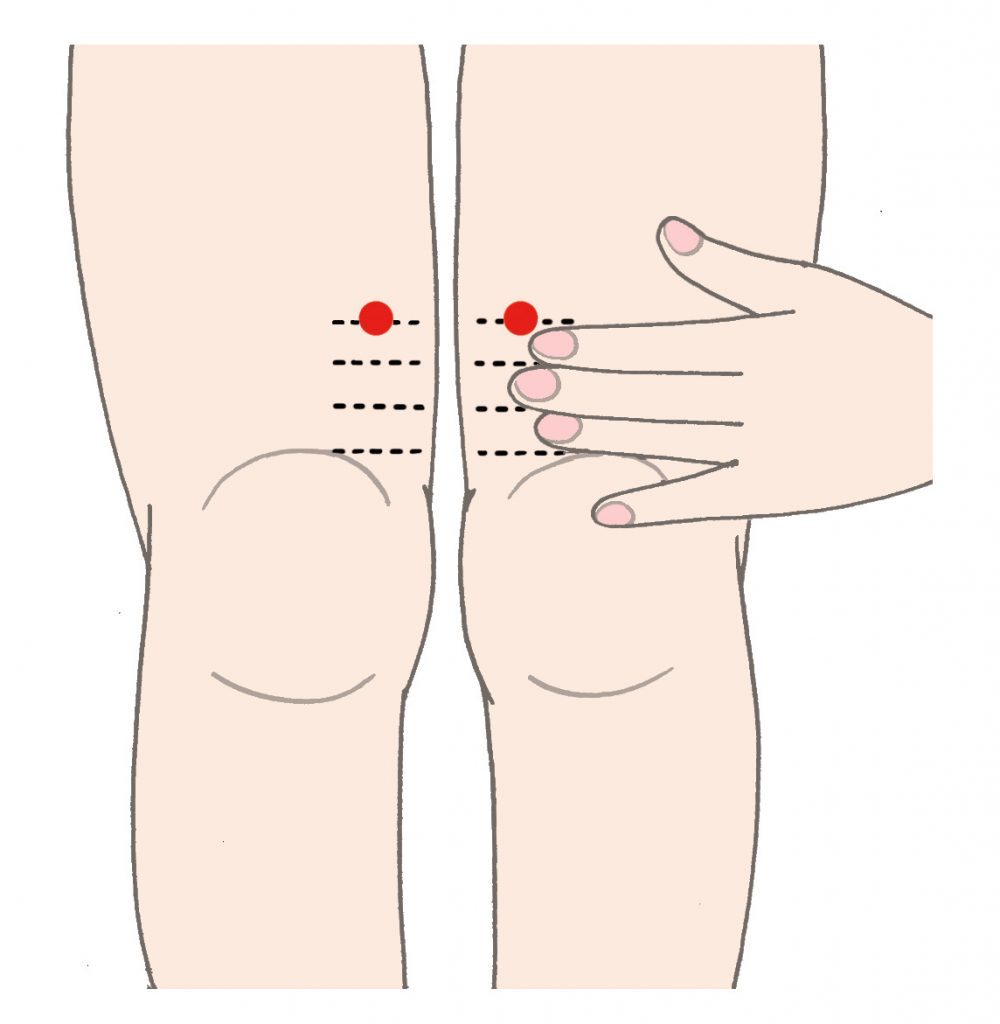
Forget rulers. Your body carries its own measuring tape — in TCM this is called the “finger-cun” system, where your own fingers measure distances on your own body:
- Sit down and find the bony bump just below your kneecap (the tibial tuberosity).
- Place four fingers together horizontally below that bump — that width is “3 cun” (about three of your thumb-widths).
- Slide one finger-width outward from the shinbone’s front edge. The tender spot you land on, roughly a thumb’s width deep in the muscle, is Zusanli.
The confirmation test: press firmly. The right spot feels distinctly sore, achy, or “electric” compared to surrounding tissue — practitioners call this the “deqi” sensation. No soreness usually means you’re off by a centimeter; nudge around until you find it. Mark it with a pen dot the first few times until your fingers memorize it.
How to Press It Right: The 3-Minute Protocol
Technique matters more than force. Here’s the method used in most clinical acupressure studies:
- Tool: your thumb pad (not the nail, not the knuckle). For deeper pressure, stack the other hand’s thumb on top.
- Motion: small slow circles, about one rotation per second — or steady sustained pressure. Both work; pick whichever lets you relax.
- Pressure: firm enough to feel strong soreness, never sharp pain. On a 1–10 scale, aim for a 5–6. If you’re wincing, back off.
- Dose: 90 seconds per leg, once or twice daily. Morning is traditional (it “wakes up” digestion for the day); evening sessions can be gentler.
- Breathing: slow exhales while pressing. Tension fights the effect — unclench your jaw, drop your shoulders.
Consistency beats intensity. Light daily pressure for a month outperforms one heroic deep-tissue session.
What It’s Actually Used For
In TCM practice, Zusanli is the go-to point for digestive complaints — bloating, sluggish digestion, nausea — and for general fatigue. Modern research has taken interest too: randomized trials have studied ST36 acupressure for post-surgical nausea, cancer-related fatigue, and functional digestive discomfort, with modest but real positive signals. It’s one of the few traditional points with a genuine evidence base building behind it.
What it won’t do: cure disease, replace medication, or “boost immunity” in any measurable miracle sense. Think of it as a daily maintenance habit, like stretching — small, cumulative, and free.
Two Companion Methods
Moxibustion: warming the point
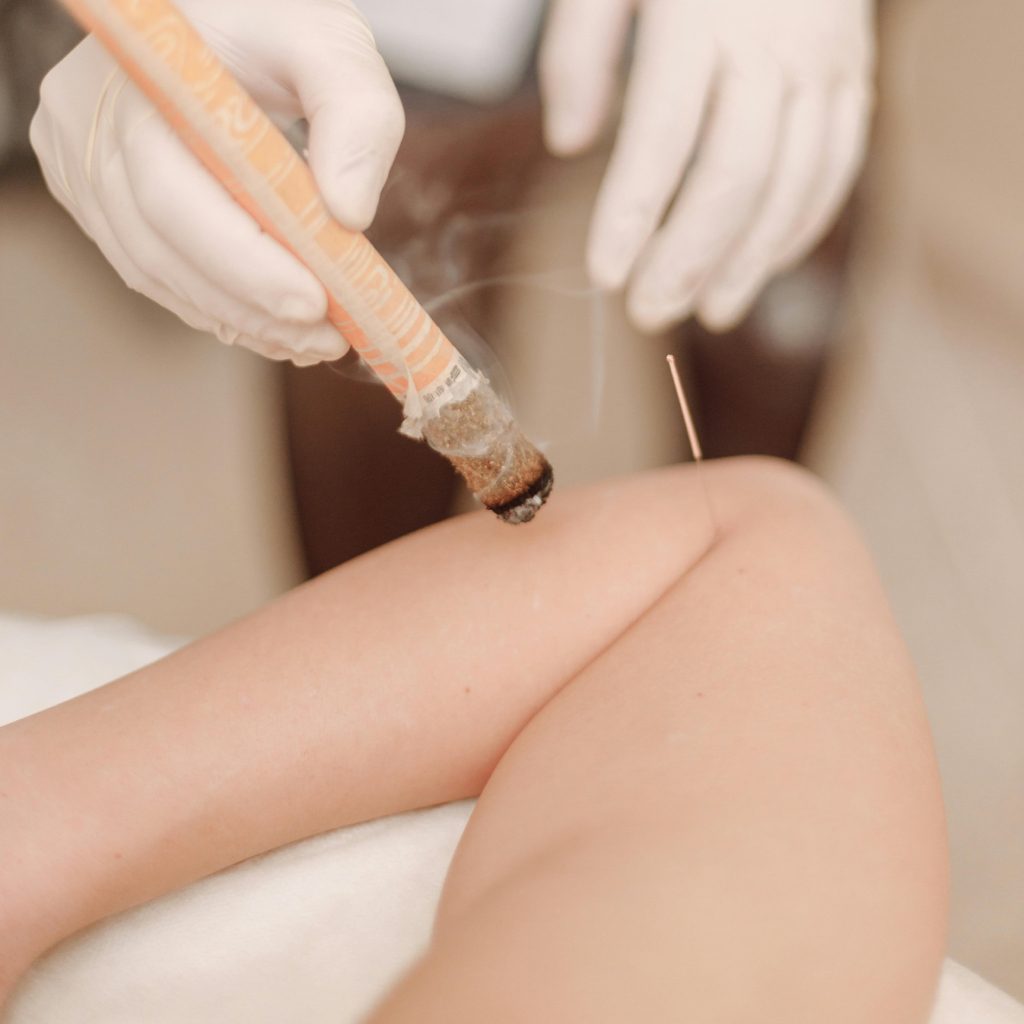
The classic partner to pressing is moxibustion — holding a lit moxa stick (compressed mugwort) 3–4 cm above the point until the skin feels comfortably warm, about 10 minutes per side. Never touch the skin with the burning tip, never leave it unattended, and skip it entirely if you have reduced sensation in your legs (for example from diabetes-related neuropathy) since you can’t judge the heat safely.
Pairing with a foot soak
A 15-minute warm foot soak (40°C water, up to mid-calf) before your evening Zusanli session is a popular combination in Chinese wellness culture. The logic is circulatory — warm feet, relaxed body, then targeted pressure. Simple and pleasant regardless of theory.
Who Should Skip It
Don’t press Zusanli if the skin over it is broken, bruised, or inflamed. Pregnant women are traditionally advised to avoid strong stimulation of leg points — check with your obstetrician first. If you have a bleeding disorder or take blood thinners, use only the lightest touch. And any persistent digestive symptoms deserve a real medical workup, not just acupressure.
Quick Answers
Left leg, right leg, or both? Both. The point exists bilaterally; do one side then the other.
How soon will I feel anything? The local soreness is immediate. Any digestive or energy effects, if they come, build over 2–4 weeks of daily practice. Anyone promising overnight transformation is selling something.
Can I press it through clothing? Thin clothing is fine, though bare skin gives better feedback for finding the exact spot.
Is there anyone it works best for? People with desk-bound digestive sluggishness — irregular meals, bloating after lunch — report the most noticeable benefit. It’s a digestion point first, everything else second.
Three minutes, two thumbs, one ancient spot below the knee. The soldiers’ legend may be myth, but the habit is real — and free.
This article is for wellness education only and is not medical advice. Consult a healthcare professional for persistent symptoms.