Someone hands you a BaZi chart — eight characters lined up in a row. Most people’s first reaction is blank panic: where do you even start? The answer is simpler than you’d think — look at just one character. The Day Master. The Day Master is the “self” of the chart; the other seven characters are all relationships revolving around that self. This guide walks you through all ten roles in that relationship map.
The Day Master: the “I” in Your Chart
A BaZi chart is built from four pillars — year, month, day, and hour of birth. Each pillar has two characters: the Heavenly Stem on top, the Earthly Branch below. The stem of the day pillar is your Day Master. There are only ten possibilities: Jia, Yi, Bing, Ding, Wu, Ji, Geng, Xin, Ren, and Gui.
Say someone was born at noon on May 20, 1990. Their chart’s day pillar might come out as “Bing-Wu” — making their Day Master Bing Fire. Someone else might be a Wu Earth or Ren Water Day Master. Everyone gets a different one.
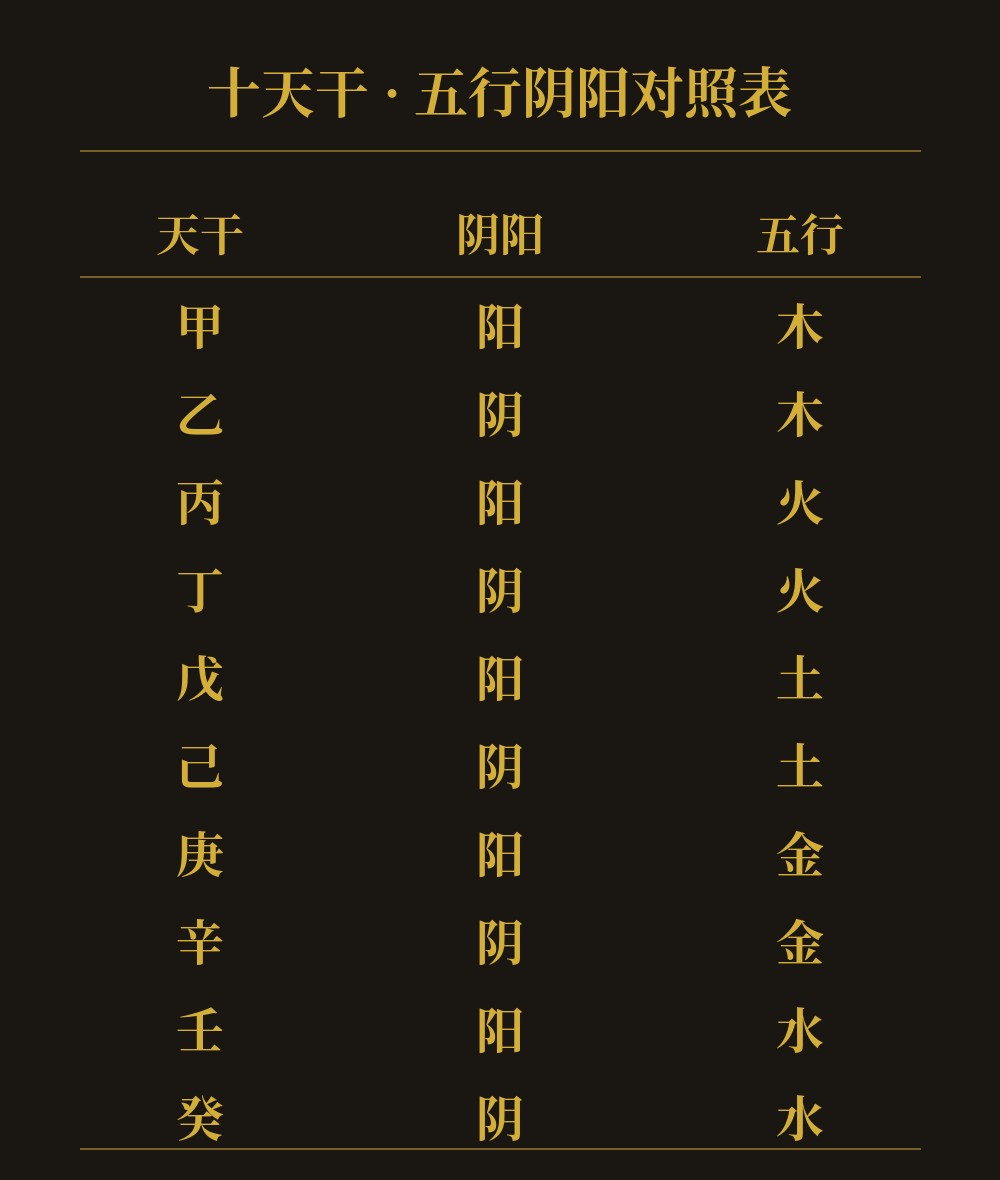
Memorize two correspondence tables now — everything else builds on them:
- Five Elements: Jia and Yi are Wood, Bing and Ding are Fire, Wu and Ji are Earth, Geng and Xin are Metal, Ren and Gui are Water
- Yin and Yang: Jia, Bing, Wu, Geng, and Ren are yang; Yi, Ding, Ji, Xin, and Gui are yin
So a “Jia Wood Day Master” is yang wood; a “Ding Fire Day Master” is yin fire. Once the Day Master is fixed, the whole chart has its anchor.
The Ten Gods: A Relationship Map Centered on You
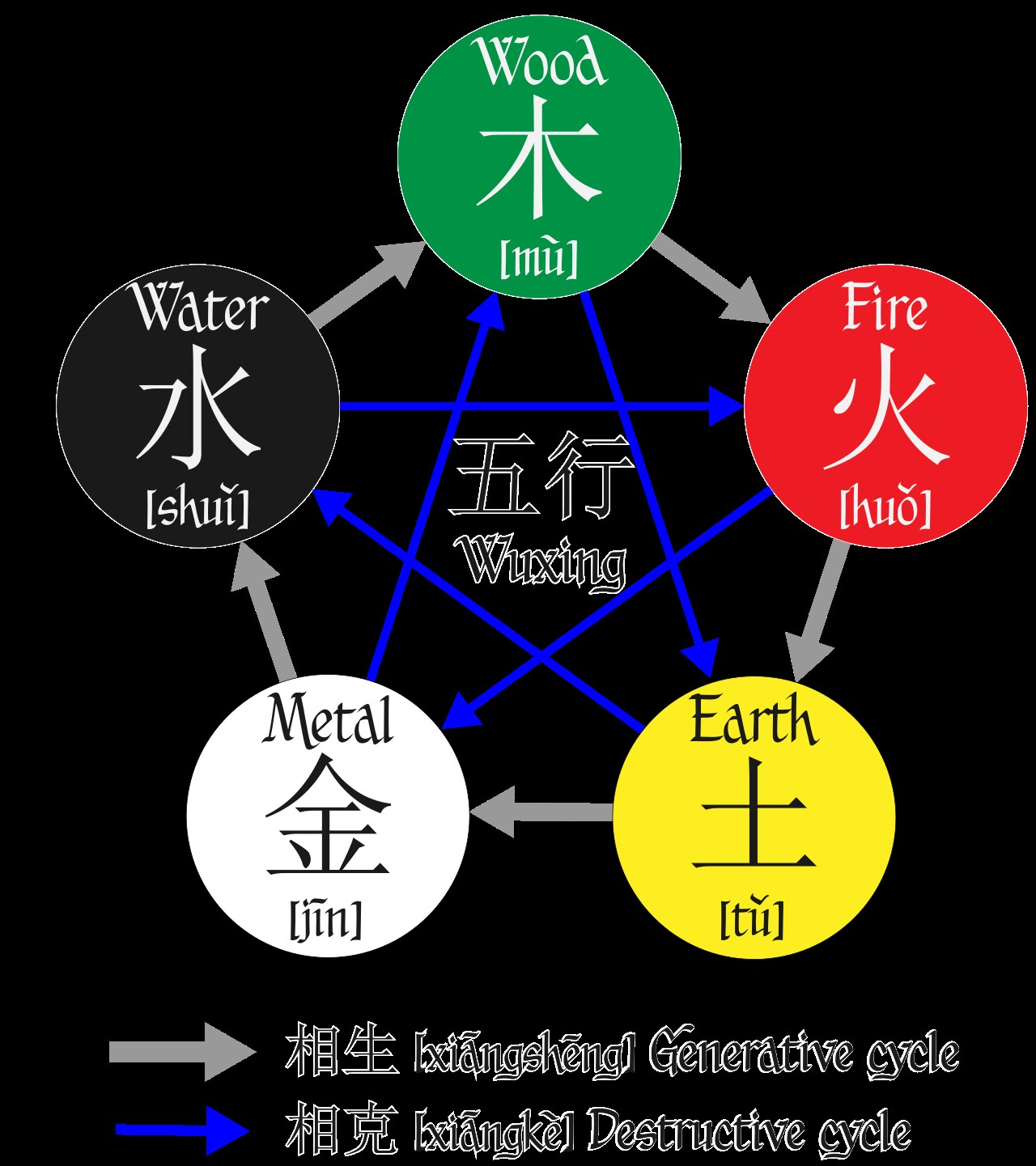
Setting the Day Master aside, seven stems remain in the chart (counting the stems hidden inside the branches). Between each of them and the Day Master there are only five possible relationships: generates me, I generate, controls me, I control, same as me. Split each by yin-yang polarity, and you get the Ten Gods:
- What generates me: Direct Resource (opposite polarity), Indirect Resource (same polarity) — traditionally mentors, education, protection
- What I generate: Eating God (opposite polarity), Hurting Officer (same polarity) — traditionally talent, expression, enjoyment
- What controls me: Direct Officer (opposite polarity), Seven Killings (same polarity) — traditionally rules, pressure, bosses
- What I control: Direct Wealth (opposite polarity), Indirect Wealth (same polarity) — traditionally income and material resources
- Same as me: Friend (same polarity), Rob Wealth (opposite polarity) — traditionally peers, friends, competition
“Same” and “opposite” polarity refer to yin-yang attributes. If your Day Master is yang Wood Jia, then Yi — also wood but yin — is opposite polarity to you, while another Jia is the same polarity as you.
Meet the Ten, One by One
Direct Officer: the boss who disciplines you but plays fair. Tradition links it to managers, rules, and reputation. Think of that strict-but-just team lead in real life — you fear him a little, but you respect him too.
Seven Killings: pressure with the padding removed. Tradition reads it as challenges, nerve, and sudden crises. Picture a startup’s early days — “no orders this month and we’re done” — that life-or-death pressure. Survive it and it becomes a medal.
Direct Resource: the mentor who shows up in a snowstorm. Tradition ties it to schooling, shelter, and elders’ favor. Like the teacher who wakes you up with one sentence the week before the big exam.
Indirect Resource: the guide on the road less traveled. Tradition gives it niche knowledge and unusual skills. Think of the self-taught programmer who switched careers successfully — not via the conventional route.
Friend: the person who is both buddy and rival. Tradition reads peers, collaboration, and competition. Your old classmates: you play ball together — and you also rank against each other.
Rob Wealth: the one who splits your pie. Tradition links it to shared or “leaking” wealth. Going into business with a partner — when you split up, even brothers keep clear books.
Eating God: the one who makes everyday life delicious. Tradition gives it talent, taste, and ease. Chefs and food creators radiate this energy most visibly.
Hurting Officer: the voice that refuses the leash. Tradition reads rebellion and talent that insists on being seen. A stand-up comic roasting everything on stage — that’s Hurting Officer energy.
Direct Wealth: the steady stream. Tradition means stable income: salary, rent, money saved honestly, bit by bit.
Indirect Wealth: the windfall. Tradition links it to unexpected gains, investments, side hustles — the kind of money where the side gig ends up out-earning the day job.
Worked Example: Reading a Jia Wood Day Master
Jia is yang wood — its traditional image is a great tree. Suppose someone’s Day Master is Jia Wood:
- Geng and Xin appear (Metal controls Wood): Geng is Seven Killings, Xin is Direct Officer
- Ren and Gui appear (Water generates Wood): Ren is Indirect Resource, Gui is Direct Resource
- Jia and Yi appear (Wood meets Wood): Jia is Friend, Yi is Rob Wealth
- Bing and Ding appear (Wood generates Fire): Bing is Eating God, Ding is Hurting Officer
- Wu and Ji appear (Wood controls Earth): Wu is Indirect Wealth, Ji is Direct Wealth
Note: this is only the “meeting people” stage. Whether that Direct Officer ends up helping you or crushing you, whether you can actually hold on to that Indirect Wealth — that depends on the chart’s strength, its combinations, and your luck cycles. That’s next-stage homework. The classic beginner mistake is rushing to call good or bad fortune the moment you’ve learned all ten names.
Don’t Forget: There Are Stems Hiding in the Branches
Sharp-eyed readers will have noticed something: eight characters in the chart, one taken by the Day Master, seven left — but so far we’ve only talked about stems. What about the branches? Traditional BaZi theory holds that each Earthly Branch “hides” one to three Heavenly Stems inside it — called hidden stems. The Wu Fire branch, for example, hides Ding Fire and Ji Earth; the Zi Water branch hides Gui Water.
Strictly speaking, then, a BaZi chart holds more than eight stems — a dozen or more once you count the hidden ones, and the Ten Gods web gets considerably more tangled. Beginners don’t need to go there yet. Master the eight visible characters first. When you can name the Ten Gods relationship between any two stems with your eyes closed, then go touch the hidden stems. Step by step — the only shortcut in learning BaZi.
Your 3-Step Starter Plan
- Step 1: Plot your chart and find the Day Master. Use a free online BaZi calculator — never hand-calculate. Good free chart tools are everywhere.
- Step 2: Label every character against the tables above. Mark each character except the Day Master as one of the Ten Gods. Label one full chart and you’ll know the Ten Gods better than 80% of hobbyists.
- Step 3: Meet the people first — don’t do readings yet. Knowing all ten means you’re one-third of the way in. Strength, chart structures, luck cycles — save those for later.
The Ten Gods are BaZi’s “common language” — learn to recognize before you learn to interpret. Go plot your own chart right now, label each god one by one, and see how well it fits. And remember: this is a traditional symbolic system — play with it for the cognitive fun, don’t treat it as a verdict on your fate. Once you truly understand the Day Master, you’ve pushed open BaZi’s door.
Quick Answers
Do I need my exact birth hour? For this guide — no. The Day Master comes from the day pillar, which needs only the birth date. The hour pillar matters later, when you study chart strength and luck cycles. If your birth time is uncertain, learn the Ten Gods first; the hour can wait.
Can I learn this without a teacher? The Ten Gods stage — absolutely. It’s pattern recognition: memorize the five relationships, practice labeling charts, and the map becomes second nature within weeks. Teachers become valuable at the next stage (strength analysis and chart structures), where judgment calls multiply.
Does BaZi say my fate is fixed? The classical texts themselves say otherwise — the famous line is “fate is fixed, but fortune is made.” The chart describes tendencies and timing; what you do with them is the variable. Treat the Ten Gods as a map of your default patterns, not a prison sentence. The whole point of learning the map is to drive better.
中文版:八字十神入门:先看懂日主