Twenty minutes with your head on the desk at noon, and the afternoon feels like a different person took over your body. Two hours of midday sleep, and the afternoon feels worse — groggy, heavy, like you never quite woke up. The biggest misunderstanding about 子午觉 (zǐ wǔ jiào, “Zi Wu sleep”) is fixating on the timing while ignoring the duration. Let’s settle it once and for all: what Zi Wu sleep actually is, whether science backs it, and how to do it without losing.

What “Zi Wu” Actually Means
“Zi” is the Zi hour (11 PM–1 AM); “Wu” is the Wu hour (11 AM–1 PM). These come from the traditional Chinese 12-branch time system, where each two-hour block of the day has a name. Ancient physicians considered these two windows the hinge points of the yin-yang cycle: at Zi, yang energy is newly born; at Wu, yang peaks and begins its turn. Resting in sync with those hinges, they argued, gives you outsized returns.
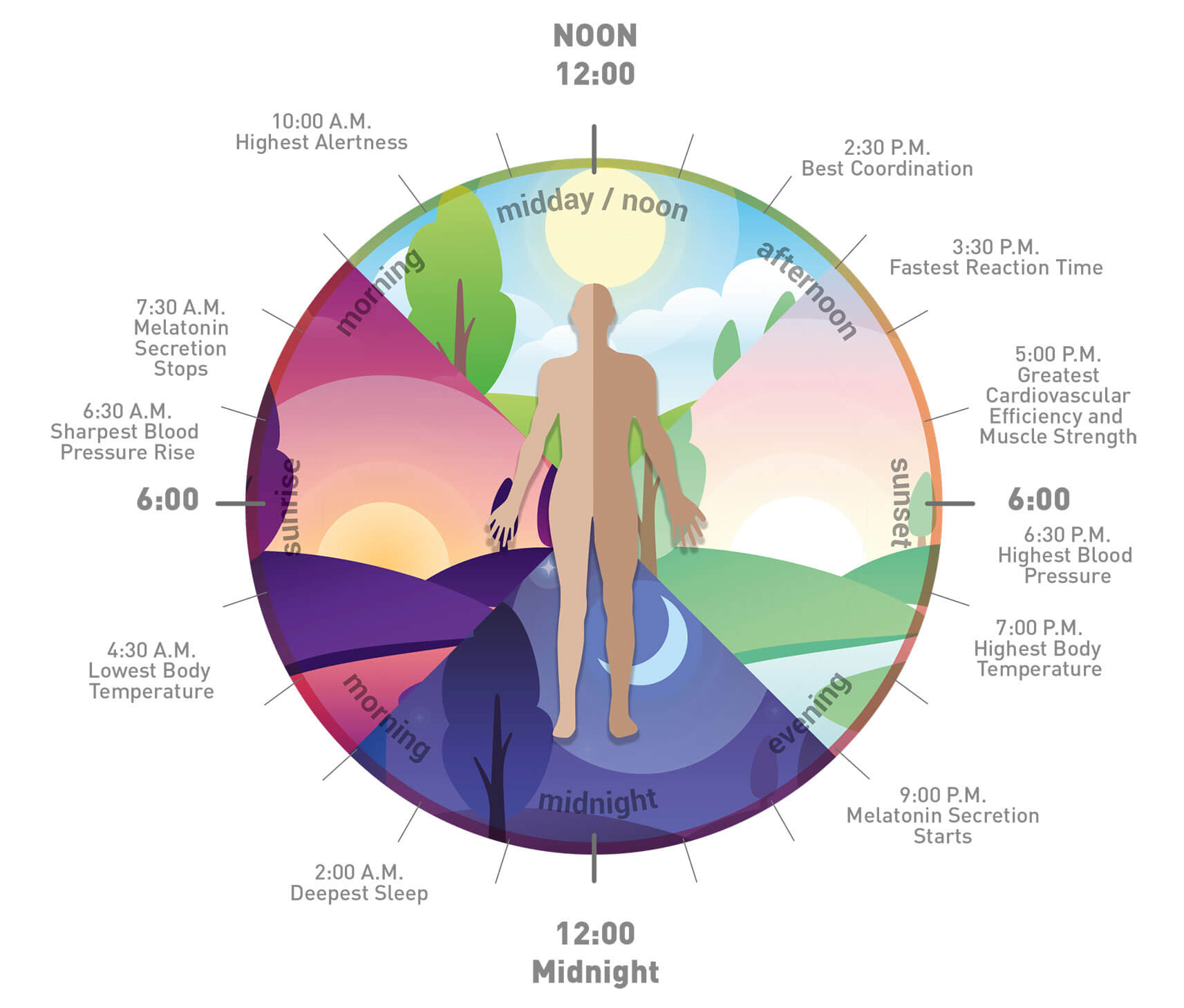
Translated into modern language: “Zi sleep” just means “be asleep before 11 PM,” and “Wu sleep” means “take a proper midday rest.” Less mystical than it sounds — at its core, it’s about respecting the body’s circadian rhythm.
What Science Says
The human body has two natural drowsiness peaks: one around 2–4 AM, one around 1–3 PM. They’re driven by melatonin and cortisol rhythms, and they show up in every human population on earth. That post-lunch slump isn’t laziness — it’s your biological clock calling roll.
On nap length, there’s a widely cited finding: NASA once had pilots nap for 26 minutes and measured a 54% boost in alertness and 34% improvement in performance. Follow-up research has since converged on an efficient-nap window of 10–30 minutes — just enough to complete light sleep without dropping into deep sleep, so you wake up clear instead of groggy.
Past 60 minutes, the math turns against you. Once deep sleep begins, an alarm rips you out mid-cycle into “sleep inertia” — that cement-headed fog that can last 30 minutes or more. Worse, a long daytime nap spends down the “sleep pressure” your body needs to fall asleep at night, pushing bedtime later and starting the whole cycle of debt.
It’s worth noting that the midday rest is hardly a Chinese eccentricity. Spain built the siesta into its daily rhythm for centuries; Japan has inemuri — the art of “sleeping while present,” napping at the desk as a sign of diligence rather than slacking. What traditional cultures intuited and modern labs confirmed is the same thing: the human brain runs a two-shift day, and a short intermission between shifts isn’t indulgence, it’s maintenance.
How to Nap So It Pays: The Three 20s
Remember this mnemonic — three 20s:
- Around 20 minutes. Set the alarm for 25 minutes (including the time it takes to drift off); 15–20 minutes of actual sleep is the sweet spot. Can’t fall asleep? Doesn’t matter — 20 minutes of eyes-closed rest still pays back most of the benefit.
- Don’t sleep face-down on the desk. Face-down napping compresses the eyes and the cervical spine, and jams the stomach against the desk edge. If you can, stretch out on a sofa or a folding cot; if you can’t, lean back in your chair with a U-shaped neck pillow and tilt your head slightly back.
- Finish by 1 PM. Try to wrap the nap before 13:00. Push it past 3 PM and your nighttime sleep onset shifts at least an hour later — robbing Peter to pay Paul.
Coffee drinkers, try the “coffee nap”: drink your coffee, then immediately nap for 20 minutes. Caffeine takes about 20 minutes to kick in — so you wake up just as it arrives, and the nap’s refreshment stacks with the caffeine’s lift. This one has actual studies behind it; it’s not internet folklore. One caution: keep the coffee nap before 2 PM. Caffeine’s half-life is five to six hours, and a late coffee nap will happily protect your afternoon while quietly sabotaging your night.
Zi Sleep: The Part Night Owls Most Need to Read
The Zi hour (11 PM–1 AM) is traditionally associated with the gallbladder meridian; falling asleep before 11 is said to let the liver and gallbladder rest fully, with the payoff showing up as clear eyes and fresh breath the next morning. People who chronically sleep past 1 AM tend to share two traits: bitter taste in the mouth in the morning, and dull, tired-looking skin.
Can’t do 11 PM? Then hold three bottom lines: asleep before midnight, no work messages in the hour before bed, and a fully dark bedroom. A blackout curtain costs almost nothing and is arguably the highest-ROI sleep aid ever sold.
What about night-shift and rotating-shift workers? For you, one rule outranks all the timing theory: get one continuous 6-hour block of dark sleep every day. Regularity beats auspicious hours, every single time. That means blackout curtains, earplugs, a “do not disturb” sign that your household actually respects — and keeping the same sleep window even on days off, because a shifting schedule tells your circadian system that nothing is reliable, and it responds by sleeping lightly.
Who Should Not Force the Midday Nap
Zi Wu sleep is good — with exceptions. People with chronic insomnia should generally skip daytime napping: every minute slept at noon is a minute stolen from nighttime sleep drive, and the night gets harder, feeding the vicious cycle. This group should save every scrap of drowsiness for the night.
Adults over 65, whose natural sleep need has already declined, do fine with 10–15 minutes — no need to force more. And for people with depressive tendencies or excessive daytime sleepiness, heavy daytime sleeping may be a symptom rather than a solution — see a doctor before optimizing the nap.
Quick Answers: 4 Questions About Zi Wu Sleep
Q: I can’t fall asleep at noon — is just lying there with my eyes closed useful? Yes. Twenty minutes of eyes-closed rest lets the brain’s default mode network idle, delivering roughly sixty to seventy percent of an actual nap’s benefit. Stop stressing about “having to fall asleep” — the harder you chase it, the further it runs.
Q: Why do I drool and feel worse after napping? Most likely you slept too long and dropped into deep sleep, or you slept face-down and compressed something. Apply the three-20s rules for a week and it usually disappears.
Q: Is 11 PM some kind of magic number? Not magic — statistics. People who fall asleep before 11 tend to get a higher proportion of deep sleep. But regularity beats the exact hour: a fixed midnight bedtime every night outperforms 11 PM one night and 2 AM the next.
Q: Can weekend lie-ins repay the week’s sleep debt? Not really. Research shows weekend catch-up sleep eases drowsiness but doesn’t undo the metabolic damage — insulin resistance and related disruption don’t get repaid. Don’t treat the weekend as a sleep credit card.
One line to take with you: Zi Wu sleep works — but how you sleep matters ten times more than whether you sleep. Twenty minutes at noon, done by 1 PM; in bed by 11 PM at night, or hold the midnight line if you can’t. Your body already knows this rhythm — the afternoon slump is its daily reminder. Start today at lunch: set a 25-minute alarm and try it.
For general wellness information only — not medical advice. If you feel unwell, consult a qualified professional.
中文版:子午觉到底有没有用